What does 1 Kings 15:17 mean?
"And Baasha king of Israel went up against Judah, and built Ramah, that he might not suffer any to go out or come in to Asa king of Judah." - 1 Kings 15:17
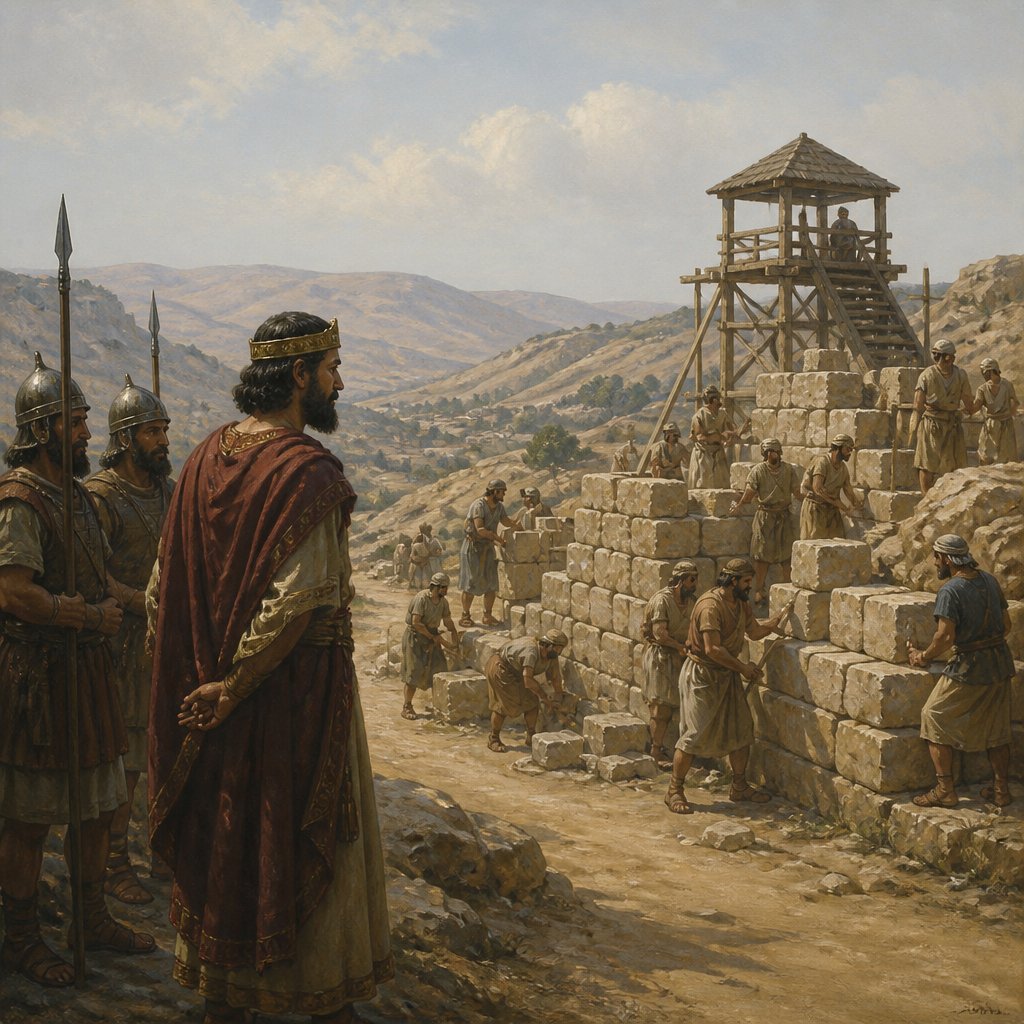
The verse 1 Kings 15:17 in the King James Version of the Bible states, "And Baasha king of Israel went up against Judah, and built Ramah, that he might not suffer any to go out or come in to Asa king of Judah." This verse is part of a larger narrative found in the book of 1 Kings that details the history of the kingdoms of Israel and Judah. To understand the significance of this verse, it is important to look at the historical and biblical context in which it is situated.
During the time of the divided kingdom, Israel and Judah were two separate nations with their own kings. Baasha was the king of Israel, and Asa was the king of Judah. The verse describes Baasha's hostile actions towards Judah by building the city of Ramah as a means of controlling the border and preventing people from going in and out of Judah. This act was not only an act of aggression but also a significant threat to the sovereignty and security of the kingdom of Judah.
The larger context of this verse can be found in 1 Kings 15, which details the reigns of the kings of Israel and Judah during this period. The book of 1 Kings serves as a historical account of the monarchy in Israel and Judah and provides insight into the political, religious, and social dynamics of the time. In the preceding verses, the reigns of Abijam and Asa, kings of Judah, are detailed, providing a backdrop to Baasha's hostile actions against Judah.
The verse 1 Kings 15:17 also serves to highlight the ongoing political and military tensions between the kingdoms of Israel and Judah. The division of the nation of Israel into two separate kingdoms following the reign of Solomon had led to a deep-seated rivalry between the two nations. Baasha's actions were in direct defiance of the covenant that God had made with the descendants of David, the kings of Judah, to uphold their reign over the kingdom (2 Samuel 7:16).
Symbolically, Baasha's building of Ramah can be seen as an attempt to thwart God's plan for the kingdom of Judah. Ramah was strategically located on the border of Judah, and its construction was a deliberate effort to disrupt the flow of people and goods in and out of the kingdom. This not only posed a military threat but also had economic and social implications for the people of Judah.
The verse also underscores the theme of the ongoing struggle between good and evil, righteousness and unrighteousness, loyalty to God and disobedience. Baasha's actions were a manifestation of the ungodly and oppressive rule that was prevalent in the northern kingdom of Israel. In contrast, Asa, the king of Judah, was known for his commitment to following God's commandments and for his efforts to abolish idolatry in the land (1 Kings 15:11-14).
Furthermore, the verse can be seen as a reflection of the complex relationships and power dynamics that existed among the kingdoms in the ancient Near East. The construction of fortified cities and the control of borders were common strategies employed by ancient rulers to exert control and demonstrate their military might. Baasha's actions were a demonstration of his military aggression and his attempt to assert dominance over Judah.
In conclusion, 1 Kings 15:17 serves as a significant point in the historical narrative of the kingdoms of Israel and Judah. The verse highlights the ongoing tensions and power struggles between the two kingdoms and serves as a reflection of the broader themes of political intrigue, military aggression, and the timeless struggle between good and evil. It also underscores the importance of remaining faithful to God's commandments and the consequences of disobedience.
Have questions about 1 Kings 15:17?
Dive deeper into this scripture with Bible Chat — an AI-powered tool for exploring God's Word through conversation. Ask questions, get context, and grow in your understanding of the Bible.
Get Our Apps


1 Kings 15:17 Artwork

1 Kings 15:17 - "And Baasha king of Israel went up against Judah, and built Ramah, that he might not suffer any to go out or come in to Asa king of Judah."
"And Baasha king of Israel went up against Judah, and built Ramah, that he might not suffer any to go out or come in to Asa king of Judah." - 1 Kings 15:17

1 Kings 17:15 - "And she went and did according to the saying of Elijah: and she, and he, and her house, did eat many days."

Acts 17:15

Provers 15:17

1 Samuel 1:15-17

1 kings 3:15

1 kings 3:15

1 Kings 4:17 - "Jehoshaphat the son of Paruah, in Issachar:"

2 Kings 15:17 - "In the nine and thirtieth year of Azariah king of Judah began Menahem the son of Gadi to reign over Israel, and reigned ten years in Samaria."

"And she went and did according to the saying of Elijah: and she, and he, and her house, did eat many days." - 1 Kings 17:15

1 Kings 21:17 - "¶ And the word of the LORD came to Elijah the Tishbite, saying,"

1 Kings 6:17 - "And the house, that is, the temple before it, was forty cubits long."

1 Kings 17:2 - "And the word of the LORD came unto him, saying,"

1 Kings 17:8 - "¶ And the word of the LORD came unto him, saying,"

1 Kings 15:31 - "¶ Now the rest of the acts of Nadab, and all that he did, are they not written in the book of the chronicles of the kings of Israel?"

1 Kings 10:15 - "Beside that he had of the merchantmen, and of the traffick of the spice merchants, and of all the kings of Arabia, and of the governors of the country."

1 Kings 9:17 - "And Solomon built Gezer, and Beth-horon the nether,"

1 Kings 15:1 - "Now in the eighteenth year of king Jeroboam the son of Nebat reigned Abijam over Judah."

1 Timothy 6:15-16 – "God, the blessed and only Ruler, the King of kings and Lord of lords."

1 Kings 15:32 - "And there was war between Asa and Baasha king of Israel all their days."

1 Kings 15:16 - "¶ And there was war between Asa and Baasha king of Israel all their days."

1 Kings 11:1-5

1 Timothy 6:15-16 – "God, the blessed and only Ruler, the King of kings and Lord of lords."

1 Timothy 6:15-16 – "God, the blessed and only Ruler, the King of kings and Lord of lords."

1 Timothy 6:15-16 – "God, the blessed and only Ruler, the King of kings and Lord of lords."

1 Kings 17:17 - "¶ And it came to pass after these things, that the son of the woman, the mistress of the house, fell sick; and his sickness was so sore, that there was no breath left in him."

1 Kings 1:15 - "¶ And Bath-sheba went in unto the king into the chamber: and the king was very old; and Abishag the Shunammite ministered unto the king."

1 Kings 15:9 - "¶ And in the twentieth year of Jeroboam king of Israel reigned Asa over Judah."

1 Timothy 6:15-16 – "God, the blessed and only Ruler, the King of kings and Lord of lords."