What does 1 Kings 14:9 mean?
"But hast done evil above all that were before thee: for thou hast gone and made thee other gods, and molten images, to provoke me to anger, and hast cast me behind thy back:" - 1 Kings 14:9
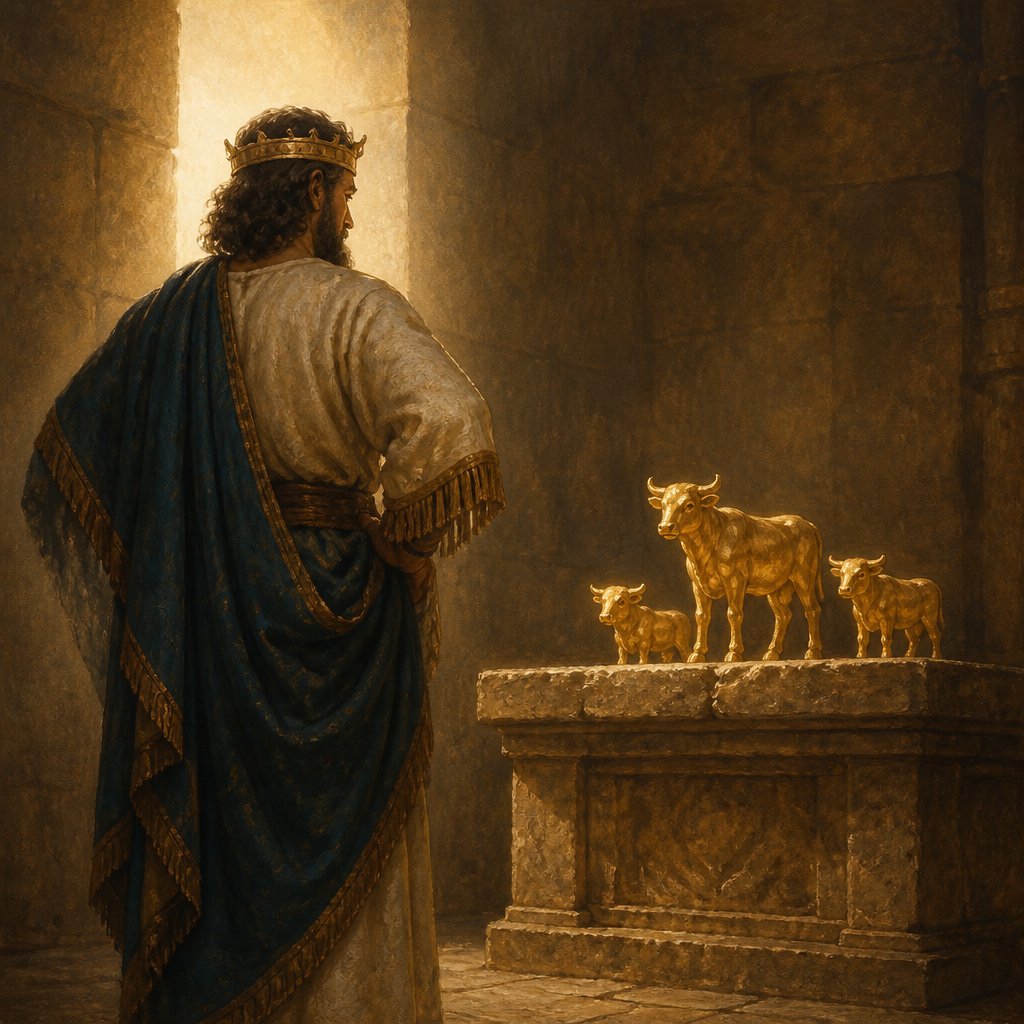
1 Kings 14:9 (KJV) - "But hast done evil above all that were before thee: for thou hast gone and made thee other gods, and molten images, to provoke me to anger, and hast cast me behind thy back:"
This verse is part of a larger narrative in the book of 1 Kings that details the reign of various kings in the divided kingdom of Israel. In this particular verse, the prophet Ahijah is delivering a message from God to Jeroboam, the king of Israel at the time. The message is a stern rebuke from God for Jeroboam's disobedience and idolatry.
The verse begins with Ahijah stating that Jeroboam has done evil above all that were before him. This indicates the severity and extent of Jeroboam's sin in the eyes of God. It emphasizes the magnitude of Jeroboam's disobedience and departure from God's commands. The phrase "above all that were before thee" shows that Jeroboam's actions were even worse than those of the previous Israelite kings who had also strayed from the path of righteousness.
The verse then goes on to specify the nature of Jeroboam's wrongdoing. It mentions that he "has gone and made other gods, and molten images." This highlights the fact that Jeroboam not only turned away from the one true God, but he also actively pursued and worshipped false gods. The reference to "molten images" underscores the idolatrous practices that Jeroboam had instituted, where he had crafted physical representations of these false deities for the people to worship. This was a direct violation of the first two of the Ten Commandments, which prohibit the worship of other gods and the creation of graven images (Exodus 20:3-4).
The verse continues to convey God's displeasure with Jeroboam's actions, stating that these actions served to "provoke me to anger." This language reflects the deep emotional response of God to the betrayal and unfaithfulness of His people. It emphasizes the gravity of Jeroboam's sin and the damage it has caused to his relationship with God. The phrase "and hast cast me behind thy back" further illustrates the extent of Jeroboam's disregard for God. It depicts a deliberate turning away from God, a deliberate rejection of His guidance and authority in favor of pursuing his own desires and inclinations.
In terms of context, this verse is situated within a larger narrative of the history of the kings of Israel and Judah. Jeroboam was the first king of the northern kingdom of Israel after the nation split into two kingdoms following the reign of Solomon. His reign was marked by a departure from the worship of the true God and the establishment of idolatrous practices, which sowed the seeds of spiritual and moral decline in the nation. The verse serves as a warning and indictment against the dangers of idolatry and the consequences of turning away from God.
Symbolically, this verse represents the timeless struggle between faithfulness and disobedience, between true worship and idolatry. It serves as a reminder of the importance of remaining steadfast in our devotion to God and staying true to His commandments. The imagery of casting God behind one's back conveys the idea of willfully ignoring and rejecting God's presence and authority, ultimately leading to spiritual ruin. It underscores the need for repentance and turning back to God in order to restore the broken relationship.
In conclusion, 1 Kings 14:9 presents a powerful and sobering message about the consequences of turning away from God and embracing idolatry. It serves as a timeless warning against the allure of false gods and the destructive nature of disobedience. The verse underscores the importance of remaining faithful to God and the need for repentance and reconciliation in the face of sin. Ultimately, it points to the enduring truth that only in God can true fulfillment and purpose be found.
Have questions about 1 Kings 14:9?
Dive deeper into this scripture with Bible Chat — an AI-powered tool for exploring God's Word through conversation. Ask questions, get context, and grow in your understanding of the Bible.
Get Our Apps


1 Kings 14:9 Artwork

1 Kings 14:9 - "But hast done evil above all that were before thee: for thou hast gone and made thee other gods, and molten images, to provoke me to anger, and hast cast me behind thy back:"
"But hast done evil above all that were before thee: for thou hast gone and made thee other gods, and molten images, to provoke me to anger, and hast cast me behind thy back:" - 1 Kings 14:9

1 Kings 9:14 - "And Hiram sent to the king sixscore talents of gold."

"And Hiram sent to the king sixscore talents of gold." - 1 Kings 9:14

1 Kings 14:1-20

1 Kings 14:26
1 Kings 14:26

Genesis 14:9 - "With Chedorlaomer the king of Elam, and with Tidal king of nations, and Amraphel king of Shinar, and Arioch king of Ellasar; four kings with five."

1 Kings 12:14

1 Kings 12:14

1 Kings 14:1 - "At that time Abijah the son of Jeroboam fell sick."

1 Kings 3:9

2 Chronicles 9:14 - "Beside that which chapmen and merchants brought. And all the kings of Arabia and governors of the country brought gold and silver to Solomon."

1 Kings 14:29 - "¶ Now the rest of the acts of Rehoboam, and all that he did, are they not written in the book of the chronicles of the kings of Judah?"

1 Kings 16:14 - "Now the rest of the acts of Elah, and all that he did, are they not written in the book of the chronicles of the kings of Israel?"

Luke 18:9-14

1 Kings 6:14 - "So Solomon built the house, and finished it."

1 Kings 4:14 - "Ahinadab the son of Iddo had Mahanaim:"

Luke 18: 9-14

1 Kings 9:18 - "And Baalath, and Tadmor in the wilderness, in the land,"

1 Kings 21:14 - "Then they sent to Jezebel, saying, Naboth is stoned, and is dead."

1 Kings 14:30 - "And there was war between Rehoboam and Jeroboam all their days."

1 Kings 14:19 - "And the rest of the acts of Jeroboam, how he warred, and how he reigned, behold, they are written in the book of the chronicles of the kings of Israel."

1 Kings 9:17 - "And Solomon built Gezer, and Beth-horon the nether,"

1 Kings 1:14 - "Behold, while thou yet talkest there with the king, I also will come in after thee, and confirm thy words."

1 Kings 15:9 - "¶ And in the twentieth year of Jeroboam king of Israel reigned Asa over Judah."

1 Kings 14:14 - "Moreover the LORD shall raise him up a king over Israel, who shall cut off the house of Jeroboam that day: but what? even now."

1 Chronicles 14:9 - "And the Philistines came and spread themselves in the valley of Rephaim."

1 Kings 22:9 - "Then the king of Israel called an officer, and said, Hasten hither Micaiah the son of Imlah."

Genesis 14:9 With Chedorlaomer the king of Elam, and with Tidal king of nations, and Amraphel king of Shinar, and Arioch king of Ellasar; four kings with five.