What does 1 Kings 14:29 mean?
"¶ Now the rest of the acts of Rehoboam, and all that he did, are they not written in the book of the chronicles of the kings of Judah?" - 1 Kings 14:29

The verse 1 Kings 14:29 in the King James Version of the Bible reads, "Now the rest of the acts of Rehoboam, and all that he did, are they not written in the book of the chronicles of the kings of Judah?" At first glance, this verse may seem unremarkable or insignificant compared to other more well-known passages in the Bible. However, upon closer examination, it offers valuable insights into the themes of human pride, divine judgment, and the consequences of sin.
To fully understand the significance of this verse, it is important to provide some context. Rehoboam was the son of King Solomon and the grandson of King David. After Solomon's death, Rehoboam ascended to the throne as the king of Judah. However, he quickly demonstrated a lack of wisdom and humility, which led to the division of the kingdom. Rehoboam's pride and harsh treatment of his subjects caused the ten northern tribes to rebel and establish their own kingdom, leaving Rehoboam to rule over only the tribes of Judah and Benjamin. The verse in question refers to the "acts of Rehoboam," which likely include his reign, his interactions with the people, and any notable events that occurred during his time as king.
One of the central themes in this verse is the concept of human pride and its consequences. Rehoboam's arrogance and refusal to heed the advice of his elders led to the downfall of his kingdom and the division of Israel. His failure to exercise humility and wisdom as a leader resulted in widespread unrest and conflict, ultimately leading to the fragmentation of the once-unified nation. This serves as a sobering reminder of the destructive power of pride and the importance of humility in leadership.
Furthermore, the verse also highlights the divine judgment that is evident throughout the Bible. Rehoboam's actions and decisions had far-reaching consequences, not only for himself but for the entire nation of Israel. The division of the kingdom and the subsequent turmoil that ensued can be seen as a manifestation of God's judgment upon Rehoboam and the people for their disobedience and waywardness. This aligns with the overarching biblical theme that emphasizes the importance of obedience to God's commands and the inevitable consequences of sin.
The verse also serves as a reminder of the importance of recording and preserving historical accounts. The reference to the "book of the chronicles of the kings of Judah" underscores the significance of documenting and preserving the events and deeds of the past. Through the preservation of historical records, future generations can learn from the successes and failures of their predecessors, gaining valuable insight into the outcomes of various actions and decisions. In the case of Rehoboam, his reign and its consequences were recorded for posterity, serving as a cautionary tale for future leaders and generations.
Symbolically, the verse can be seen as a representation of the cyclical nature of human history. Throughout the Bible, there are numerous instances of pride, disobedience, and divine judgment, all of which serve as recurring themes throughout the narrative. Rehoboam's story is just one example of this pattern, serving as a microcosm of the broader human experience and the timeless lessons that can be gleaned from it.
In conclusion, while 1 Kings 14:29 may appear to be a relatively simple and straightforward verse, it offers valuable insights into themes such as human pride, divine judgment, and the importance of historical records. By examining this verse in its broader context, readers can gain a deeper understanding of the timeless truths and lessons that are woven throughout the biblical narrative, providing guidance and wisdom for all generations.
Have questions about 1 Kings 14:29?
Dive deeper into this scripture with Bible Chat — an AI-powered tool for exploring God's Word through conversation. Ask questions, get context, and grow in your understanding of the Bible.
Get Our Apps


1 Kings 14:29 Artwork

1 Kings 14:29 - "¶ Now the rest of the acts of Rehoboam, and all that he did, are they not written in the book of the chronicles of the kings of Judah?"

"¶ Now the rest of the acts of Rehoboam, and all that he did, are they not written in the book of the chronicles of the kings of Judah?" - 1 Kings 14:29

2 Kings 14:29 - "And Jeroboam slept with his fathers, even with the kings of Israel; and Zachariah his son reigned in his stead."

Jeremiah 29: 4-14

Jeremiah 29: 4-14

Jeremiah 29: 4-14

Jeremiah 29: 4-14

Jeremiah 29: 4-14

1 Kings 11:29-32

1 Kings 14:1-20

1 Kings 14:26
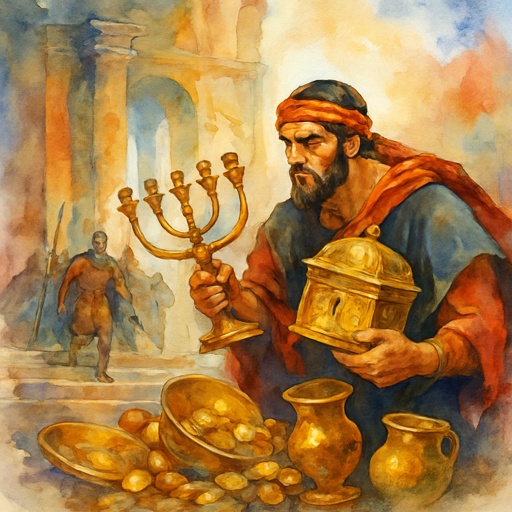
1 Kings 14:26

1 Kings 1:29 - "And the king sware, and said, As the LORD liveth, that hath redeemed my soul out of all distress,"

1 Kings 22:29 - "So the king of Israel and Jehoshaphat the king of Judah went up to Ramoth-gilead."

1 Kings 12:29 - "And he set the one in Beth-el, and the other put he in Dan."

1 Corinthians 14:29 - "Let the prophets speak two or three, and let the other judge."

"And Jeroboam slept with his fathers, even with the kings of Israel; and Zachariah his son reigned in his stead." - 2 Kings 14:29

1 Kings 12:14

1 Kings 12:14

1 Kings 14:1 - "At that time Abijah the son of Jeroboam fell sick."

1 Kings 10:29 - "And a chariot came up and went out of Egypt for six hundred shekels of silver, and an horse for an hundred and fifty: and so for all the kings of the Hittites, and for the kings of Syria, did they bring them out by their means."

1 Kings 9:14 - "And Hiram sent to the king sixscore talents of gold."

1 Kings 16:14 - "Now the rest of the acts of Elah, and all that he did, are they not written in the book of the chronicles of the kings of Israel?"

1 Kings 4:29 - "¶ And God gave Solomon wisdom and understanding exceeding much, and largeness of heart, even as the sand that is on the sea shore."

1 Kings 6:14 - "So Solomon built the house, and finished it."

1 Kings 4:14 - "Ahinadab the son of Iddo had Mahanaim:"

1 Kings 21:14 - "Then they sent to Jezebel, saying, Naboth is stoned, and is dead."

1 Kings 14:30 - "And there was war between Rehoboam and Jeroboam all their days."

1 Kings 14:19 - "And the rest of the acts of Jeroboam, how he warred, and how he reigned, behold, they are written in the book of the chronicles of the kings of Israel."

1 Kings 1:14 - "Behold, while thou yet talkest there with the king, I also will come in after thee, and confirm thy words."