What does 1 Kings 14:1 mean?
"At that time Abijah the son of Jeroboam fell sick." - 1 Kings 14:1

1 Kings 14:1 (KJV) states: "At that time Abijah the son of Jeroboam fell sick."
This verse comes from the first book of Kings in the Old Testament, and it marks a turning point in the story of Jeroboam, the first king of the Northern Kingdom of Israel. To fully understand the significance of this verse, it is important to consider the historical and cultural context in which it was written.
During the time of Abijah's illness, the kingdom of Israel was divided into two separate entities. The Southern Kingdom, also known as the Kingdom of Judah, was ruled by the descendants of David, while the Northern Kingdom (referred to simply as Israel) was ruled by Jeroboam, who had rebelled against the house of David. Jeroboam was a controversial figure, as he had led the ten northern tribes of Israel in a revolt against the house of David and introduced idol worship to his kingdom in order to consolidate his power.
The mention of Abijah's illness is significant because it serves as a link between the personal and political aspects of Jeroboam's reign. In ancient times, the health of a ruler's heir was often believed to be connected to the ruler's own actions and decisions. Therefore, Abijah's illness can be seen as a reflection of Jeroboam's failure as a leader, both in the eyes of his subjects and in the eyes of God.
The verse also sets the stage for the rest of the narrative in 1 Kings 14, in which Jeroboam's wife disguises herself and seeks the prophet Ahijah for guidance regarding her son's health. This incident leads to a prophecy of doom for Jeroboam and his dynasty, as Ahijah prophesies the destruction of Jeroboam's household because of their idolatry and disobedience to God.
The theme of divine judgment and punishment is central to this verse and the broader narrative of Jeroboam's reign. Jeroboam's decision to introduce idol worship and lead the northern tribes of Israel away from the worship of the one true God is portrayed as a grievous sin that ultimately leads to the downfall of his dynasty. The illness of Abijah serves as a poignant reminder of the consequences of Jeroboam's actions, and it foreshadows the tragic fate that awaits his family.
In addition to its historical and political significance, 1 Kings 14:1 also carries symbolic and spiritual meaning. The illness of Abijah can be interpreted as a symbol of the spiritual sickness that had infected the entire kingdom of Israel under Jeroboam's rule. The introduction of idol worship and the abandonment of God's commandments had led the Israelites astray, and Abijah's illness serves as a tangible representation of the moral and spiritual decay that had taken hold of the nation.
Overall, 1 Kings 14:1 is a verse that encapsulates the complex interplay of personal, political, and spiritual elements in the biblical narrative. It marks a crucial moment in the story of Jeroboam and the kingdom of Israel, and it serves as a sobering reminder of the consequences of straying from God's commandments. As such, it continues to hold relevance for readers today, reminding us of the importance of remaining faithful to God and the perils of turning away from His ways.
Have questions about 1 Kings 14:1?
Dive deeper into this scripture with Bible Chat — an AI-powered tool for exploring God's Word through conversation. Ask questions, get context, and grow in your understanding of the Bible.
Get Our Apps


1 Kings 14:1 Artwork

1 Kings 14:1 - "At that time Abijah the son of Jeroboam fell sick."

1 Kings 14:1-20

"At that time Abijah the son of Jeroboam fell sick." - 1 Kings 14:1

1 Kings 14:26
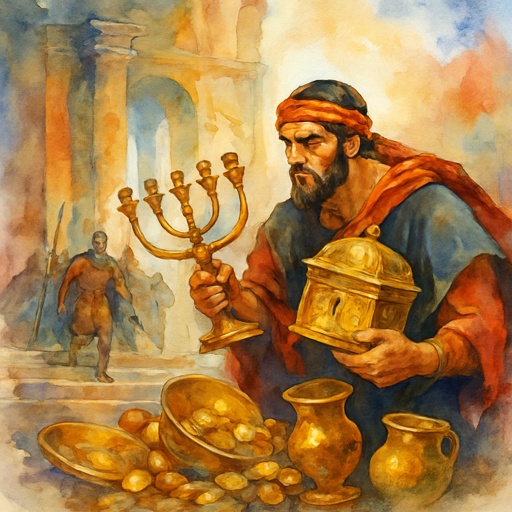
1 Kings 14:26

1 Kings 12:14

1 Kings 12:14

1 Kings 9:14 - "And Hiram sent to the king sixscore talents of gold."

1 Kings 6:14 - "So Solomon built the house, and finished it."

1 Kings 4:14 - "Ahinadab the son of Iddo had Mahanaim:"

1 Kings 1:14 - "Behold, while thou yet talkest there with the king, I also will come in after thee, and confirm thy words."

1 Kings 14:29 - "¶ Now the rest of the acts of Rehoboam, and all that he did, are they not written in the book of the chronicles of the kings of Judah?"

1 Kings 16:14 - "Now the rest of the acts of Elah, and all that he did, are they not written in the book of the chronicles of the kings of Israel?"

1 Kings 21:14 - "Then they sent to Jezebel, saying, Naboth is stoned, and is dead."

1 Kings 14:30 - "And there was war between Rehoboam and Jeroboam all their days."

1 Kings 14:19 - "And the rest of the acts of Jeroboam, how he warred, and how he reigned, behold, they are written in the book of the chronicles of the kings of Israel."

1 Kings 14:14 - "Moreover the LORD shall raise him up a king over Israel, who shall cut off the house of Jeroboam that day: but what? even now."

1 Kings 11:14 - "¶ And the LORD stirred up an adversary unto Solomon, Hadad the Edomite: he was of the king's seed in Edom."

1 Kings 14:26 Show the King of Egypt dressed in Egyptian kingly attire overseeing the removal of the treasures.

1 Kings 22:14 - "And Micaiah said, As the LORD liveth, what the LORD saith unto me, that will I speak."

1 Kings 14:25 - "¶ And it came to pass in the fifth year of king Rehoboam, that Shishak king of Egypt came up against Jerusalem:"

2 Kings 14:1 - "In the second year of Joash son of Jehoahaz king of Israel reigned Amaziah the son of Joash king of Judah."

1 Kings 8:14 - "And the king turned his face about, and blessed all the congregation of Israel: (and all the congregation of Israel stood;)"

Soothing the Soul: The Gospel of Gentle Care 1 Kings 19:3-8; 1 Samuel 16:14-23

Micah 1:14 - "Therefore shalt thou give presents to Moresheth-gath: the houses of Achzib shall be a lie to the kings of Israel."

1 Kings 2:14 - "He said moreover, I have somewhat to say unto thee. And she said, Say on."

1 Kings 15:14 - "But the high places were not removed: nevertheless Asa's heart was perfect with the LORD all his days."

1 Kings 14:28 - "And it was so, when the king went into the house of the LORD, that the guard bare them, and brought them back into the guard chamber."

Soothing the Soul: The Gospel of Gentle Care 1 Kings 19:3-8; 1 Samuel 16:14-23

1 Kings 14:17 - "¶ And Jeroboam's wife arose, and departed, and came to Tirzah: and when she came to the threshold of the door, the child died;"