What does 1 Kings 13:3 mean?
"And he gave a sign the same day, saying, This is the sign which the LORD hath spoken; Behold, the altar shall be rent, and the ashes that are upon it shall be poured out." - 1 Kings 13:3
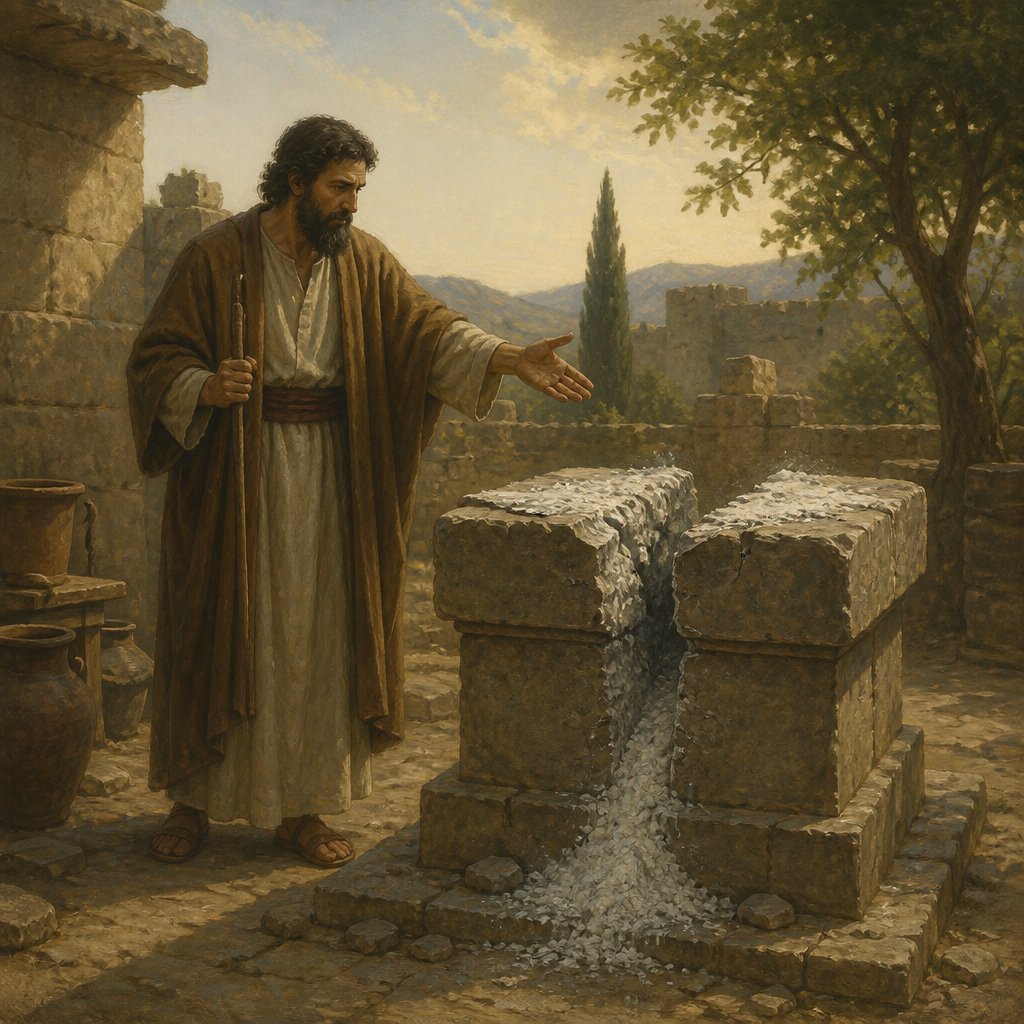
The Bible verse 1 Kings 13:3 from the King James Version (KJV) states, "And he gave a sign the same day, saying, This is the sign which the Lord hath spoken; Behold, the altar shall be rent, and the ashes that are upon it shall be poured out."
This verse comes from the Old Testament and is a part of the story of the prophet who was sent by God to Jeroboam, the king of Israel, with a message of judgment. The prophet was instructed not to eat or drink in that place and to return home by a different route. However, another older prophet deceived him into disobeying God's command, and as a result, the prophet was killed by a lion.
The deeper meaning of this verse can be understood through the themes of obedience, judgment, and the consequences of disobedience. It serves as a powerful reminder of the importance of following God's commands and the severe consequences of failing to do so.
The context of this verse is crucial for understanding its significance. Jeroboam, the king of Israel, had led the kingdom into idolatry and had set up golden calves for the people to worship. In response, God sent a prophet to pronounce judgment on Jeroboam's altar and to call him to repentance. The prophet's obedient and faithful response to God's command stands in stark contrast to the disobedience of the older prophet who misled him.
The symbolism in this verse is also significant. The sign given by the prophet, that the altar would be rent and the ashes poured out, symbolizes the destruction and desolation that would come upon the idolatrous altar and Jeroboam's reign. It also serves as a sign of God's power and authority over the false gods and the consequences of disobedience.
The theme of obedience to God's commands is a central aspect of this verse. The prophet's unwavering obedience to God's instructions stood in contrast to the older prophet's deception and disobedience. This serves as a powerful lesson for believers, emphasizing the importance of following God's commands and the consequences of failing to do so. It also highlights the significance of discerning and testing the spirits, as mentioned in 1 John 4:1, to ensure that we are not led astray by deception.
Furthermore, the theme of judgment and the consequences of disobedience is evident in this verse. The destruction of the altar and the pouring out of the ashes serve as a visual representation of God's judgment upon the idolatry and disobedience of Jeroboam. It serves as a warning to all who would follow in his footsteps, emphasizing the severity of God's judgment and the consequences of turning away from Him.
In conclusion, 1 Kings 13:3 from the King James Version of the Bible holds deep significance and serves as a powerful reminder of the importance of obedience, the reality of God's judgment, and the consequences of disobedience. It is a timeless lesson that continues to resonate with believers today, emphasizing the need to remain steadfast in following God's commands and the severe repercussions of straying from His will. This verse offers a sobering reminder of the power and authority of God and the importance of remaining faithful and obedient to Him.
Have questions about 1 Kings 13:3?
Dive deeper into this scripture with Bible Chat — an AI-powered tool for exploring God's Word through conversation. Ask questions, get context, and grow in your understanding of the Bible.
Get Our Apps


1 Kings 13:3 Artwork

1 Kings 13:3 - "And he gave a sign the same day, saying, This is the sign which the LORD hath spoken; Behold, the altar shall be rent, and the ashes that are upon it shall be poured out."
"And he gave a sign the same day, saying, This is the sign which the LORD hath spoken; Behold, the altar shall be rent, and the ashes that are upon it shall be poured out." - 1 Kings 13:3

1 Kings 3:13 - "And I have also given thee that which thou hast not asked, both riches, and honour: so that there shall not be any among the kings like unto thee all thy days."

1 Kings 11:13

1 Kings 11:13

1 Kings 6:11-13

1 kings 11:11-13

1 Kings 11:11-13

1 Kings 6:11-13

1 Kings 6:11-13

1 Kings 6:11-13

1 Kings 6:11-13

1 Kings 11:11-13

1 Thessalonians 3:13

1 Kings 7:13 - "¶ And king Solomon sent and fetched Hiram out of Tyre."

1 Thessalonians 3:13

1 Kings 3:9

1 kings 3:15

1 Thessalonians 3:13

1 Thessalonians 3:13

1 Thessalonians 3:13

1 kings 3:15

1 kings 3:12

Lamentations 3:13

Colossians 3:13

1 Thessalonians 3:13

1 Thessalonians 3:13

1 Thessalonians 3:13

1 Kings 13:13 - "And he said unto his sons, Saddle me the ass. So they saddled him the ass: and he rode thereon,"

1 Kings 12:13 - "And the king answered the people roughly, and forsook the old men's counsel that they gave him;"