What does 1 John 3:2 mean?
"Beloved, now are we the sons of God, and it doth not yet appear what we shall be: but we know that, when he shall appear, we shall be like him; for we shall see him as he is." - 1 John 3:2
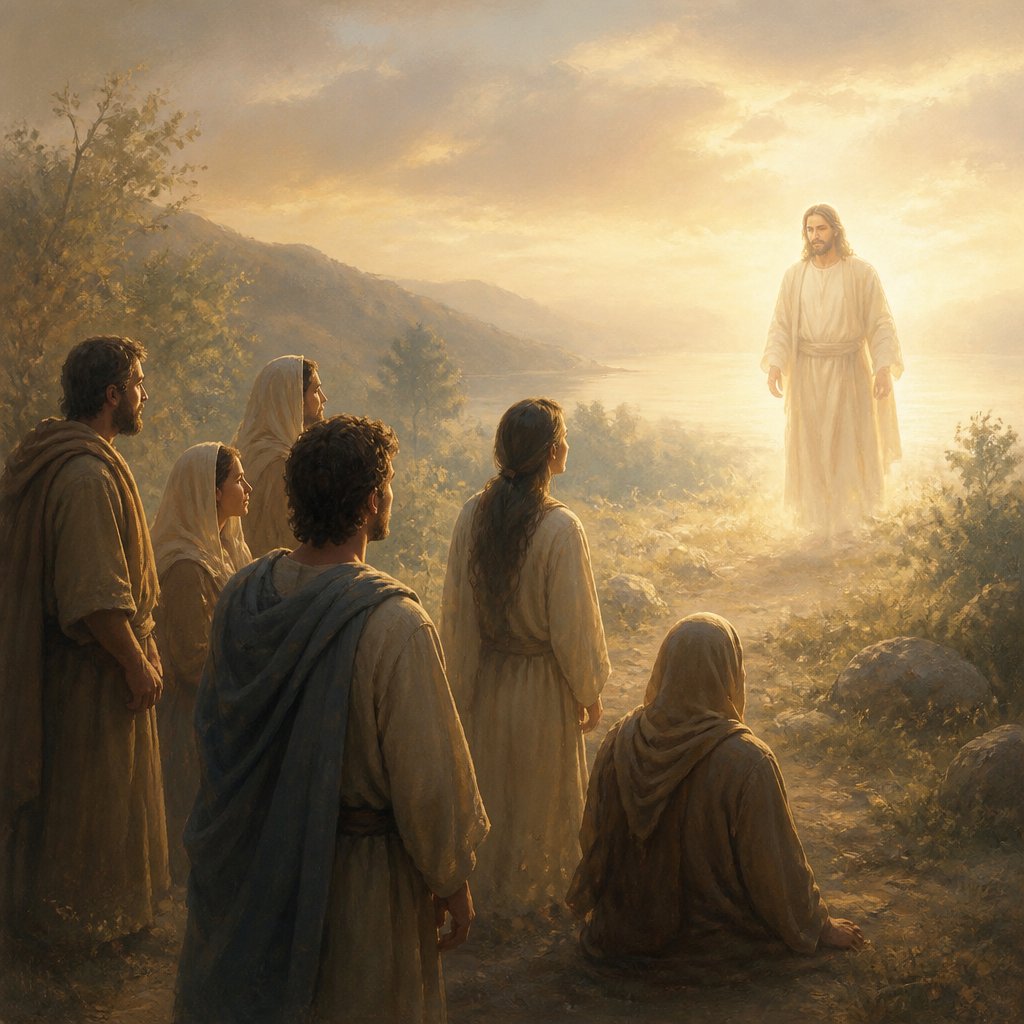
“Beloved, now are we the sons of God, and it doth not yet appear what we shall be: but we know that, when he shall appear, we shall be like him; for we shall see him as he is.” (1 John 3:2, KJV)
In this single sentence John gathers up the whole Christian life as a lived paradox: a present certainty joined to a future unveiling. He addresses the church as “Beloved,” speaking as a pastor and as one who has already grounded his readers in the reality of God’s love. That word sets the tone. The doctrine he states is not cold information; it is family speech, the language of people who have been received and kept by divine affection. The first theme, then, is identity. “Now are we the sons of God” declares something true in the present tense. John is not describing a distant possibility but a current standing. In the flow of the chapter, this follows 1 John 3:1, where John has marveled that “the Father hath bestowed upon us” such love “that we should be called the sons of God.” The verse is continuing that astonishment and pressing it into assurance: the believer’s relationship to God is not merely a title spoken over them; it is a reality they already inhabit.
Yet John immediately adds, “and it doth not yet appear what we shall be.” Here is the second theme: hiddenness and incompleteness in the present. The child of God is truly God’s child, yet the full shape and glory of that sonship is not currently visible. The language “doth not yet appear” suggests that the final condition of the redeemed is, for now, veiled—partly from the world, partly even from the believer’s own understanding. This fits John’s wider context in the epistle, where he repeatedly contrasts what is “manifest” with what is not. In 1 John he speaks of Christ being “manifested” to take away sins, and he speaks of the children of God being “manifest” in their practice of righteousness. Here, however, he confesses that there remains a future manifestation of the believer’s glory that has not yet come into sight. This is not uncertainty about whether salvation is real; it is humility about the magnitude of what God is bringing to completion.
John then turns from what is not yet seen to what is confidently known: “but we know that, when he shall appear, we shall be like him.” The third theme is hope grounded in the appearing of Christ. The “he” who “shall appear” is the Lord Jesus Christ, whose coming John expects not as an idea but as an event. In John’s thought, the future of the believer is inseparable from the person of Christ; it is not merely that heaven is promised, but that Christ is promised. The believer’s transformation is tied to Christ’s revelation. John does not say, “when we shall appear,” but “when he shall appear,” as though Christ’s unveiling is the sunrise by which all other things become clear. The symbolism of appearing is the language of light and disclosure: what has been concealed will be made plain; what has been in promise will stand in sight.
“We shall be like him” is the heart of the verse’s promise and its most reverent mystery. It speaks of likeness, not equality. John is not teaching that believers become gods; he is teaching that believers are conformed to Christ. The likeness is moral and spiritual, and also in the sense of glorification: a perfected condition in which sin is no longer present, weakness is no longer ruling, and the believer’s life is fully aligned with the life of the Son. In the immediate context, John is about to say, “And every man that hath this hope in him purifieth himself, even as he is pure” (1 John 3:3, KJV). That shows that the promised likeness has a present effect: the future purity of being like Christ calls the believer now into a life of purification. The verse is therefore not only comfort; it is a summons. Sonship is present, but its destiny is purity, and the hope of that destiny presses on the conscience and shapes conduct.
The final clause gives the reason and the wonder of this likeness: “for we shall see him as he is.” This is the theme of vision, and it is deeply symbolic. Scripture often connects sight with knowing, and knowing with being shaped. John’s wording is strikingly direct: not merely seeing “him,” but seeing “him as he is.” This suggests an unmediated clarity, a true apprehension of Christ in his reality. In this life, believers walk by faith and not by sight; they know Christ truly, but not with the fullness of unveiled perception. John teaches that the moment of seeing Christ “as he is” will be transformative, because the vision of Christ is not passive. To behold him in truth is to be changed into the likeness of what is beheld. The promise implies that the obstacles that cloud perception—sin, mortality, dimness of understanding, the limitations of the present world—will be removed. The believer’s final change is connected to this encounter: Christ revealed, Christ seen, and the believer made like him.
Within the wider context of 1 John, this verse stands as a bridge between John’s teaching on God’s love and identity, and his teaching on righteousness and separation from sin. John has been insisting that those who are born of God do not make peace with sin, not because they are trying to earn sonship, but because sonship has a nature and a future. The verse establishes that Christian holiness is not driven by fear of losing a title, but by the certainty of belonging and the certainty of becoming. “Now” anchors assurance: believers are already God’s children. “Not yet appear” guards against triumphalism: the present Christian experience is real but unfinished. “When he shall appear” fixes hope on Christ’s return rather than on worldly improvement. “We shall be like him” gives the content of hope: conformity to the Son. “We shall see him as he is” gives the means and climax of that hope: the beatific vision, the unveiling of Christ that completes the believer’s transformation.
The significance, then, is that 1 John 3:2 holds together the whole Christian story in one breath: adoption already granted, glory not yet revealed, Christ certainly coming, likeness surely given, and a final sight of the Lord that both satisfies the heart and completes the soul. It teaches believers to live between “now” and “not yet” with settled assurance, patient humility, and purifying hope, because their future is not finally defined by their present weakness but by the appearing and the face of Jesus Christ.
Have questions about 1 John 3:2?
Dive deeper into this scripture with Bible Chat — an AI-powered tool for exploring God's Word through conversation. Ask questions, get context, and grow in your understanding of the Bible.
Get Our Apps


1 John 3:2 Artwork

1 John 3:2 – "Dear friends, now we are children of God, and what we will be has not yet been made known."

1 John 3:2 – "Dear friends, now we are children of God, and what we will be has not yet been made known."

1 John 3:2 - "Beloved, now are we the sons of God, and it doth not yet appear what we shall be: but we know that, when he shall appear, we shall be like him; for we shall see him as he is."

1 John 3:2-3 - "Beloved, now are we the sons of God, and it doth not yet appear what we shall be: but we know that, when he shall appear, we shall be like him; for we shall see him as he is. And every man that hath this hope in him purifieth himself, even as he is pure."
"Beloved, now are we the sons of God, and it doth not yet appear what we shall be: but we know that, when he shall appear, we shall be like him; for we shall see him as he is." - 1 John 3:2
"Beloved, now are we the sons of God, and it doth not yet appear what we shall be: but we know that, when he shall appear, we shall be like him; for we shall see him as he is." - 1 John 3:2
"Beloved, now are we the sons of God, and it doth not yet appear what we shall be: but we know that, when he shall appear, we shall be like him; for we shall see him as he is. And every man that hath this hope in him purifieth himself, even as he is pure." - 1 John 3:2-3

1 John 3:1-3

1 John 2:3 - "And hereby we do know that we know him, if we keep his commandments."

John 3:3

3 John 1:2 - "Beloved, I wish above all things that thou mayest prosper and be in health, even as thy soul prospereth."

2 John 1:3 - "Grace be with you, mercy, and peace, from God the Father, and from the Lord Jesus Christ, the Son of the Father, in truth and love."

John 3:3-8

John 1:1-3 KJVA (1) In the beginning was the Word, and the Word was with God, and the Word was God. (2) The same was in the beginning with God. (3) All things were made by him; and without him was not any thing made that was made.

John 1:1-3 KJVA (1) In the beginning was the Word, and the Word was with God, and the Word was God. (2) The same was in the beginning with God. (3) All things were made by him; and without him was not any thing made that was made.

1 John 3:4 - "Whosoever committeth sin transgresseth also the law: for sin is the transgression of the law."

1 John 3:13 - "Marvel not, my brethren, if the world hate you."

John 3:14

John 3:16

John 1:3

John 1:3

John 3:16

1 John 3:3 - "And every man that hath this hope in him purifieth himself, even as he is pure."

John 3:16

John 3:16

John 3-16

John 3:16

John 3:16

John 12:3

1 John 3:6 - "Whosoever abideth in him sinneth not: whosoever sinneth hath not seen him, neither known him."