What does 1 John 1:9 mean?
"If we confess our sins, he is faithful and just to forgive us our sins, and to cleanse us from all unrighteousness." - 1 John 1:9

“**If we confess our sins, he is faithful and just to forgive us our sins, and to cleanse us from all unrighteousness**” (1 John 1:9, KJV) stands near the beginning of John’s first epistle as a plain, weighty promise about how God deals with sin in those who come to Him in truth. It is written to people being called to live in the light of God’s reality, not in the shadows of self-deception, and it explains how fellowship with God is maintained when sin is present and acknowledged.
The immediate context is John’s opening proclamation that the message “which we have heard” is that “**God is light, and in him is no darkness at all**” (1 John 1:5, KJV). In that light, John rejects two false ways of speaking: claiming fellowship with God while walking in darkness, and claiming to have no sin at all. Just before verse 9 he says, “**If we say that we have no sin, we deceive ourselves, and the truth is not in us**” (1 John 1:8, KJV). Just after, he adds, “**If we say that we have not sinned, we make him a liar, and his word is not in us**” (1 John 1:10, KJV). Between those warnings, 1 John 1:9 is the open door of honesty: it is the verse that shows the path from the admission of sin to restored cleanness and continued fellowship with the God who is light.
The verse begins with a condition that is not a work to purchase pardon but a truthful turning of the heart: “**If we confess our sins**.” To “confess” is to speak openly and truly about what is real, agreeing with God about what sin is and that it is ours. The verse does not say, “If we excuse our sins,” or “If we rename our sins,” but “confess,” which implies that sin is not merely weakness or misunderstanding, but guilt and uncleanness that must be brought into the light. In the flow of John’s thought, confession belongs with walking in the light; it is the opposite of hiding. Darkness conceals; light reveals. Confession, then, is a kind of coming out of concealment, refusing the self-protecting lie that says, “I have no sin,” and choosing truth because “God is light.”
The next words place the weight of hope not on the confessor’s performance but on God’s character: “**he is faithful and just**.” This is striking because one might expect John to say God is merciful and gracious—which He is—but John emphasizes faithfulness and justice. “Faithful” speaks of God’s steadfast reliability: He will do what He has promised; He will not change or become unwilling to receive the penitent. The verse therefore teaches that forgiveness is not a rare exception but a dependable part of God’s dealing with those who come honestly. “Just” adds a second foundation: forgiveness is not God pretending sin is nothing, but God acting in righteousness. In the surrounding context John has already said, “**the blood of Jesus Christ his Son cleanseth us from all sin**” (1 John 1:7, KJV). That statement explains how God can be “just” while forgiving and cleansing: sin is not ignored; it is dealt with through the blood of Jesus Christ. John’s point is that when sins are brought into the light through confession, God’s forgiveness does not violate His justice, because He forgives in a way consistent with the cleansing power already declared in the preceding verse.
Then comes the double promise: “**to forgive us our sins, and to cleanse us from all unrighteousness**.” Forgiveness addresses guilt and liability; cleansing addresses defilement and corruption. John does not reduce sin to only a legal problem or only a moral stain; he speaks as though sin both condemns and soils. To be forgiven is to have sin no longer held against the person; to be cleansed is to be washed from what sin has made of the person. In John’s light-and-darkness symbolism, cleansing is the removal of what does not belong in the presence of the God who has “no darkness at all.” The phrase “**all unrighteousness**” widens the scope beyond known, named sins confessed in detail; it declares the sufficiency of God’s cleansing to reach every form of wrongness that stands contrary to His light. The verse therefore comforts the tender conscience that fears some remainder is too deep or too entangled: God’s cleansing is not partial. John’s language is comprehensive, not because sin is small, but because God’s remedy in Jesus Christ is greater.
The significance of 1 John 1:9 also lies in how it guards against two opposite errors. On the one hand, it confronts denial: anyone who says he has no sin is self-deceived. John insists that real fellowship with God does not come through claiming sinlessness, but through truthful confession and God’s cleansing. On the other hand, it confronts despair: the one who confesses is not met with uncertainty, as though forgiveness might be withheld, but with a promise grounded in God’s faithfulness and justice. The verse does not picture God as reluctant; it portrays Him as reliably committed to forgive and cleanse those who come in truth.
Read as part of the opening movement of the epistle, 1 John 1:9 functions like a hinge between the revelation that God is pure light and the lived reality that believers still stumble. It teaches that the Christian life is not sustained by pretending darkness is not there, but by bringing everything into the light where God’s faithful, just forgiveness and cleansing operate. It is, in John’s prose, the ongoing answer to the problem that 1 John itself refuses to minimize: sin is real, but so is the cleansing power declared in “the blood of Jesus Christ his Son,” and so is the dependable character of the God who forgives.
Have questions about 1 John 1:9?
Dive deeper into this scripture with Bible Chat — an AI-powered tool for exploring God's Word through conversation. Ask questions, get context, and grow in your understanding of the Bible.
Get Our Apps


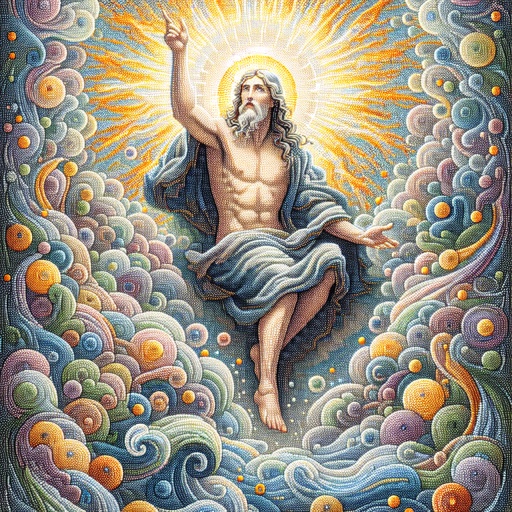
1 John 1:9 Artwork

1 John 1:9

1 John 1:9 - "If we confess our sins, he is faithful and just to forgive us our sins, and to cleanse us from all unrighteousness."

1 John 1:9 - "If we confess our sins, he is faithful and just to forgive us our sins, and to cleanse us from all unrighteousness."

"If we confess our sins, he is faithful and just to forgive us our sins, and to cleanse us from all unrighteousness." - 1 John 1:9

"If we confess our sins, he is faithful and just to forgive us our sins, and to cleanse us from all unrighteousness." - 1 John 1:9

John 10:9

John 9:1-3

John 9:1-41

John 1:9 - "That was the true Light, which lighteth every man that cometh into the world."

John 9:1 - "And as Jesus passed by, he saw a man which was blind from his birth."

1 John 2:9 - "He that saith he is in the light, and hateth his brother, is in darkness even until now."

Mark 1:9 - "And it came to pass in those days, that Jesus came from Nazareth of Galilee, and was baptized of John in Jordan."

3 John 1:9 - "I wrote unto the church: but Diotrephes, who loveth to have the preeminence among them, receiveth us not."

1 John 5:9 - "If we receive the witness of men, the witness of God is greater: for this is the witness of God which he hath testified of his Son."

2 John 1:9 - "Whosoever transgresseth, and abideth not in the doctrine of Christ, hath not God. He that abideth in the doctrine of Christ, he hath both the Father and the Son."

1 John 3:9 - "Whosoever is born of God doth not commit sin; for his seed remaineth in him: and he cannot sin, because he is born of God."

"That was the true Light, which lighteth every man that cometh into the world." - John 1:9

"That was the true Light, which lighteth every man that cometh into the world." - John 1:9

1 John 4:9 - "In this was manifested the love of God toward us, because that God sent his only begotten Son into the world, that we might live through him."

john 1:1

John 1:1

John 1:1

John 1:1

Revelation 1:9 - "I John, who also am your brother, and companion in tribulation, and in the kingdom and patience of Jesus Christ, was in the isle that is called Patmos, for the word of God, and for the testimony of Jesus Christ."

1 John 1:4 - "And these things write we unto you, that your joy may be full."

"In this was manifested the love of God toward us, because that God sent his only begotten Son into the world, that we might live through him." - 1 John 4:9

John 1:1

John 1:1
John 1:1

John 1:1