What does 1 John 1:8 mean?
"If we say that we have no sin, we deceive ourselves, and the truth is not in us." - 1 John 1:8

The Bible verse 1 John 1:8 in the King James Version (KJV) states, "If we say that we have no sin, we deceive ourselves, and the truth is not in us." This verse is brief but contains a powerful message that is relevant to the Christian faith and human nature.
The book of 1 John is an epistle written by the apostle John, one of Jesus' original disciples. It is believed to have been written in the late first century and is addressed to a community of believers. The purpose of the letter is to encourage and instruct these believers in their faith, and to warn them against false teachings and immoral behavior.
The verse 1 John 1:8 addresses the issue of sin, a central theme in Christianity. The concept of sin is foundational to Christian theology, as it represents humanity's separation from God due to disobedience and moral failure. The verse acknowledges the universal reality of sin, stating that it is deceptive to deny its presence in our lives. It emphasizes the need for self-awareness and humility, as well as the importance of acknowledging our own moral shortcomings.
The verse begins with the conditional statement, "If we say that we have no sin." This sets up a hypothetical situation in which an individual claims to be without sin. This claim is then countered with the assertion that such a statement would be self-deception. The verse challenges the idea of self-righteousness and moral perfection, asserting that it is contrary to the truth. This aligns with broader Biblical teachings that emphasize the universal nature of sin and the need for redemption through faith in Jesus Christ.
The verse also highlights the importance of genuine confession and repentance as a necessary step in the Christian life. By acknowledging our sinfulness, we open ourselves to the transformative power of God's grace and forgiveness. This confession is grounded in the truth of God's Word and is essential for maintaining a healthy relationship with God and with others.
The verse 1 John 1:8 carries a powerful message that is relevant to all people, regardless of their religious beliefs. It speaks to the universal human experience of moral failure and the temptation to deny or minimize our own wrongdoing. It challenges the tendency to judge others while ignoring our own faults, and it calls for humility and self-reflection.
In addition to its moral and theological significance, the verse also holds symbolic and allegorical meaning within the broader context of Christian theology. It serves as a reminder of the fallen nature of humanity and the need for salvation through Christ. It also emphasizes the importance of sincerity and truthfulness in our relationship with God and with others.
Overall, 1 John 1:8 is a powerful and convicting verse that emphasizes the universal reality of sin and the need for humility, self-awareness, and confession. It offers an important reminder of the human condition and the transformative power of God's grace and forgiveness. This verse continues to be a source of encouragement and challenge for believers as they seek to live a life of faith and integrity.
Have questions about 1 John 1:8?
Dive deeper into this scripture with Bible Chat — an AI-powered tool for exploring God's Word through conversation. Ask questions, get context, and grow in your understanding of the Bible.
Get Our Apps


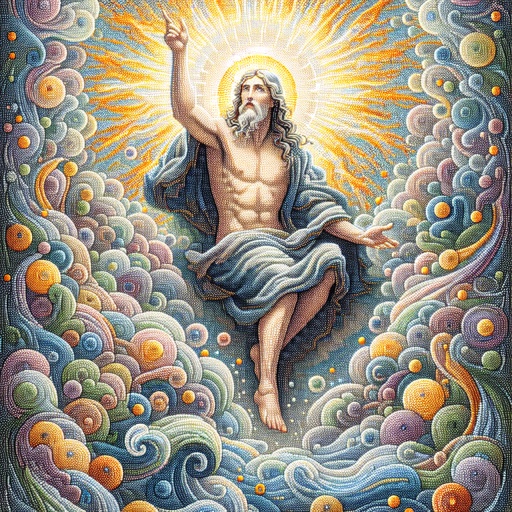
1 John 1:8 Artwork

1 John 1:8 - "If we say that we have no sin, we deceive ourselves, and the truth is not in us."

"If we say that we have no sin, we deceive ourselves, and the truth is not in us." - 1 John 1:8

John 3:3-8

John 15:1-8

John 8:1 - "Jesus went unto the mount of Olives."

John 1:8 - "He was not that Light, but was sent to bear witness of that Light."

1 John 4:8 - "He that loveth not knoweth not God; for God is love."

1 John 1:9

3 John 1:8 - "We therefore ought to receive such, that we might be fellowhelpers to the truth."

1 John 5:8 - "And there are three that bear witness in earth, the Spirit, and the water, and the blood: and these three agree in one."

"Jesus went unto the mount of Olives." - John 8:1

"He was not that Light, but was sent to bear witness of that Light." - John 1:8

2 John 1:8 - "Look to yourselves, that we lose not those things which we have wrought, but that we receive a full reward."

"He that loveth not knoweth not God; for God is love." - 1 John 4:8

1 John 3:8 - "He that committeth sin is of the devil; for the devil sinneth from the beginning. For this purpose the Son of God was manifested, that he might destroy the works of the devil."

1 John 2:8 - "Again, a new commandment I write unto you, which thing is true in him and in you: because the darkness is past, and the true light now shineth."

john 1:1

John 1:1

John 1:1

John 1:1

1 John 1:4 - "And these things write we unto you, that your joy may be full."

"We therefore ought to receive such, that we might be fellowhelpers to the truth." - 3 John 1:8

John 1:1

John 1:1
John 1:1

John 1:1

John 1:1

John 1:1

John 1:1

John 1:1