What does 1 Corinthians 9:7-14 mean?
"7 Who goeth a warfare any time at his own charges? who planteth a vineyard, and eateth not of the fruit thereof? or who feedeth a flock, and eateth not of the milk of the flock? 8 Say I these things as a man? or saith not the law the same also? 9 For it is written in the law of Moses, Thou shalt not muzzle the mouth of the ox that treadeth out the corn. Doth God take care for oxen? 10 Or saith he it altogether for our sakes? For our sakes, no doubt, this is written: that he that ploweth should plow in hope; and that he that thresheth in hope should be partaker of his hope. 11 If we have sown unto you spiritual things, is it a great thing if we shall reap your carnal things? 12 If others be partakers of this power over you, are not we rather? Nevertheless we have not used this power; but suffer all things, lest we should hinder the gospel of Christ. 13 Do ye not know that they which minister about holy things live of the things of the temple? and they which wait at the altar are partakers with the altar? 14 Even so hath the Lord ordained that they which preach the gospel should live of the gospel." - 1 Corinthians 9:7-14
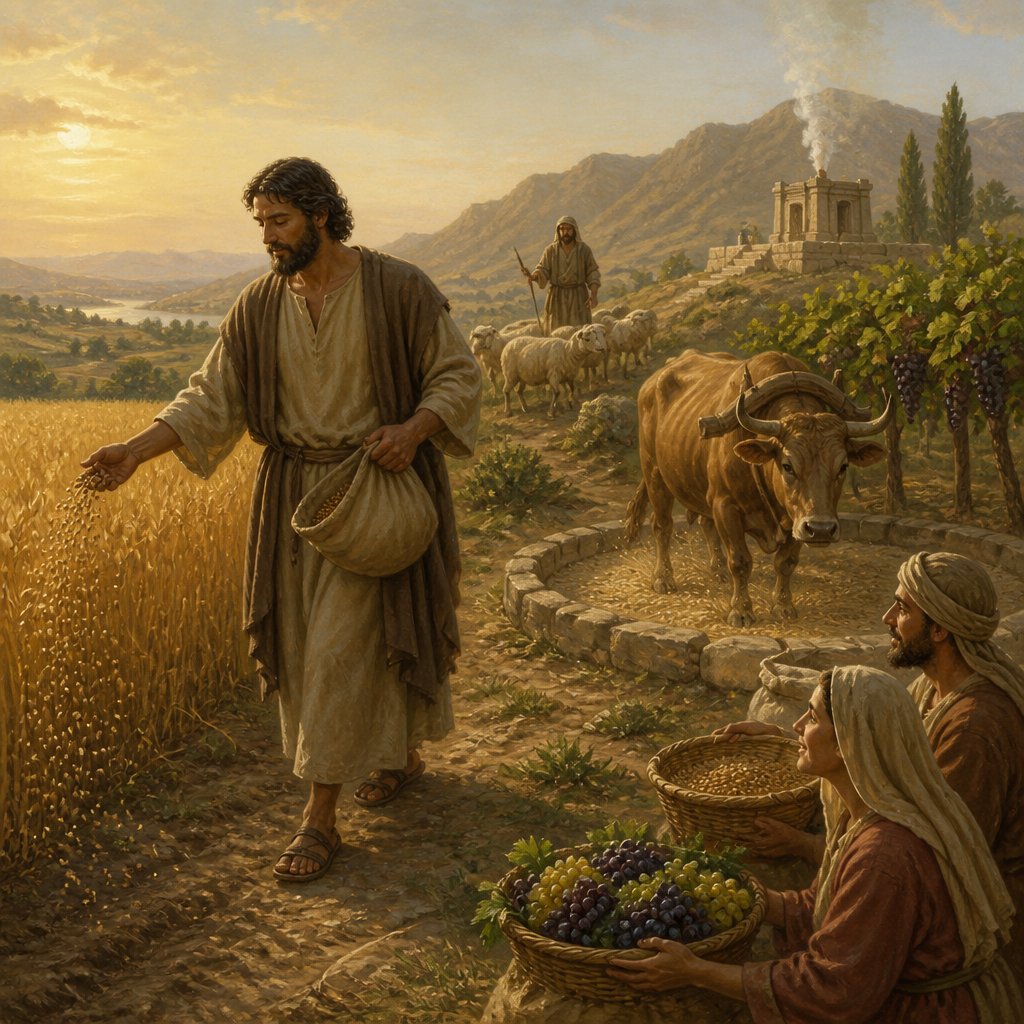
1 Corinthians 9:7-14, KJV
"Who goeth a warfare any time at his own charges? who planteth a vineyard, and eateth not of the fruit thereof? or who feedeth a flock, and eateth not of the milk of the flock? Say I these things as a man? or saith not the law the same also? For it is written in the law of Moses, Thou shalt not muzzle the mouth of the ox that treadeth out the corn. Doth God take care for oxen? Or saith he it altogether for our sakes? For our sakes, no doubt, this is written: that he that ploweth should plow in hope; and that he that thresheth in hope should be partaker of his hope. If we have sown unto you spiritual things, is it a great thing if we shall reap your carnal things? If others be partakers of this power over you, are not we rather? Nevertheless we have not used this power; but suffer all things, lest we should hinder the gospel of Christ. Do ye not know that they which minister about holy things live of the things of the temple? and they which wait at the altar are partakers with the altar? Even so hath the Lord ordained that they which preach the gospel should live of the gospel."
Context
The passage in 1 Corinthians 9:7-14 is a part of Paul's larger discussion about his apostolic rights and how he has chosen to exercise them in his ministry. Paul was addressing the church in Corinth, which was a vibrant and diverse community. Paul had preached the Gospel in Corinth and had established the church there, but his authority and teachings were being challenged by some members of the church. In this passage, Paul defends his right to be supported financially by the Corinthians as he ministers to them.
Commentary
In these verses, Paul uses several examples to argue that it is just and fair for those who work in ministry to be supported by those whom they serve. He begins by asking rhetorical questions about common practices in warfare, agriculture, and shepherding. Paul's point is that it is customary for those who work in these industries to receive compensation for their labor. He then refers to the law of Moses, specifically Deuteronomy 25:4, which states that an ox should be allowed to eat while it treads the grain. Paul argues that if God cares for such an animal, how much more does He care for those who preach the Gospel?
Paul then goes on to explain that the principle behind this law is that those who work should be able to partake in the benefits of their labor. He applies this principle to his own ministry, comparing the spiritual work of preaching the Gospel to sowing seeds and tilling the land. Just as those who labor in the fields are entitled to the fruits of their labor, so too should those who labor in the ministry be supported by those to whom they minister.
In verse 11, Paul emphasizes that if he and his fellow apostles have sown spiritual things among the Corinthians, it is reasonable for them to reap material support from the Corinthians. Paul makes it clear that although he has the right to receive such support, he has chosen not to exercise that right in order to avoid hindering the spread of the Gospel. Paul then draws further support for his argument from the Old Testament, citing the practice of the Levitical priests living off the sacrifices brought to the temple.
Finally, Paul boldly asserts that the Lord has ordained that those who preach the Gospel should live from the Gospel. This statement underscores the importance of supporting those who are called to full-time ministry. Paul's argument is not just about his own rights as an apostle, but also about the broader principle of providing for the material needs of those who dedicate their lives to spreading the Good News.
Themes
The primary theme of this passage is the support of those who work in ministry. Paul's teachings reflect the biblical principle that those who labor in the service of spreading the Gospel are entitled to receive material support from those whom they serve. This principle is rooted in the Old Testament and is affirmed by the example of the Levitical priests in the temple. The passage also addresses the selflessness and sacrifice that servants of the Gospel should exhibit in their work, as Paul chose not to exercise his rights for the sake of the Gospel.
Symbolism
The imagery used in this passage is primarily agricultural and pastoral, drawing on the parallels between physical labor and spiritual work. The act of sowing and reaping is used as an analogy for the work of preaching and receiving support. The ox treading the grain symbolizes those who work in ministry, and the principle of allowing the ox to eat while it works represents the right of those who minister to be supported by the fruits of their labor.
In conclusion, 1 Corinthians 9:7-14 addresses the important principle of supporting those who work in ministry and the sacrifices they make for the sake of the Gospel. Paul's teachings challenge believers to remember the needs of those who devote themselves to sharing the message of Christ and to provide for them as they fulfill their calling. This passage serves as a reminder of the responsibility of the church to care for those who serve in ministry and the importance of upholding the biblical principle of supporting those who preach the Gospel.
Have questions about 1 Corinthians 9:7-14?
Dive deeper into this scripture with Bible Chat — an AI-powered tool for exploring God's Word through conversation. Ask questions, get context, and grow in your understanding of the Bible.
Get Our Apps


1 Corinthians 9:7-14 Artwork

1 Corinthians 9:7-14 - "Who serves as a soldier at his own expense? Who plants a vineyard and does not eat its grapes? Who tends a flock and does not drink the milk? Do I say this merely on human authority? Doesn’t the Law say the same thing? For it is written in the Law of Moses: “Do not muzzle an ox while it is treading out the grain.” Is it about oxen that God is concerned? Surely he says this for us, doesn’t he? Yes, this was written for us, because whoever plows and threshes should be able to do so in the hope of sharing in the harvest. If we have sown spiritual seed among you, is it too much if we reap a material harvest from you? If others have this right of support from you, shouldn’t we have it all the more? But we did not use this right. On the contrary, we put up with anything rather than hinder the gospel of Christ. Don’t you know that those who serve in the temple get their food from the temple, and that those who serve at the altar share in what is offered on the altar? In the same way, the Lord has commanded that those who preach the gospel should receive their living from the gospel."
"Who serves as a soldier at his own expense? Who plants a vineyard and does not eat its grapes? Who tends a flock and does not drink the milk? Do I say this merely on human authority? Doesn’t the Law say the same thing? For it is written in the Law of Moses: “Do not muzzle an ox while it is treading out the grain.” Is it about oxen that God is concerned? Surely he says this for us, doesn’t he? Yes, this was written for us, because whoever plows and threshes should be able to do so in the hope of sharing in the harvest. If we have sown spiritual seed among you, is it too much if we reap a material harvest from you? If others have this right of support from you, shouldn’t we have it all the more? But we did not use this right. On the contrary, we put up with anything rather than hinder the gospel of Christ. Don’t you know that those who serve in the temple get their food from the temple, and that those who serve at the altar share in what is offered on the altar? In the same way, the Lord has commanded that those who preach the gospel should receive their living from the gospel." - 1 Corinthians 9:7-14
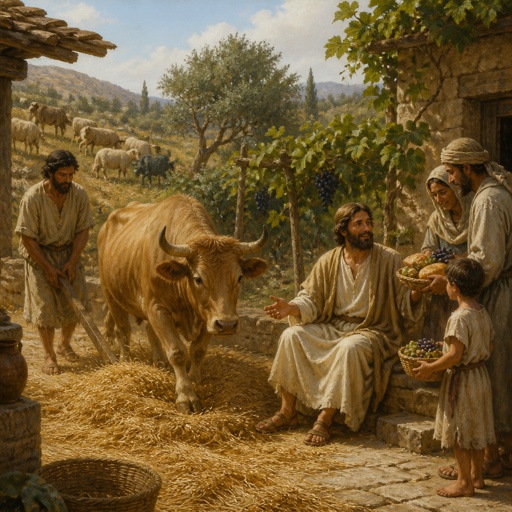
"Who serves as a soldier at his own expense? Who plants a vineyard and does not eat its grapes? Who tends a flock and does not drink the milk? Do I say this merely on human authority? Doesn’t the Law say the same thing? For it is written in the Law of Moses: “Do not muzzle an ox while it is treading out the grain.” Is it about oxen that God is concerned? Surely he says this for us, doesn’t he? Yes, this was written for us, because whoever plows and threshes should be able to do so in the hope of sharing in the harvest. If we have sown spiritual seed among you, is it too much if we reap a material harvest from you? If others have this right of support from you, shouldn’t we have it all the more? But we did not use this right. On the contrary, we put up with anything rather than hinder the gospel of Christ. Don’t you know that those who serve in the temple get their food from the temple, and that those who serve at the altar share in what is offered on the altar? In the same way, the Lord has commanded that those who preach the gospel should receive their living from the gospel." - 1 Corinthians 9:7-14

1 Corinthians 9:14 - "Even so hath the Lord ordained that they which preach the gospel should live of the gospel."

1 Corinthians 7:9 - "But if they cannot contain, let them marry: for it is better to marry than to burn."

1 Corinthians 9:7 - "Who goeth a warfare any time at his own charges? who planteth a vineyard, and eateth not of the fruit thereof? or who feedeth a flock, and eateth not of the milk of the flock?"

1 Corinthians 7:14 - "For the unbelieving husband is sanctified by the wife, and the unbelieving wife is sanctified by the husband: else were your children unclean; but now are they holy."

Corinthians 9:6-7

1 Corinthians 14:9 - "So likewise ye, except ye utter by the tongue words easy to be understood, how shall it be known what is spoken? for ye shall speak into the air."

1 Corinthians 14:7 - "And even things without life giving sound, whether pipe or harp, except they give a distinction in the sounds, how shall it be known what is piped or harped?"

1 Corinthians 14:1

1 corinthians 14:1

1 Corinthians 14:36

1 Corinthians 9:25-27

1 Corinthians 9:25-27

1 Corinthians 14:36

1 Corinthians 14:37

"But if they cannot contain, let them marry: for it is better to marry than to burn." - 1 Corinthians 7:9

1 Corinthians 9:25-27

1 Corinthians 9:25-27

2 Corinthians 9:14 - "And by their prayer for you, which long after you for the exceeding grace of God in you."

1 Corinthians 14:39-40

1 Corinthians 14:26-33

1 Corinthians 14:36-40

1 Corinthians 14:36-37
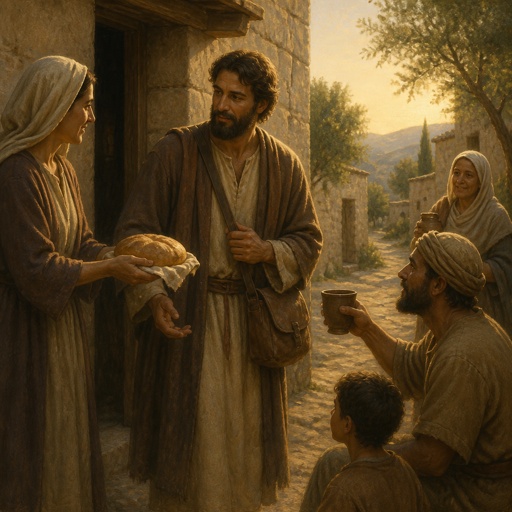
"Even so hath the Lord ordained that they which preach the gospel should live of the gospel." - 1 Corinthians 9:14

Corinthians 9:6-7 for Christmas card with little kids.

2 Corinthians 9:7 - "Every man according as he purposeth in his heart, so let him give; not grudgingly, or of necessity: for God loveth a cheerful giver."

1 Corinthians 14:14 - "For if I pray in an unknown tongue, my spirit prayeth, but my understanding is unfruitful."

1 Corinthians 12:14 - "For the body is not one member, but many."