What does 1 Corinthians 7:4 mean?
"The wife hath not power of her own body, but the husband: and likewise also the husband hath not power of his own body, but the wife." - 1 Corinthians 7:4
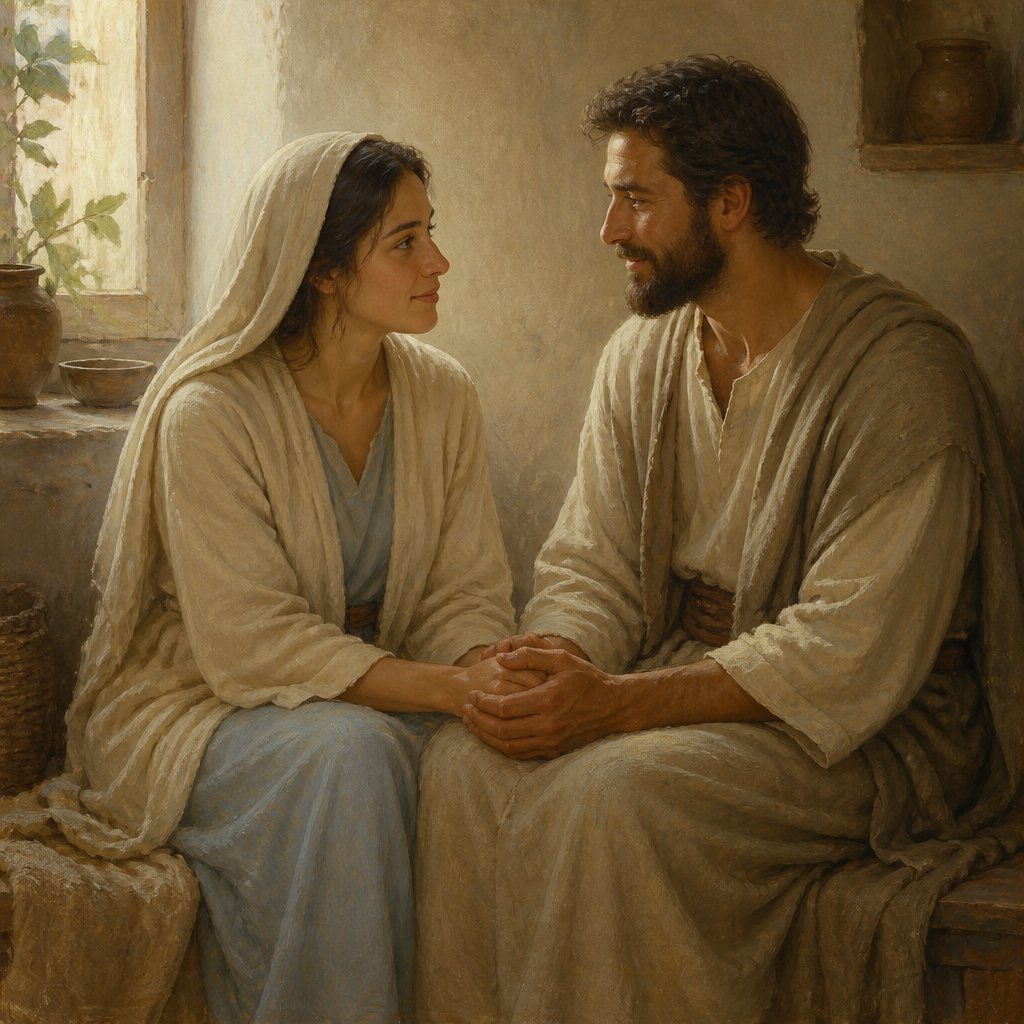
1 Corinthians 7:4 (KJV) – “The wife hath not power of her own body, but the husband: and likewise also the husband hath not power of his own body, but the wife.”
This verse from the first epistle to the Corinthians addresses the concept of mutual submission and mutual responsibility within the context of marriage. It presents a unique perspective that challenges the prevailing cultural norms of the time, in which women were often considered the property of their husbands and had little to no say in matters related to their own bodies or personal autonomy.
The verse begins by stating that “The wife hath not power of her own body, but the husband.” This could be misinterpreted as a statement of dominance, but when viewed in the broader context of the biblical teaching on marriage, it becomes clear that the intention is not to enforce a hierarchical power structure, but rather to emphasize the interdependence and mutual responsibility of the husband and wife within the marital relationship.
The verse goes on to assert that “likewise also the husband hath not power of his own body, but the wife.” This parallel statement serves to underscore the mutual nature of the relationship, emphasizing that both spouses have a shared responsibility to honor and care for each other’s physical and emotional needs. This reflects the biblical principle of mutual submission, as articulated in Ephesians 5:21, which instructs believers to “submit to one another out of reverence for Christ.”
In the broader context of the Corinthian church, this teaching would have been particularly radical, as the city of Corinth was known for its widespread immorality and disregard for traditional moral values. The Christian community in Corinth was thus challenged to live out their faith in a way that was countercultural, and this verse serves as a reminder of the radical transformation that the gospel brings to all aspects of life, including marriage and family relationships.
The verse also speaks to the issue of sexual intimacy within marriage. By affirming that neither spouse has exclusive authority over their own body, it emphasizes the importance of mutual consent and respect within the context of physical intimacy. This stands in contrast to the prevailing cultural norms of the time, in which women in particular may have been treated as mere objects for the satisfaction of their husbands, with little regard for their own desires or boundaries.
The broader thematic implications of this verse are consistent with the broader biblical teachings on marriage, which emphasize the sanctity and mutual responsibility of the marital relationship. This is reflected in passages such as Ephesians 5:25, in which husbands are instructed to love their wives as Christ loved the church, and in Proverbs 18:22, which declares that “He who finds a wife finds a good thing and obtains favor from the Lord.”
From a symbolic perspective, this verse serves as a reminder of the selfless love and sacrificial commitment that should characterize the marital relationship. It subverts the prevailing cultural norms of dominance and control, and instead promotes a vision of marriage in which both spouses are called to honor and care for each other with mutual respect and humility. This reflects the larger biblical narrative of selfless love and service, which is ultimately embodied in the person of Jesus Christ, who laid down his life for the sake of his bride, the church.
In conclusion, 1 Corinthians 7:4 offers a powerful and countercultural vision of marriage, emphasizing the principles of mutual submission, mutual responsibility, and mutual respect within the marital relationship. It challenges prevailing cultural norms and affirms the sanctity and mutual interdependence of the marital bond. This verse serves as a reminder of the transformative power of the gospel in all areas of life, including the most intimate and personal aspects of human relationships.
Have questions about 1 Corinthians 7:4?
Dive deeper into this scripture with Bible Chat — an AI-powered tool for exploring God's Word through conversation. Ask questions, get context, and grow in your understanding of the Bible.
Get Our Apps


1 Corinthians 7:4 Artwork

1 Corinthians 7:4 - "The wife hath not power of her own body, but the husband: and likewise also the husband hath not power of his own body, but the wife."
"The wife hath not power of her own body, but the husband: and likewise also the husband hath not power of his own body, but the wife." - 1 Corinthians 7:4

1 Corinthians 13:4-7

1 Corinthians 13:4-7

1 Corinthians 13:4-7

1 Corinthians 13:4-7

Corinthians 13:4-7

1 Corinthians 13:4-7 - "4 Love is patient, love is kind. It does not envy, it does not boast, it is not proud. 5 It does not dishonor others, it is not self-seeking, it is not easily angered, it keeps no record of wrongs. 6 Love does not delight in evil but rejoices with the truth. 7 It always protects, always trusts, always hopes, always perseveres."

1 Corinthians 4:20

1 Corinthians 4:20

"4 Love is patient, love is kind. It does not envy, it does not boast, it is not proud. 5 It does not dishonor others, it is not self-seeking, it is not easily angered, it keeps no record of wrongs. 6 Love does not delight in evil but rejoices with the truth. 7 It always protects, always trusts, always hopes, always perseveres." - 1 Corinthians 13:4-7

1 Corinthians 4:20

1 Corinthians 4:20

1 Corinthians 13:4-6

1 Corinthians 13:4-6

1 Corinthians 13:4-6

1 Corinthians 13:4-6

1 Corinthians 13:4-6

1 Corinthians 13:4-6

1 Corinthians 13:4-6

1 Corinthians 13:4-6

1 Corinthians 4:7 - "For who maketh thee to differ from another? and what hast thou that thou didst not receive? now if thou didst receive it, why dost thou glory, as if thou hadst not received it?"

2 Corinthians 4:7 - "But we have this treasure in earthen vessels, that the excellency of the power may be of God, and not of us."

1 Corinthians 4:1-2

1 Corinthians 7:6 - "But I speak this by permission, and not of commandment."

1 Corinthians 4:20 - "For the kingdom of God is not in word, but in power."

1 Corinthians 15:7 - "After that, he was seen of James; then of all the apostles."

1 Corinthians 7:23 - "Ye are bought with a price; be not ye the servants of men."

1 Corinthians 9:4 - "Have we not power to eat and to drink?"

2 Corinthians 7:4 - "Great is my boldness of speech toward you, great is my glorying of you: I am filled with comfort, I am exceeding joyful in all our tribulation."