What does 1 Corinthians 3:7 mean?
"So then neither is he that planteth any thing, neither he that watereth; but God that giveth the increase." - 1 Corinthians 3:7
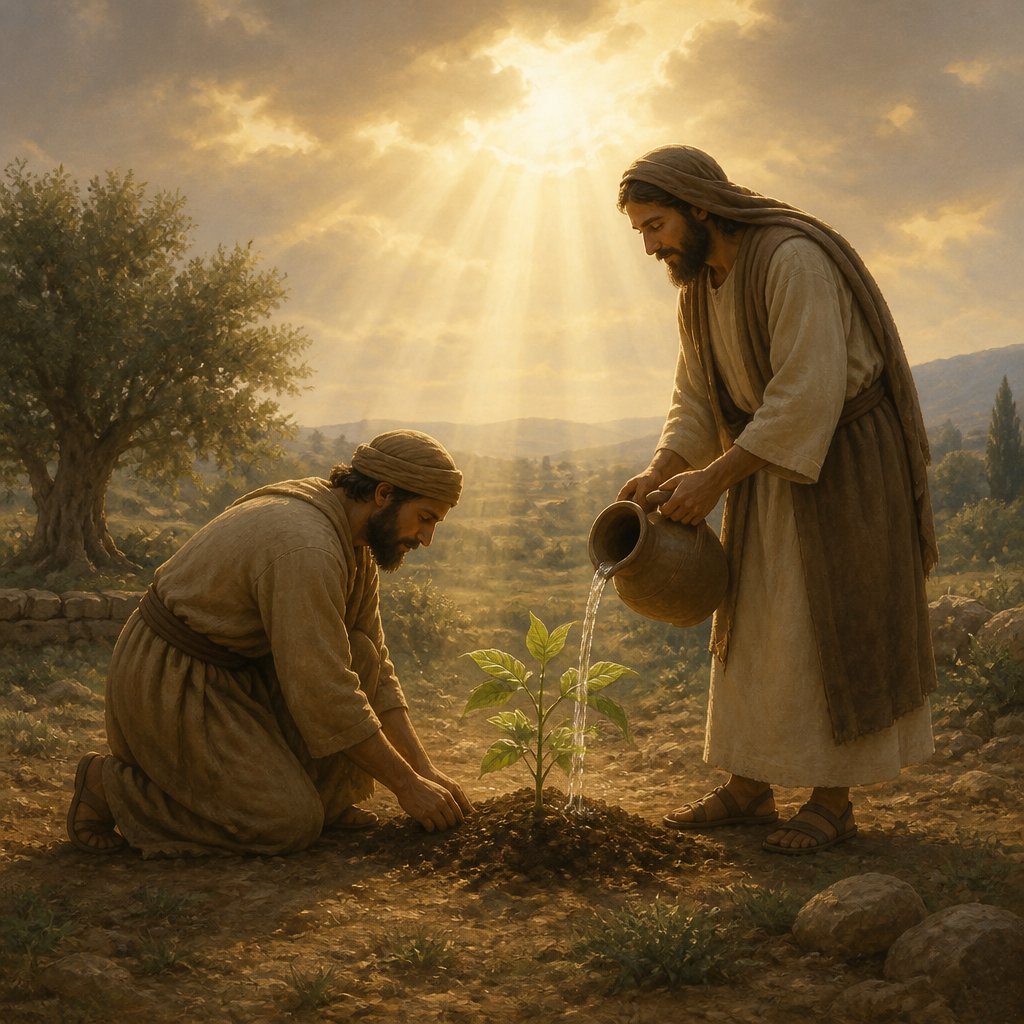
The verse 1 Corinthians 3:7 in the King James Version of the Bible reads: "So then neither is he that planteth any thing, neither he that watereth; but God that giveth the increase."
This verse is part of a larger passage in the book of 1 Corinthians in which the apostle Paul is addressing the issue of divisions within the church in Corinth. In this specific verse, Paul is talking about the work of planting and watering crops as a metaphor for the work of spreading and nurturing the Gospel.
The verse highlights the idea that the success of the spread of the Gospel does not depend on the efforts of those who preach it, but rather on God Himself. Paul is reminding the Corinthians that the success of their ministry and the growth of the church does not come from their own abilities or strategies, but from the power and work of God.
One of the key themes in this verse is the sovereignty and power of God. It emphasizes that all growth and increase in the Christian faith comes from God alone. This is an important reminder for believers to stay humble and recognize that it is not by their own strength or skill that they are able to spread the message of the Gospel, but by the grace and power of God.
Another theme present in this verse is the idea of cooperation and unity within the body of Christ. Paul uses the imagery of planting and watering to illustrate the collaborative effort of different individuals in the church. The one who plants and the one who waters are working together towards the same goal, and their individual efforts are ultimately directed towards the work of God. This serves as a reminder for believers to work together in harmony, recognizing that each person has a role to play in the advancement of the Gospel.
The verse also carries a message of encouragement and reassurance for those involved in ministry. It relieves the pressure of feeling solely responsible for the success of their work, reminding them that the ultimate results are in God's hands. This can provide comfort and confidence for those who may feel overwhelmed by the task of sharing the Gospel.
Symbolically, the act of planting and watering can be seen as a representation of the different stages of evangelism and discipleship. Planting can be seen as the initial sharing of the Gospel, while watering represents the ongoing nurturing and growth of those who have received the message. This imagery serves as a visual representation of the collaborative effort required for the ministry to thrive.
In the broader context of the book of 1 Corinthians, this verse is addressing the issue of division and competition within the church. Paul is reminding the Corinthians that their focus should be on the work of God and the unity of the body, rather than on personal pride and rivalry. This message is relevant for Christians today, serving as a reminder to prioritize the work of God over personal agendas and to work together in harmony for the advancement of the Gospel.
In conclusion, 1 Corinthians 3:7 emphasizes the sovereignty and power of God in the growth of the church. It encourages believers to work together in unity and cooperation, recognizing that their individual efforts are ultimately directed towards the work of God. This verse serves as a reminder for Christians to stay humble, to rely on God's strength, and to prioritize the advancement of the Gospel over personal ambitions.
Have questions about 1 Corinthians 3:7?
Dive deeper into this scripture with Bible Chat — an AI-powered tool for exploring God's Word through conversation. Ask questions, get context, and grow in your understanding of the Bible.
Get Our Apps


1 Corinthians 3:7 Artwork

1 Corinthians 3:7 - "So then neither is he that planteth any thing, neither he that watereth; but God that giveth the increase."

1 Corinthians 3:7 So then neither he who plants is anything, nor he who waters, but God who gives the increase.

1 Corinthians 3:7 So then neither he who plants is anything, nor he who waters, but God who gives the increase.
"So then neither is he that planteth any thing, neither he that watereth; but God that giveth the increase." - 1 Corinthians 3:7

1 Corinthians 7:3 - "Let the husband render unto the wife due benevolence: and likewise also the wife unto the husband."

1 Corinthians 3:16

1 Corinthians 3:16

1 corinthians 3:16-17

1 Corinthians 3:6-7 - "I have planted, Apollos watered; but God gave the increase. So then neither is he that planteth anything, neither he that watereth; but God that giveth the increase."

1 Corinthians 3:16

1 corinthians 3:16-17

1 corinthians 3:16-17

1 Corinthians 7:6 - "But I speak this by permission, and not of commandment."

1 Corinthians 13:4-7

1 Corinthians 13:4-7

1 Corinthians 13:4-7

1 Corinthians 13:4-7

"Let the husband render unto the wife due benevolence: and likewise also the wife unto the husband." - 1 Corinthians 7:3

1 Corinthians 3:23 - "And ye are Christ's; and Christ is God's."

1 Corinthians 15:7 - "After that, he was seen of James; then of all the apostles."

1 Corinthians 7:23 - "Ye are bought with a price; be not ye the servants of men."

1 Corinthians 12:3-13

2 Corinthians 1:3-4

1 Corinthians 7:19 - "Circumcision is nothing, and uncircumcision is nothing, but the keeping of the commandments of God."

1 Corinthians 7:31 - "And they that use this world, as not abusing it: for the fashion of this world passeth away."

1 Corinthians 10:3 - "And did all eat the same spiritual meat;"

1 Corinthians 3:20 - "And again, The Lord knoweth the thoughts of the wise, that they are vain."

2 Corinthians 7:3 - "I speak not this to condemn you: for I have said before, that ye are in our hearts to die and live with you."

1 Corinthians 1:7 - "So that ye come behind in no gift; waiting for the coming of our Lord Jesus Christ:"

1 Corinthians 12:7 - "But the manifestation of the Spirit is given to every man to profit withal."