What does 1 Chronicles 9:6 mean?
"And of the sons of Zerah; Jeuel, and their brethren, six hundred and ninety." - 1 Chronicles 9:6
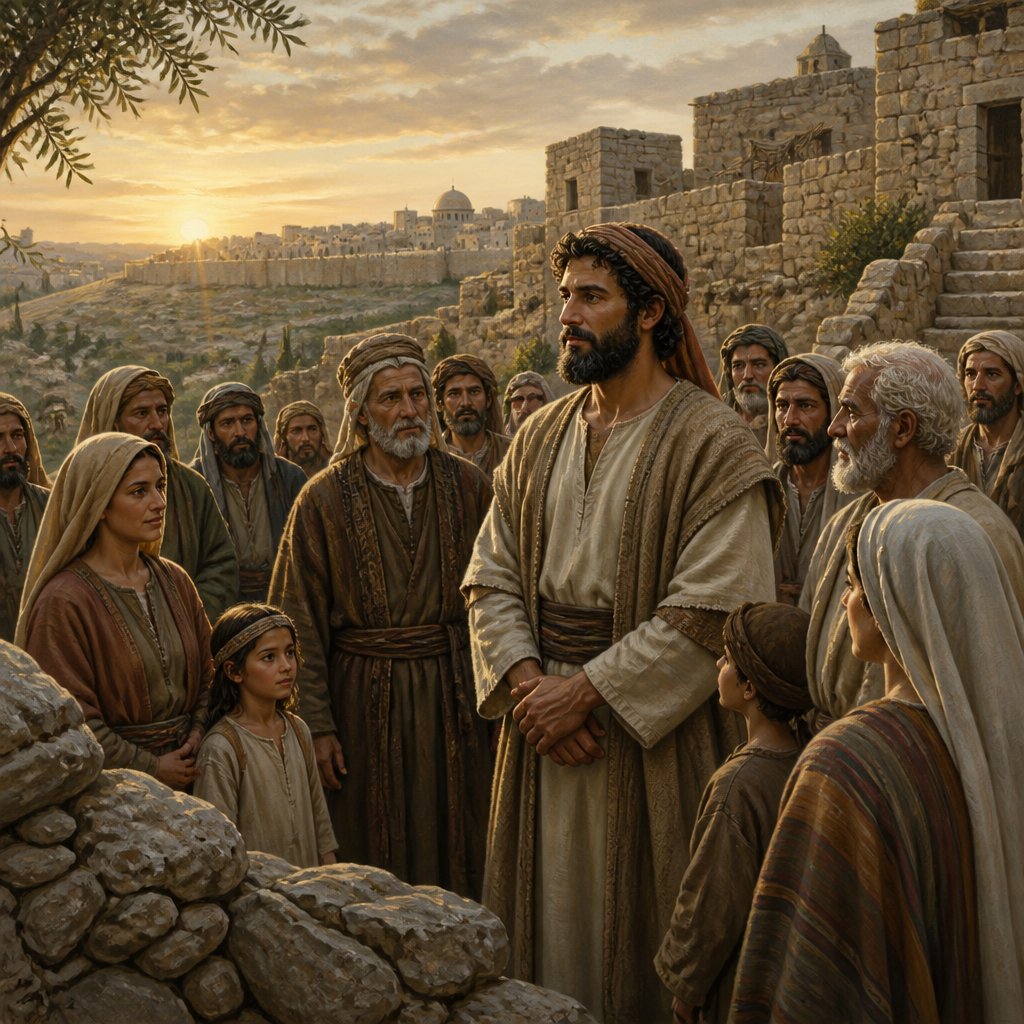
Sure! Here is a detailed and in-depth meaning and commentary on 1 Chronicles 9:6 (KJV):
"3739 All the inhabitants of Jerusalem, with the priests and the Levites, and all the Nethinims, and the children of Solomon's servants, were three hundred ninety and two."
1 Chronicles 9:6 provides a brief glimpse into the population of Jerusalem at the time. In this verse, it mentions three groups of people: the inhabitants of Jerusalem, the priests and the Levites, and the Nethinims. It also references the children of Solomon's servants. This verse is part of a larger section of genealogies and lists in the book of 1 Chronicles, which serves to establish the history and heritage of the people of Israel.
Firstly, let's delve into the meaning and significance of the inhabitants of Jerusalem. Jerusalem was the capital city of the kingdom of Judah and held immense religious and political importance for the Israelites. The fact that the verse mentions the inhabitants of Jerusalem highlights the significance of the city as the center of Jewish life and worship. It is likely that the population of Jerusalem at the time was diverse and included people from various tribes and backgrounds.
The next group mentioned in the verse is the priests and the Levites. The priests were responsible for conducting religious ceremonies and offering sacrifices in the temple, while the Levites assisted the priests and were given other religious duties. Their role was crucial in maintaining the religious practices and traditions of the Israelites. The inclusion of the priests and Levites in this verse reflects the importance of religious life within the community and emphasizes the centrality of the temple in Jerusalem.
The verse also references the Nethinims, who were a group of servants or temple workers. They were dedicated to serving in the temple and performing tasks necessary for the maintenance and functioning of the sacred space. The Nethinims were not of Israelite descent, and their service was often hereditary. Their inclusion in this verse highlights the diversity of roles within the religious community and the varied backgrounds of those involved in the worship and upkeep of the temple.
Lastly, the verse mentions the children of Solomon's servants, which could refer to a specific group of individuals who were descendants of servants appointed by King Solomon. This reference serves as a reminder of the historical legacy of the Israelites and the enduring impact of their ancestors' actions and roles in the kingdom.
In a broader context, the verse 1 Chronicles 9:6 not only provides a snapshot of the population of Jerusalem but also serves to emphasize the interconnectedness of the different groups within the community. It illustrates the diverse roles and responsibilities of the people, from the priests and Levites to the Nethinims and the descendants of Solomon's servants. It highlights the collective effort and collaboration required to maintain the religious and societal structure of Jerusalem.
Symbolically, this verse represents the unity and cohesion within the community of Jerusalem. Despite their diverse backgrounds and roles, the inhabitants of Jerusalem, along with the priests, Levites, Nethinims, and descendants of Solomon's servants, were all part of a larger interconnected network that contributed to the functioning and vibrancy of the city. This verse underscores the idea of communal responsibility and the shared commitment to upholding the religious and cultural heritage of the Israelites.
In conclusion, 1 Chronicles 9:6 offers a window into the population and dynamics of Jerusalem, shedding light on the different groups that comprised the community. It underscores the significance of the city as a religious and political center, as well as the diverse roles and responsibilities of its inhabitants. Symbolically, the verse reflects the unity and interconnectedness within the community, emphasizing the collective effort required to maintain the religious and societal structure of Jerusalem.
Have questions about 1 Chronicles 9:6?
Dive deeper into this scripture with Bible Chat — an AI-powered tool for exploring God's Word through conversation. Ask questions, get context, and grow in your understanding of the Bible.
Get Our Apps


1 Chronicles 9:6 Artwork

1 Chronicles 9:6 - "And of the sons of Zerah; Jeuel, and their brethren, six hundred and ninety."
"And of the sons of Zerah; Jeuel, and their brethren, six hundred and ninety." - 1 Chronicles 9:6

1 Chronicles 6:9 - "And Ahimaaz begat Azariah, and Azariah begat Johanan,"
"And Ahimaaz begat Azariah, and Azariah begat Johanan," - 1 Chronicles 6:9

1 Chronicles 6:6 - "And Uzzi begat Zerahiah, and Zerahiah begat Meraioth,"

1 Chronicles 1:6 - "And the sons of Gomer; Ashchenaz, and Riphath, and Togarmah."

1 Chronicles 6:1 - "The sons of Levi; Gershon, Kohath, and Merari."

1 Chronicles 14:6 - "And Nogah, and Nepheg, and Japhia,"

1 Chronicles 9:37 - "And Gedor, and Ahio, and Zechariah, and Mikloth."

1 Chronicles 9:10 - "¶ And of the priests; Jedaiah, and Jehoiarib, and Jachin,"

1 Chronicles 24:9 - "The fifth to Malchijah, the sixth to Mijamin,"

1 Chronicles 9:5 - "And of the Shilonites; Asaiah the firstborn, and his sons."

1 Chronicles 3:6 - "Ibhar also, and Elishama, and Eliphelet,"

1 Chronicles 6:25 - "And the sons of Elkanah; Amasai, and Ahimoth."

1 Chronicles 6:16 - "¶ The sons of Levi; Gershom, Kohath, and Merari."

1 Chronicles 6:17 - "And these be the names of the sons of Gershom; Libni, and Shimei."

1 Chronicles 9:30 - "And some of the sons of the priests made the ointment of the spices."

1 Chronicles 12:9 - "Ezer the first, Obadiah the second, Eliab the third,"

1 Chronicles 6:28 - "And the sons of Samuel; the firstborn Vashni, and Abiah."

1 Chronicles 14:9 - "And the Philistines came and spread themselves in the valley of Rephaim."

1 Chronicles 1:9 - "And the sons of Cush; Seba, and Havilah, and Sabta, and Raamah, and Sabtecha. And the sons of Raamah; Sheba, and Dedan."

2 Chronicles 9:6 - "Howbeit I believed not their words, until I came, and mine eyes had seen it: and, behold, the one half of the greatness of thy wisdom was not told me: for thou exceedest the fame that I heard."

1 Chronicles 6:14 - "And Azariah begat Seraiah, and Seraiah begat Jehozadak,"

1 Chronicles 6:58 - "And Hilen with her suburbs, Debir with her suburbs,"

1 Chronicles 6:12 - "And Ahitub begat Zadok, and Zadok begat Shallum,"

1 Chronicles 7:6 - "¶ The sons of Benjamin; Bela, and Becher, and Jediael, three."

1 Chronicles 6:53 - "Zadok his son, Ahimaaz his son."

1 Chronicles 6:11 - "And Azariah begat Amariah, and Amariah begat Ahitub,"

1 Chronicles 6:5 - "And Abishua begat Bukki, and Bukki begat Uzzi,"

1 Chronicles 6:45 - "The son of Hashabiah, the son of Amaziah, the son of Hilkiah,"