What does 1 Chronicles 9:39 mean?
"And Ner begat Kish; and Kish begat Saul; and Saul begat Jonathan, and Malchi-shua, and Abinadab, and Esh-baal." - 1 Chronicles 9:39
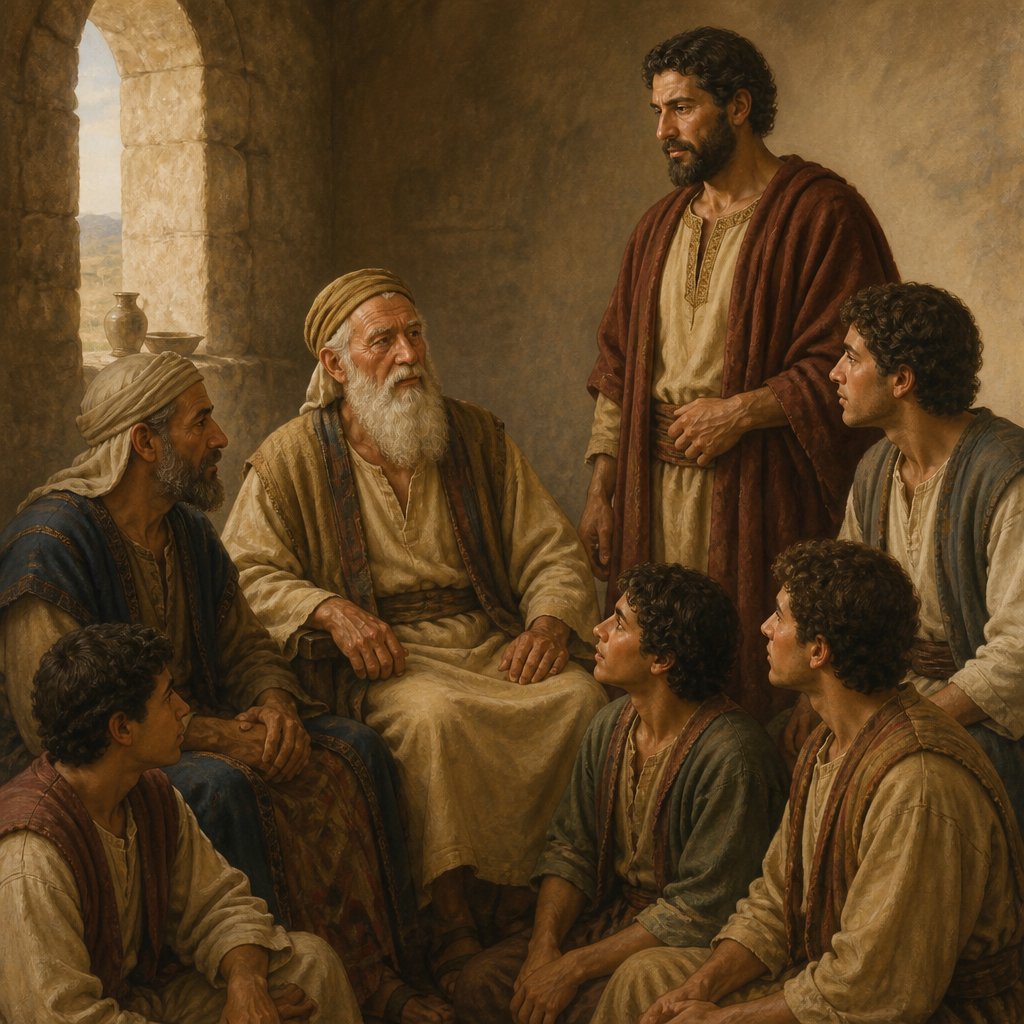
1 Chronicles 9:39 (KJV) states, "And Ner begat Kish; and Kish begat Saul; and Saul begat Jonathan, and Malchishua, and Abinadab, and Eshbaal."
In order to fully understand the meaning and significance of this verse, it is important to examine the context in which it is situated. The book of 1 Chronicles is a historical account of the genealogies of the Israelites, tracing their lineage from Adam to the time of the Babylonian exile. This particular verse falls within a section that records the genealogy of the tribe of Benjamin.
The name "Ner" is the first individual mentioned in this verse. He is the father of Kish, who in turn is the father of Saul. Saul, of course, is the first king of Israel and the ancestor of Jonathan, Malchishua, Abinadab, and Eshbaal.
One of the key themes that can be drawn from this verse is the importance of lineage and ancestry within the biblical narrative. Throughout the Old Testament, there is a strong emphasis on the idea of lineage and the passing down of blessings and responsibilities from one generation to the next. This is particularly evident in the case of Saul, who was anointed as king by the prophet Samuel based on his lineage and ancestry.
The mention of Saul's descendants also serves as a reminder of the complexities and challenges of familial relationships. Saul and Jonathan, in particular, have a well-documented and complex relationship that is marked by both loyalty and tragedy. Saul's reign as king eventually ends in his death on the battlefield, and Jonathan also meets a tragic end. The inclusion of these names in the genealogy serves as a reminder of the joys and sorrows that come with family ties.
Furthermore, the mention of Eshbaal in this verse is notable. In some translations of the Bible, Eshbaal is referred to as Ishbosheth. This is because the name "Baal" was often associated with pagan worship and was considered offensive to the Israelites. Therefore, his name was changed to Ishbosheth, which means "man of shame" in Hebrew. The inclusion of this name in the genealogy is a subtle yet powerful reminder of the ways in which individuals and families can be affected by the cultural and religious beliefs of their time.
Symbolically, the mention of Saul and his descendants also serves as a foreshadowing of the coming of the ultimate king in the line of David. The story of Saul and his descendants is ultimately overshadowed by the rise of David, who is chosen by God to be the king of Israel. This transition of leadership represents the unfolding of God's plan for the nation of Israel and the establishment of the line of David, which ultimately leads to the birth of Jesus Christ, the promised Savior.
In conclusion, 1 Chronicles 9:39 (KJV) is a verse that may seem like a simple listing of names in a genealogy, but upon closer examination, it reveals deep insights into the themes of lineage, family dynamics, and the unfolding of God's plan for his people. It serves as a reminder of the importance of understanding and appreciating our own ancestral roots, as well as the larger narrative of God's redemptive work throughout history.
Have questions about 1 Chronicles 9:39?
Dive deeper into this scripture with Bible Chat — an AI-powered tool for exploring God's Word through conversation. Ask questions, get context, and grow in your understanding of the Bible.
Get Our Apps


1 Chronicles 9:39 Artwork

1 Chronicles 9:39 - "And Ner begat Kish; and Kish begat Saul; and Saul begat Jonathan, and Malchi-shua, and Abinadab, and Esh-baal."
"And Ner begat Kish; and Kish begat Saul; and Saul begat Jonathan, and Malchi-shua, and Abinadab, and Esh-baal." - 1 Chronicles 9:39

1 Chronicles 1:39 - "And the sons of Lotan; Hori, and Homam: and Timna was Lotan's sister."

1 Chronicles 7:39 - "And the sons of Ulla; Arah, and Haniel, and Rezia."

1 Chronicles 2:39 - "And Azariah begat Helez, and Helez begat Eleasah,"

1 Chronicles 11:39 - "Zelek the Ammonite, Naharai the Berothite, the armourbearer of Joab the son of Zeruiah,"

1 Chronicles 12:39 - "And there they were with David three days, eating and drinking: for their brethren had prepared for them."

1 Chronicles 16:39 - "And Zadok the priest, and his brethren the priests, before the tabernacle of the LORD in the high place that was at Gibeon,"

1 Chronicles 4:39 - "¶ And they went to the entrance of Gedor, even unto the east side of the valley, to seek pasture for their flocks."

1 Chronicles 8:39 - "And the sons of Eshek his brother were, Ulam his firstborn, Jehush the second, and Eliphelet the third."

"And the sons of Ulla; Arah, and Haniel, and Rezia." - 1 Chronicles 7:39

"And the sons of Lotan; Hori, and Homam: and Timna was Lotan's sister." - 1 Chronicles 1:39

1 Chronicles 6:39 - "And his brother Asaph, who stood on his right hand, even Asaph the son of Berachiah, the son of Shimea,"

"And Azariah begat Helez, and Helez begat Eleasah," - 1 Chronicles 2:39

"Zelek the Ammonite, Naharai the Berothite, the armourbearer of Joab the son of Zeruiah," - 1 Chronicles 11:39

1 Kings 22:39 - "Now the rest of the acts of Ahab, and all that he did, and the ivory house which he made, and all the cities that he built, are they not written in the book of the chronicles of the kings of Israel?"

1 Chronicles 9:37 - "And Gedor, and Ahio, and Zechariah, and Mikloth."

1 Chronicles 9:10 - "¶ And of the priests; Jedaiah, and Jehoiarib, and Jachin,"

1 Chronicles 24:9 - "The fifth to Malchijah, the sixth to Mijamin,"

1 Chronicles 9:5 - "And of the Shilonites; Asaiah the firstborn, and his sons."

1 Chronicles 6:9 - "And Ahimaaz begat Azariah, and Azariah begat Johanan,"

1 Chronicles 9:30 - "And some of the sons of the priests made the ointment of the spices."

1 Chronicles 12:9 - "Ezer the first, Obadiah the second, Eliab the third,"
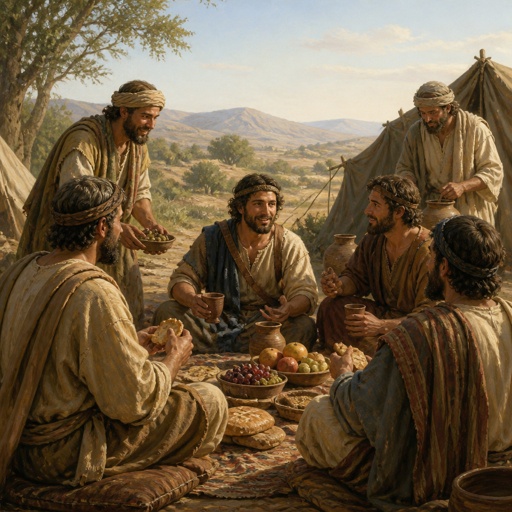
"And there they were with David three days, eating and drinking: for their brethren had prepared for them." - 1 Chronicles 12:39

1 Chronicles 14:9 - "And the Philistines came and spread themselves in the valley of Rephaim."

1 Chronicles 1:9 - "And the sons of Cush; Seba, and Havilah, and Sabta, and Raamah, and Sabtecha. And the sons of Raamah; Sheba, and Dedan."

1 Chronicles 26:9 - "And Meshelemiah had sons and brethren, strong men, eighteen."

1 Chronicles 21:9 - "¶ And the LORD spake unto Gad, David's seer, saying,"

1 Chronicles 9:41 - "And the sons of Micah were, Pithon, and Melech, and Tahrea, and Ahaz."

1 Chronicles 9:9 - "And their brethren, according to their generations, nine hundred and fifty and six. All these men were chief of the fathers in the house of their fathers."