What does 1 Chronicles 5:9 mean?
"And eastward he inhabited unto the entering in of the wilderness from the river Euphrates: because their cattle were multiplied in the land of Gilead." - 1 Chronicles 5:9
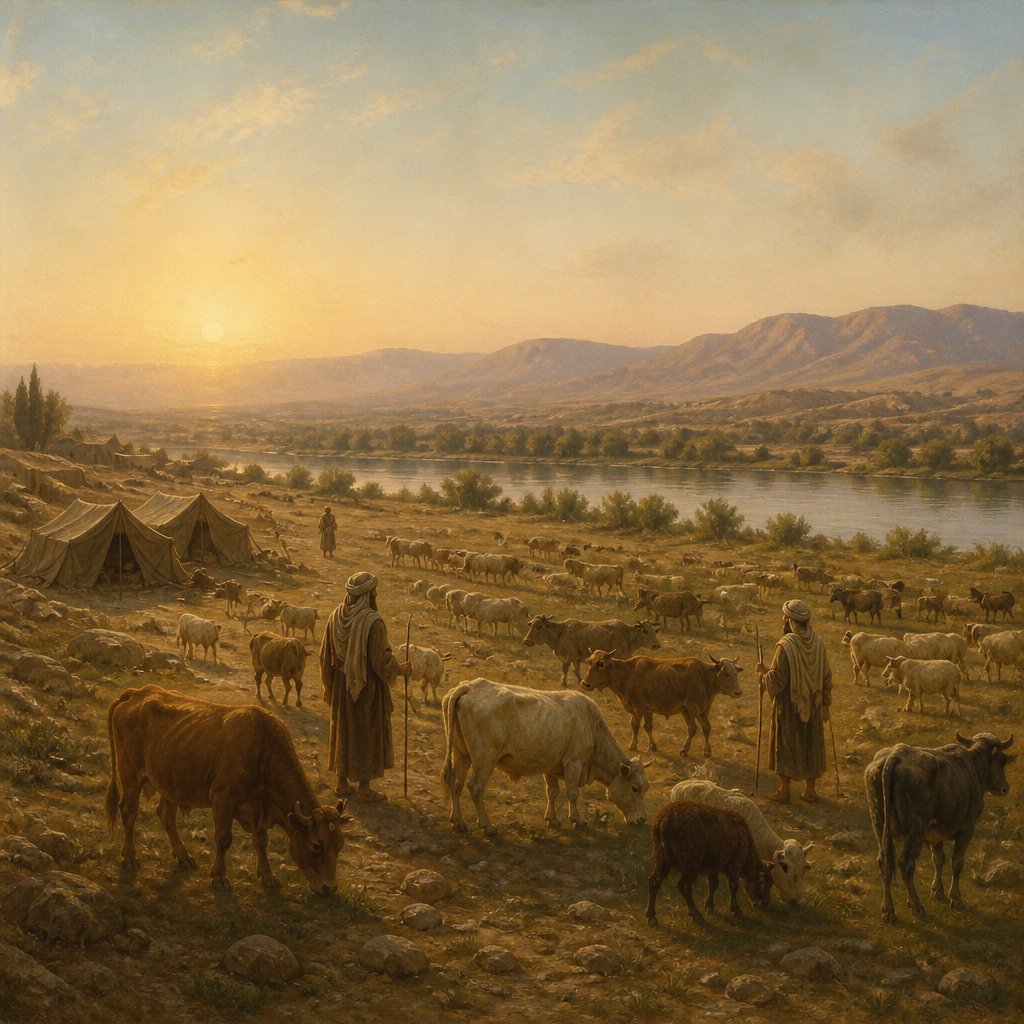
The Bible verse 1 Chronicles 5:9 in the King James Version (KJV) reads, "And eastward he inhabited unto the entering in of the wilderness from the river Euphrates: because their cattle were multiplied in the land of Gilead."
This verse is from the book of 1 Chronicles, which is a historical book in the Old Testament. The book of 1 Chronicles is essentially a record of the history of Israel, from the time of Adam to the Babylonian exile. It is a genealogical record, tracing the lineage of the Israelite tribes and recounting the reigns of the kings of Israel. The verse in question is part of a passage that is listing the genealogy of the tribe of Gad, one of the twelve tribes of Israel. This genealogy details the settlement of the tribe of Gad in the land of Gilead and the territories they inhabited.
The theme of this verse is the faithfulness of God in providing for His people. The tribe of Gad was given the land of Gilead as their inheritance, and this verse highlights the abundance and prosperity that they experienced in this land. The verse emphasizes that their cattle multiplied in the land, indicating that they were blessed with abundant resources and provisions by God.
The land of Gilead was known for its rich pasturelands, which were well-suited for raising cattle. The multiplication of their cattle was a sign of God's favor and provision for the tribe of Gad. This verse serves as a reminder that God is faithful to His promises and provides for His people in abundance. It reinforces the biblical principle that God blesses those who are faithful and obedient to Him.
Symbolically, the land of Gilead represents a place of blessing and abundance. It serves as a metaphor for the spiritual blessings that God bestows upon His people. The multiplication of cattle symbolizes not only material prosperity but also spiritual abundance. It is a reminder that God's blessings are not limited to material possessions but encompass all aspects of life, including spiritual growth and prosperity.
Furthermore, the mention of the river Euphrates in the verse holds significance. The river Euphrates was a well-known and important river in the ancient Near East, often symbolizing abundance, fertility, and life. In biblical symbolism, it represents the source of God's abundant provision and blessings. The fact that the tribe of Gad inhabited the land of Gilead "unto the entering in of the wilderness from the river Euphrates" indicates that they were settled in a place that was rich in God's blessings and provision.
In a broader context, this verse also speaks to the importance of faithfully stewarding the resources and blessings that God provides. The tribe of Gad's multiplication of cattle was a result of their hard work and diligence in caring for the land and their livestock. It serves as a reminder that God's blessings often require our active participation and stewardship. It also reflects the biblical principle that God blesses the work of our hands and rewards our faithfulness in managing His provisions.
In conclusion, 1 Chronicles 5:9 is a verse that highlights God's faithfulness in providing for His people and the abundance and prosperity that come from walking in obedience to Him. It symbolizes God's abundant blessings and provision, both materially and spiritually. It also underscores the importance of faithful stewardship and diligence in cultivating the blessings that God bestows. As such, this verse serves as an encouragement to trust in God's faithfulness and to actively participate in His plan for abundance and prosperity in our lives.
Have questions about 1 Chronicles 5:9?
Dive deeper into this scripture with Bible Chat — an AI-powered tool for exploring God's Word through conversation. Ask questions, get context, and grow in your understanding of the Bible.
Get Our Apps


1 Chronicles 5:9 Artwork

1 Chronicles 5:9 - "And eastward he inhabited unto the entering in of the wilderness from the river Euphrates: because their cattle were multiplied in the land of Gilead."
"And eastward he inhabited unto the entering in of the wilderness from the river Euphrates: because their cattle were multiplied in the land of Gilead." - 1 Chronicles 5:9

1 Chronicles 9:5 - "And of the Shilonites; Asaiah the firstborn, and his sons."

"And of the Shilonites; Asaiah the firstborn, and his sons." - 1 Chronicles 9:5

1 Chronicles 5:5 - "Micah his son, Reaia his son, Baal his son,"

2 Chronicles 5:9 - "And they drew out the staves of the ark, that the ends of the staves were seen from the ark before the oracle; but they were not seen without. And there it is unto this day."

1 Chronicles 8:5 - "And Gera, and Shephuphan, and Huram."

1 Chronicles 14:5 - "And Ibhar, and Elishua, and Elpalet,"

1 Chronicles 9:37 - "And Gedor, and Ahio, and Zechariah, and Mikloth."

1 Chronicles 9:10 - "¶ And of the priests; Jedaiah, and Jehoiarib, and Jachin,"

1 Chronicles 24:9 - "The fifth to Malchijah, the sixth to Mijamin,"

1 Chronicles 2:5 - "The sons of Pharez; Hezron, and Hamul."

1 Chronicles 5:19 - "And they made war with the Hagarites, with Jetur, and Nephish, and Nodab."

1 Chronicles 5:4 - "The sons of Joel; Shemaiah his son, Gog his son, Shimei his son,"

1 Chronicles 1:5 - "¶ The sons of Japheth; Gomer, and Magog, and Madai, and Javan, and Tubal, and Meshech, and Tiras."

2 Chronicles 9:5 - "And she said to the king, It was a true report which I heard in mine own land of thine acts, and of thy wisdom:"

1 Chronicles 9:30 - "And some of the sons of the priests made the ointment of the spices."

1 Chronicles 6:9 - "And Ahimaaz begat Azariah, and Azariah begat Johanan,"

1 Chronicles 12:9 - "Ezer the first, Obadiah the second, Eliab the third,"

1 Chronicles 14:9 - "And the Philistines came and spread themselves in the valley of Rephaim."

1 Chronicles 1:9 - "And the sons of Cush; Seba, and Havilah, and Sabta, and Raamah, and Sabtecha. And the sons of Raamah; Sheba, and Dedan."

1 Chronicles 12:5 - "Eluzai, and Jerimoth, and Bealiah, and Shemariah, and Shephatiah the Haruphite,"

1 Chronicles 26:9 - "And Meshelemiah had sons and brethren, strong men, eighteen."

1 Chronicles 9:41 - "And the sons of Micah were, Pithon, and Melech, and Tahrea, and Ahaz."

1 Chronicles 21:9 - "¶ And the LORD spake unto Gad, David's seer, saying,"

1 Chronicles 6:5 - "And Abishua begat Bukki, and Bukki begat Uzzi,"

1 Chronicles 9:9 - "And their brethren, according to their generations, nine hundred and fifty and six. All these men were chief of the fathers in the house of their fathers."

1 Chronicles 5:15 - "Ahi the son of Abdiel, the son of Guni, chief of the house of their fathers."

1 Chronicles 9:6 - "And of the sons of Zerah; Jeuel, and their brethren, six hundred and ninety."

1 Chronicles 15:9 - "Of the sons of Hebron; Eliel the chief, and his brethren fourscore:"