What does 1 Chronicles 5:26 mean?
"And the God of Israel stirred up the spirit of Pul king of Assyria, and the spirit of Tilgath-pilneser king of Assyria, and he carried them away, even the Reubenites, and the Gadites, and the half tribe of Manasseh, and brought them unto Halah, and Habor, and Hara, and to the river Gozan, unto this day." - 1 Chronicles 5:26
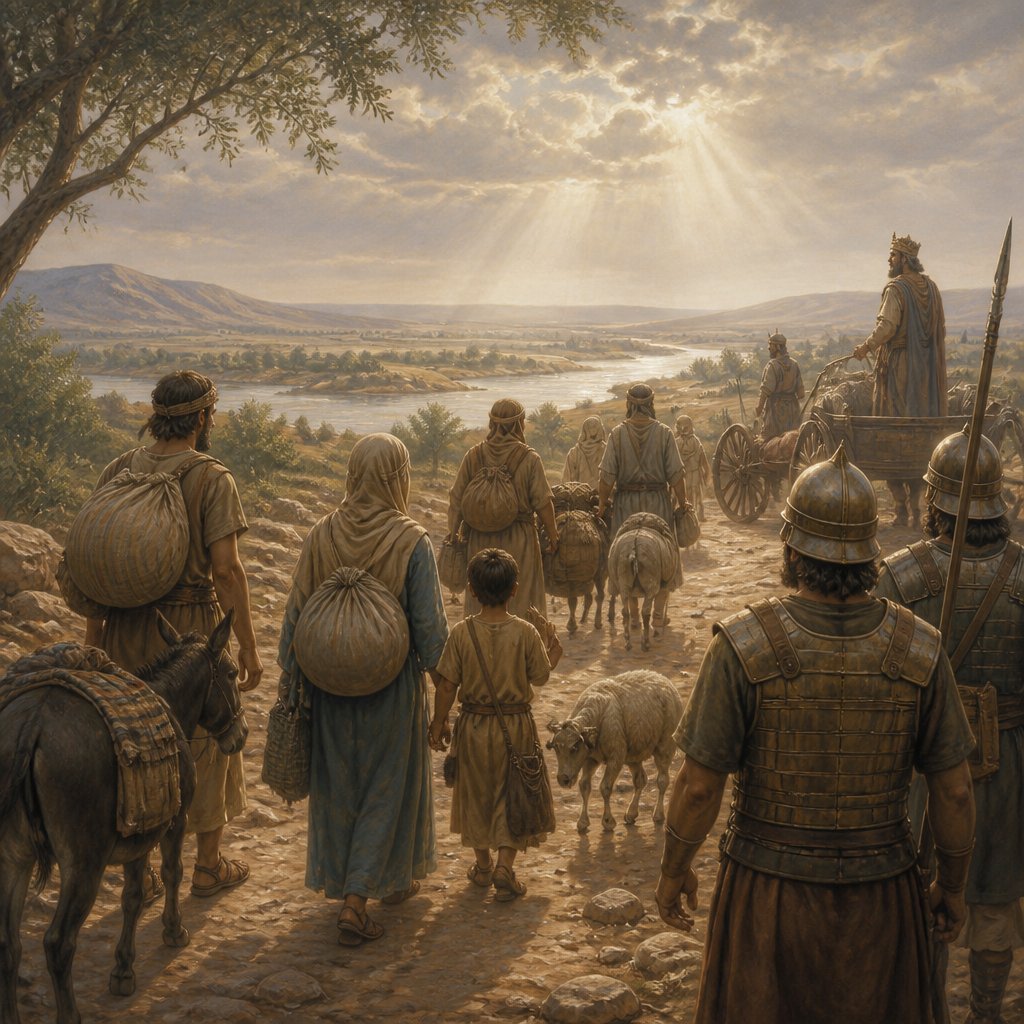
1 Chronicles 5:26 (KJV)
And the God of Israel stirred up the spirit of Pul king of Assyria, and the spirit of Tilgathpilneser king of Assyria, and he carried them away, even the Reubenites, and the Gadites, and the half tribe of Manasseh, and brought them unto Halah, and Habor, and Hara, and to the river Gozan, unto this day.
The book of 1 Chronicles is a historical account of the people of Israel, and in this verse, the focus is on the tribes of Reuben, Gad, and the half tribe of Manasseh. The verse speaks of God stirring up the spirits of the kings of Assyria, Pul and Tilgathpilneser, to carry these tribes away from their land to various locations.
At first glance, this verse may seem straightforward, recounting a historical event in the context of ancient geopolitics. However, when we delve deeper into the themes, context, and symbolism of this verse, we can uncover a more profound meaning.
The theme of divine sovereignty is prevalent in this verse. The term "the God of Israel" is used to emphasize that it was God's doing that led to the deportation of these tribes. The verse depicts God as an active agent in the affairs of the world, working through the actions of human rulers to accomplish his purposes. This idea of divine sovereignty is a recurring theme throughout the Bible, emphasizing God's ultimate control over all events and his ability to use even the actions of pagan rulers to achieve his will.
The context of this verse is also crucial to understanding its significance. The deportation of the tribes of Reuben, Gad, and the half tribe of Manasseh to Assyria was a consequence of their disobedience to God. Throughout the Old Testament, we see a pattern of God's people facing the consequences of their rebellion against him. In this instance, the Israelite tribes had strayed from God's commandments, and as a result, they suffered the loss of their land and were scattered among foreign nations. This serves as a warning to the readers of the text about the repercussions of turning away from God and the importance of obedience to his word.
Symbolism can also be found in this verse. The deportation of these tribes can be seen as a metaphor for the spiritual exile that occurs when God's people turn away from him. The foreign lands to which they were taken represent the alienation and separation from the promised land and the presence of God. However, even in their exile, God's faithfulness is evident as the verse mentions that the tribes were brought unto certain locations "unto this day," indicating that their situation had not been forgotten by God.
Furthermore, the names of the kings, Pul and Tilgathpilneser, can also hold symbolic significance. The name "Pul" means "deliverance," and "Tilgathpilneser" means "I will uncover wonders." These names can be seen as a reminder of God's ability to deliver his people and perform wonders even in the midst of their exile. It serves as a message of hope for the exiled tribes and for all who find themselves in a spiritual exile, that God is able to restore and bring them back to their land.
In conclusion, 1 Chronicles 5:26 is not just a recounting of a historical event, but a passage rich in themes, context, and symbolism. It serves to remind readers of the sovereignty of God, the consequences of disobedience, and the hope of restoration even in times of exile. This verse provides valuable insights into the nature of God and his dealings with his people, making it a significant and meaningful part of the biblical narrative.
Have questions about 1 Chronicles 5:26?
Dive deeper into this scripture with Bible Chat — an AI-powered tool for exploring God's Word through conversation. Ask questions, get context, and grow in your understanding of the Bible.
Get Our Apps


1 Chronicles 5:26 Artwork

1 Chronicles 5:26 - "And the God of Israel stirred up the spirit of Pul king of Assyria, and the spirit of Tilgath-pilneser king of Assyria, and he carried them away, even the Reubenites, and the Gadites, and the half tribe of Manasseh, and brought them unto Halah, and Habor, and Hara, and to the river Gozan, unto this day."
"And the God of Israel stirred up the spirit of Pul king of Assyria, and the spirit of Tilgath-pilneser king of Assyria, and he carried them away, even the Reubenites, and the Gadites, and the half tribe of Manasseh, and brought them unto Halah, and Habor, and Hara, and to the river Gozan, unto this day." - 1 Chronicles 5:26

1 Chronicles 26:5 - "Ammiel the sixth, Issachar the seventh, Peulthai the eighth: for God blessed him."

1 Chronicles 1:26 - "Serug, Nahor, Terah,"
"Ammiel the sixth, Issachar the seventh, Peulthai the eighth: for God blessed him." - 1 Chronicles 26:5

1 Chronicles 8:26 - "And Shamsherai, and Shehariah, and Athaliah,"

1 Chronicles 26:23 - "Of the Amramites, and the Izharites, the Hebronites, and the Uzzielites:"

1 Chronicles 26:1 - "Concerning the divisions of the porters: Of the Korhites was Meshelemiah the son of Kore, of the sons of Asaph."

"Serug, Nahor, Terah," - 1 Chronicles 1:26

1 Chronicles 12:26 - "Of the children of Levi four thousand and six hundred."

1 Chronicles 26:3 - "Elam the fifth, Jehohanan the sixth, Elioenai the seventh."

1 Chronicles 26:18 - "At Parbar westward, four at the causeway, and two at Parbar."

1 Chronicles 26:24 - "And Shebuel the son of Gershom, the son of Moses, was ruler of the treasures."

1 Chronicles 26:9 - "And Meshelemiah had sons and brethren, strong men, eighteen."

1 Chronicles 16:26 - "For all the gods of the people are idols: but the LORD made the heavens."

1 Chronicles 26:15 - "To Obed-edom southward; and to his sons the house of Asuppim."

1 Chronicles 29:26 - "¶ Thus David the son of Jesse reigned over all Israel."

1 Chronicles 26:19 - "These are the divisions of the porters among the sons of Kore, and among the sons of Merari."

1 Chronicles 24:26 - "The sons of Merari were Mahli and Mushi: the sons of Jaaziah; Beno."

1 Chronicles 5:5 - "Micah his son, Reaia his son, Baal his son,"

1 Chronicles 7:26 - "Laadan his son, Ammihud his son, Elishama his son,"

1 Chronicles 26:27 - "Out of the spoils won in battles did they dedicate to maintain the house of the LORD."

1 Chronicles 25:26 - "The nineteenth to Mallothi, he, his sons, and his brethren, were twelve:"

2 Chronicles 26:5 - "And he sought God in the days of Zechariah, who had understanding in the visions of God: and as long as he sought the LORD, God made him to prosper."

1 Thessalonians 5:26 - "Greet all the brethren with an holy kiss."

1 Chronicles 6:26 - "As for Elkanah: the sons of Elkanah; Zophai his son, and Nahath his son,"

"And Shamsherai, and Shehariah, and Athaliah," - 1 Chronicles 8:26

1 Chronicles 27:26 - "And over them that did the work of the field for tillage of the ground was Ezri the son of Chelub:"

1 Chronicles 26:13 - "¶ And they cast lots, as well the small as the great, according to the house of their fathers, for every gate."

1 Chronicles 26:20 - "¶ And of the Levites, Ahijah was over the treasures of the house of God, and over the treasures of the dedicated things."