What does 1 Chronicles 5:14 mean?
"These are the children of Abihail the son of Huri, the son of Jaroah, the son of Gilead, the son of Michael, the son of Jeshishai, the son of Jahdo, the son of Buz;" - 1 Chronicles 5:14
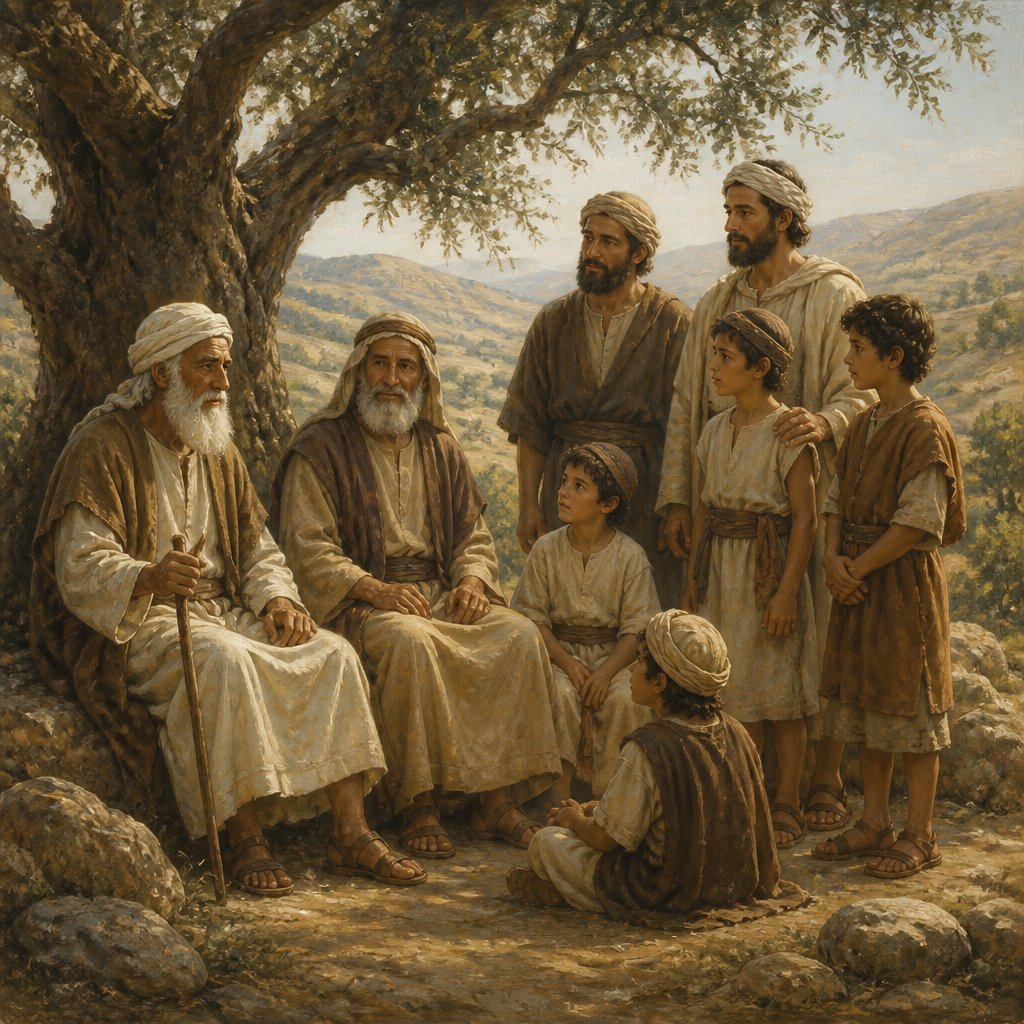
Sure! Here is a commentary on 1 Chronicles 5:14 from the King James Version of the Bible:
"These are the children of Abihail the son of Huri, the son of Jaroah, the son of Gilead, the son of Michael, the son of Jeshishai, the son of Jahdo, the son of Buz;"
1 Chronicles 5:1-26 is a genealogical record of the Eastern tribes of Israel, detailing their ancestry and leadership. In the verse above, the focus is on the descendants of Abihail, a prominent figure in the lineage of the tribe of Gad. Each name mentioned in this verse represents a link in the chain of ancestry that connects the present generation to their forefathers.
The repetition of "the son of" emphasizes the importance of lineage in ancient Israel. Ancestry was significant because it established a person's identity, inheritance, and position within society. It also played a crucial role in the fulfillment of God's promises to the nation of Israel, particularly in relation to the inheritance of the land.
The mention of Gilead is significant as he was a prominent figure in the history of the Israelite tribes. Gilead was the grandson of Manasseh, one of the sons of Joseph, and his descendants settled in the region to the east of the Jordan River, which became known as the land of Gilead. It was a region known for its fertility and was inhabited by the tribes of Reuben, Gad, and half of the tribe of Manasseh.
The genealogical record in 1 Chronicles 5 serves several purposes. Firstly, it establishes the historical and ancestral connections of the tribes of Israel, preserving their identity and heritage. It also serves as a reminder of God's faithfulness in fulfilling his promises to the patriarchs and their descendants. Furthermore, it reinforces the unity and cohesiveness of the twelve tribes of Israel, despite their dispersion throughout the Promised Land.
In a broader theological context, the genealogies in the Bible also point to the fulfillment of God's ultimate plan of salvation through the lineage of Jesus Christ. The New Testament opens with the genealogy of Jesus in Matthew 1, tracing his ancestry back to Abraham. This emphasizes the continuity of God's covenant promises throughout history and highlights the significance of Jesus' identity as the long-awaited Messiah and Savior.
Symbolically, this verse highlights the interconnectedness and continuity of generations within the nation of Israel. It underscores the importance of heritage and lineage in shaping the identity and destiny of a people. It also serves as a reminder of God's sovereign plan unfolding through the generations, culminating in the redemptive work of Christ.
In summary, 1 Chronicles 5:14, within the wider context of the genealogical record of the Eastern tribes of Israel, emphasizes the significance of ancestry, lineage, and God's faithfulness in fulfilling his promises to the people of Israel. It also points to the broader theological themes of continuity, redemption, and the fulfillment of God's ultimate plan through the lineage of Jesus Christ.
Have questions about 1 Chronicles 5:14?
Dive deeper into this scripture with Bible Chat — an AI-powered tool for exploring God's Word through conversation. Ask questions, get context, and grow in your understanding of the Bible.
Get Our Apps


1 Chronicles 5:14 Artwork

1 Chronicles 5:14 - "These are the children of Abihail the son of Huri, the son of Jaroah, the son of Gilead, the son of Michael, the son of Jeshishai, the son of Jahdo, the son of Buz;"
"These are the children of Abihail the son of Huri, the son of Jaroah, the son of Gilead, the son of Michael, the son of Jeshishai, the son of Jahdo, the son of Buz;" - 1 Chronicles 5:14

1 Chronicles 14:5 - "And Ibhar, and Elishua, and Elpalet,"

"And Ibhar, and Elishua, and Elpalet," - 1 Chronicles 14:5

2 Chronicles 5:14 - "So that the priests could not stand to minister by reason of the cloud: for the glory of the LORD had filled the house of God."

1 Chronicles 1:14 - "The Jebusite also, and the Amorite, and the Girgashite,"

1 Chronicles 14:7 - "And Elishama, and Beeliada, and Eliphalet."

1 Chronicles 14:6 - "And Nogah, and Nepheg, and Japhia,"

1 Chronicles 8:14 - "And Ahio, Shashak, and Jeremoth,"

1 Chronicles 5:5 - "Micah his son, Reaia his son, Baal his son,"

1 Chronicles 24:14 - "The fifteenth to Bilgah, the sixteenth to Immer,"

1 Chronicles 2:14 - "Nethaneel the fourth, Raddai the fifth,"

1 Chronicles 8:5 - "And Gera, and Shephuphan, and Huram."

Matthew 5:14

Matthew 5:14

1 Chronicles 6:14 - "And Azariah begat Seraiah, and Seraiah begat Jehozadak,"

1 Chronicles 2:5 - "The sons of Pharez; Hezron, and Hamul."

2 Chronicles 14:5 - "Also he took away out of all the cities of Judah the high places and the images: and the kingdom was quiet before him."

1 Chronicles 5:19 - "And they made war with the Hagarites, with Jetur, and Nephish, and Nodab."

1 Chronicles 3:14 - "Amon his son, Josiah his son."

1 Chronicles 14:9 - "And the Philistines came and spread themselves in the valley of Rephaim."

1 Chronicles 5:4 - "The sons of Joel; Shemaiah his son, Gog his son, Shimei his son,"

1 Chronicles 14:13 - "And the Philistines yet again spread themselves abroad in the valley."

1 Chronicles 1:5 - "¶ The sons of Japheth; Gomer, and Magog, and Madai, and Javan, and Tubal, and Meshech, and Tiras."

1 Chronicles 9:5 - "And of the Shilonites; Asaiah the firstborn, and his sons."

"The Jebusite also, and the Amorite, and the Girgashite," - 1 Chronicles 1:14

1 Chronicles 16:14 - "He is the LORD our God; his judgments are in all the earth."

1 Chronicles 12:5 - "Eluzai, and Jerimoth, and Bealiah, and Shemariah, and Shephatiah the Haruphite,"

1 Chronicles 6:5 - "And Abishua begat Bukki, and Bukki begat Uzzi,"

1 Chronicles 5:15 - "Ahi the son of Abdiel, the son of Guni, chief of the house of their fathers."