What does 1 Chronicles 4:40 mean?
"And they found fat pasture and good, and the land was wide, and quiet, and peaceable; for they of Ham had dwelt there of old." - 1 Chronicles 4:40
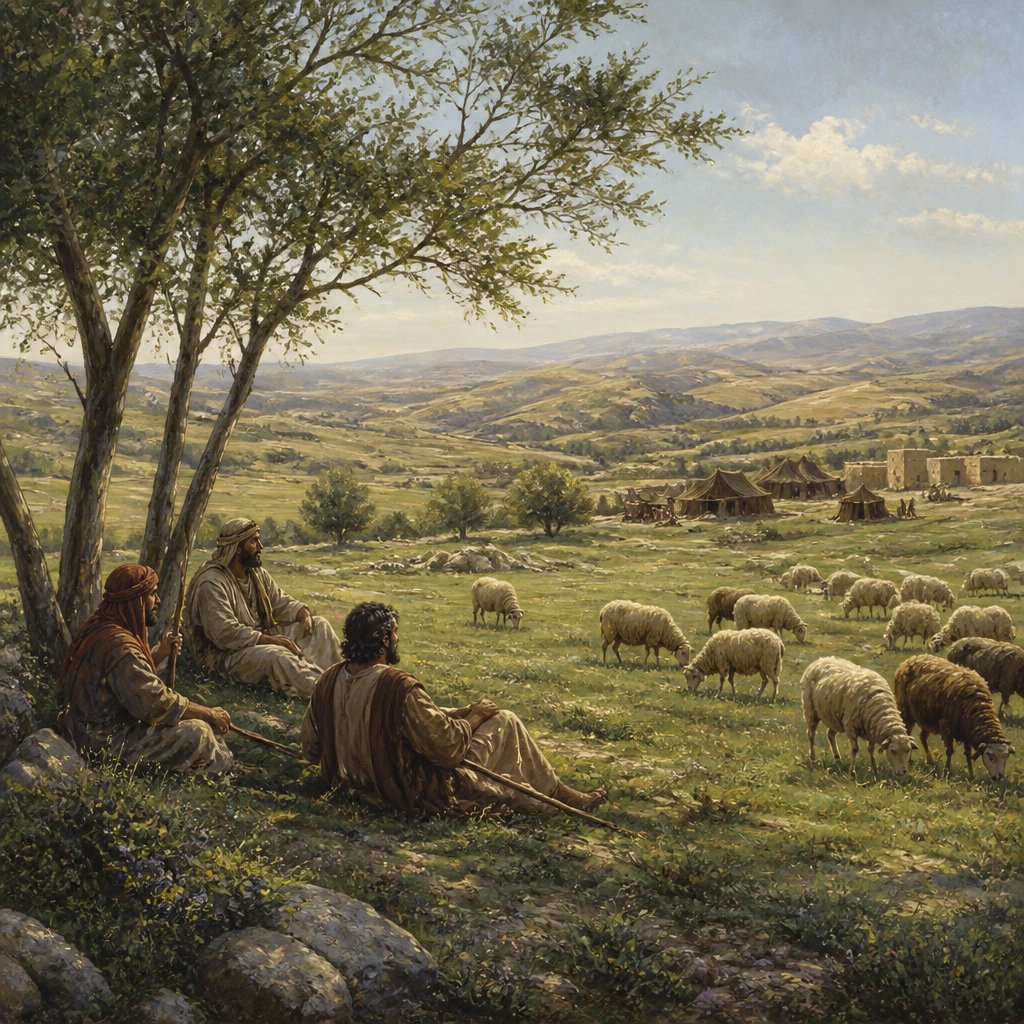
1 Chronicles 4:40 (KJV) reads, "And they found fat pasture and good, and the land was wide, and quiet, and peaceable; for they of Ham had dwelt there of old."
This verse is a part of the genealogy of Judah in the book of 1 Chronicles and describes the migration of the descendants of Judah to the outskirts of the city of Gedor. The verse recounts how the descendants of Judah came across a fertile and spacious land that was peaceful and quiet, as it had previously been inhabited by the people of Ham.
In order to understand the full context and significance of this verse, we must first look at the broader context of the book of 1 Chronicles and its place within the Bible. 1 Chronicles is part of the Hebrew Bible and the Christian Old Testament, and it is a historical record that traces the genealogy of the descendants of Adam through the tribes of Israel. The book highlights the importance of obedience to God and the significance of the Davidic line in the history of Israel. 1 Chronicles is also known for its detailed lists of names, and it serves as a means of preserving the records of the nation of Israel.
Now, let's delve into the specific verse of 1 Chronicles 4:40 and its various themes and symbolism. The verse speaks to the theme of the fulfillment of God's promises and the provision of blessings for His people. The discovery of the fat pasture and spacious land by the descendants of Judah can be seen as an indication of God's faithfulness in providing for His people. This theme of God's provision is echoed throughout the Bible, and it serves as a source of encouragement and hope for believers.
Furthermore, the description of the land as peaceful, quiet, and peaceable carries symbolic significance. It represents the ideal image of a land that is conducive to rest and tranquility. This can be interpreted as a reflection of God's desire for His people to dwell in peace and harmony. It also serves as a contrast to the tumultuous and chaotic circumstances that the Israelites often found themselves in throughout their history. The peacefulness of the land can be seen as a metaphor for the state of the heart and soul when one is in alignment with God's will.
Moreover, the mention of the land being previously inhabited by the people of Ham adds another layer of significance to the verse. The descendants of Ham are associated with the nations of Africa, and their presence in the land serves as a reminder of the interconnectedness of all people. It reflects the diversity of God's creation and His care for all nations. This can be seen as a message of inclusivity and the universal scope of God's love and provision.
Overall, 1 Chronicles 4:40 carries rich themes of God's faithfulness, provision, peace, and unity. It serves as a testament to the fulfillment of God's promises and the blessings He bestows upon His people. The verse also carries symbolic significance in its portrayal of the ideal land and its association with the people of Ham. It reminds believers of the importance of resting in God's peace and embracing the diversity of His creation.
In conclusion, 1 Chronicles 4:40 offers a profound message of hope and encouragement, and its themes resonate throughout the broader narrative of the Bible. It serves as a reminder of God's provision and care for His people, and it encourages believers to seek peace and unity in their own lives. The verse also conveys the timeless truth of God's faithfulness and His desire for all nations to dwell in harmony.
Have questions about 1 Chronicles 4:40?
Dive deeper into this scripture with Bible Chat — an AI-powered tool for exploring God's Word through conversation. Ask questions, get context, and grow in your understanding of the Bible.
Get Our Apps


1 Chronicles 4:40 Artwork

1 Chronicles 4:40 - "And they found fat pasture and good, and the land was wide, and quiet, and peaceable; for they of Ham had dwelt there of old."
"And they found fat pasture and good, and the land was wide, and quiet, and peaceable; for they of Ham had dwelt there of old." - 1 Chronicles 4:40

1 Chronicles 11:40 - "Ira the Ithrite, Gareb the Ithrite,"

Isaiah 40:4

1 Chronicles 2:40 - "And Eleasah begat Sisamai, and Sisamai begat Shallum,"

1 Chronicles 6:40 - "The son of Michael, the son of Baaseiah, the son of Malchiah,"

1 Chronicles 1:40 - "The sons of Shobal; Alian, and Manahath, and Ebal, Shephi, and Onam. And the sons of Zibeon; Aiah, and Anah."

1 Chronicles 9:40 - "And the son of Jonathan was Merib-baal: and Merib-baal begat Micah."

"Ira the Ithrite, Gareb the Ithrite," - 1 Chronicles 11:40

"The son of Michael, the son of Baaseiah, the son of Malchiah," - 1 Chronicles 6:40

1 Chronicles 4 : 10

"And Eleasah begat Sisamai, and Sisamai begat Shallum," - 1 Chronicles 2:40

1 Chronicles 8:40 - "And the sons of Ulam were mighty men of valour, archers, and had many sons, and sons' sons, an hundred and fifty. All these are of the sons of Benjamin."

1 Chronicles 1:4 - "Noah, Shem, Ham, and Japheth."

"And the son of Jonathan was Merib-baal: and Merib-baal begat Micah." - 1 Chronicles 9:40

"The sons of Shobal; Alian, and Manahath, and Ebal, Shephi, and Onam. And the sons of Zibeon; Aiah, and Anah." - 1 Chronicles 1:40

2 Chronicles 4:22

1 Chronicles 16:40 - "To offer burnt offerings unto the LORD upon the altar of the burnt offering continually morning and evening, and to do according to all that is written in the law of the LORD, which he commanded Israel;"

1 Chronicles 4:29 - "And at Bilhah, and at Ezem, and at Tolad,"

1 Chronicles 4:30 - "And at Bethuel, and at Hormah, and at Ziklag,"

1 Chronicles 8:4 - "And Abishua, and Naaman, and Ahoah,"

1 Chronicles 4:1 - "The sons of Judah; Pharez, Hezron, and Carmi, and Hur, and Shobal."

1 Chronicles 4:34 - "And Meshobab, and Jamlech, and Joshah the son of Amaziah,"

1 Chronicles 15:4 - "And David assembled the children of Aaron, and the Levites:"

1 Chronicles 7:40 - "All these were the children of Asher, heads of their father's house, choice and mighty men of valour, chief of the princes. And the number throughout the genealogy of them that were apt to the war and to battle was twenty and six thousand men."

1 Chronicles 4:25 - "Shallum his son, Mibsam his son, Mishma his son."

1 Chronicles 4:28 - "And they dwelt at Beer-sheba, and Moladah, and Hazar-shual,"

1 Chronicles 4:16 - "And the sons of Jehaleleel; Ziph, and Ziphah, Tiria, and Asareel."

1 Chronicles 4:7 - "And the sons of Helah were, Zereth, and Jezoar, and Ethnan."

1 Chronicles 6:4 - "¶ Eleazar begat Phinehas, Phinehas begat Abishua,"