What does 1 Chronicles 2:42 mean?
"¶ Now the sons of Caleb the brother of Jerahmeel were, Mesha his firstborn, which was the father of Ziph; and the sons of Mareshah the father of Hebron." - 1 Chronicles 2:42
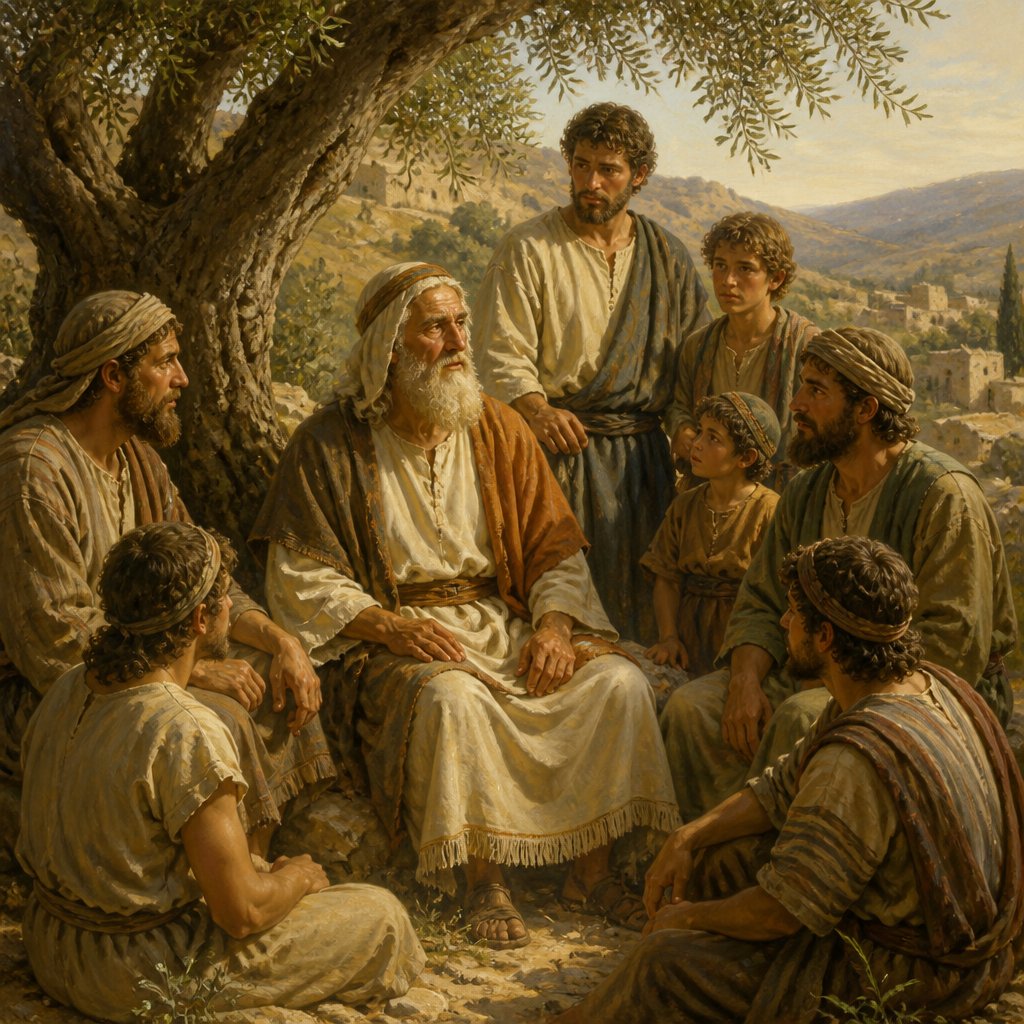
The Bible verse 1 Chronicles 2:42 in the King James Version (KJV) reads, "Now the sons of Caleb the brother of Jerahmeel were, Mesha his firstborn, which was the father of Ziph; and the sons of Mareshah the father of Hebron." This verse is part of a genealogy recorded in the book of 1 Chronicles. Genealogies are a recurring theme in the Bible and serve several purposes, including establishing lineage, tracing the descendants of important figures, and emphasizing the importance of family and heritage.
In this verse, the focus is on Caleb, the brother of Jerahmeel. Caleb was a prominent figure in the Old Testament, known for his faith and courage. He was one of the twelve spies sent by Moses to explore the land of Canaan, and he was also a leader of the tribe of Judah. His lineage and descendants are being recorded here to establish his place in the history of Israel.
The verse mentions Caleb's firstborn son, Mesha, who was the father of Ziph, and the sons of Mareshah, who was the father of Hebron. The mention of these specific descendants is significant because it connects Caleb to the cities of Ziph and Hebron. These cities were important in the history of Israel and had strategic significance. Ziph was located in the territory of the tribe of Judah, and Hebron was a significant city in the southern part of the land of Canaan.
The genealogy in 1 Chronicles 2 serves to connect the Israelites to their ancestral land and to establish their rightful inheritance. It also highlights the faithfulness of God in fulfilling his promises to the descendants of Abraham, Isaac, and Jacob. The genealogy also reinforces the importance of the tribe of Judah and its leading figures, such as Caleb, in the history of Israel.
One of the key themes in this verse is the importance of lineage and heritage in the biblical narrative. Throughout the Bible, genealogies are used to establish the lineage of key figures, such as kings, prophets, and other important individuals. The genealogy of Caleb in 1 Chronicles 2 serves to affirm his place in the history of Israel and to connect him to the land and the people.
Furthermore, the verse emphasizes the significance of the cities of Ziph and Hebron in the history of Israel. These were not just geographical locations, but they were also places with spiritual and symbolic importance. Hebron, for example, was associated with the patriarch Abraham and was a key city in the promised land. The mention of Hebron in Caleb's genealogy serves to affirm the connection of his descendants to this important city.
Symbolically, the genealogy of Caleb also points to the faithfulness of God in preserving and fulfilling his promises to his people. The inclusion of specific names and lineage in the genealogy highlights the individuality and significance of each person within the broader narrative of God's redemptive plan for Israel. It also underscores the importance of faithfulness and obedience in the lineage of the people of God.
In conclusion, 1 Chronicles 2:42 in the King James Version is a verse that may seem mundane at first glance, but it carries important themes of lineage, heritage, and the faithfulness of God. It connects the descendants of Caleb to the land of Israel and establishes their place in the history of God's people. As we study genealogies in the Bible, we are reminded of the intricate and purposeful way in which God works through history to fulfill his promises and to bring about his sovereign plan.
Have questions about 1 Chronicles 2:42?
Dive deeper into this scripture with Bible Chat — an AI-powered tool for exploring God's Word through conversation. Ask questions, get context, and grow in your understanding of the Bible.
Get Our Apps


1 Chronicles 2:42 Artwork

1 Chronicles 2:42 - "¶ Now the sons of Caleb the brother of Jerahmeel were, Mesha his firstborn, which was the father of Ziph; and the sons of Mareshah the father of Hebron."
"¶ Now the sons of Caleb the brother of Jerahmeel were, Mesha his firstborn, which was the father of Ziph; and the sons of Mareshah the father of Hebron." - 1 Chronicles 2:42

1 Chronicles 1:42 - "The sons of Ezer; Bilhan, and Zavan, and Jakan. The sons of Dishan; Uz, and Aran."

1 Chronicles 6:42 - "The son of Ethan, the son of Zimmah, the son of Shimei,"

1 Chronicles 11:42 - "Adina the son of Shiza the Reubenite, a captain of the Reubenites, and thirty with him,"

1 Chronicles 9:42 - "And Ahaz begat Jarah; and Jarah begat Alemeth, and Azmaveth, and Zimri; and Zimri begat Moza;"

2 Chronicles 6:42 - "O LORD God, turn not away the face of thine anointed: remember the mercies of David thy servant."

Genesis 42:1-2

"The son of Ethan, the son of Zimmah, the son of Shimei," - 1 Chronicles 6:42

1 Chronicles 16:42 - "And with them Heman and Jeduthun with trumpets and cymbals for those that should make a sound, and with musical instruments of God. And the sons of Jeduthun were porters."

"The sons of Ezer; Bilhan, and Zavan, and Jakan. The sons of Dishan; Uz, and Aran." - 1 Chronicles 1:42

1 Chronicles 4:42 - "And some of them, even of the sons of Simeon, five hundred men, went to mount Seir, having for their captains Pelatiah, and Neariah, and Rephaiah, and Uzziel, the sons of Ishi."

"Adina the son of Shiza the Reubenite, a captain of the Reubenites, and thirty with him," - 1 Chronicles 11:42

1 Chronicles 2:48 - "Maachah, Caleb's concubine, bare Sheber, and Tirhanah."

"And Ahaz begat Jarah; and Jarah begat Alemeth, and Azmaveth, and Zimri; and Zimri begat Moza;" - 1 Chronicles 9:42

1 Chronicles 2:8 - "And the sons of Ethan; Azariah."

1 Chronicles 2:15 - "Ozem the sixth, David the seventh:"

1 Chronicles 2:14 - "Nethaneel the fourth, Raddai the fifth,"

1 Chronicles 2:38 - "And Obed begat Jehu, and Jehu begat Azariah,"

1 Chronicles 2:41 - "And Shallum begat Jekamiah, and Jekamiah begat Elishama."

1 Chronicles 2:36 - "And Attai begat Nathan, and Nathan begat Zabad,"

1 Chronicles 2:11 - "And Nahshon begat Salma, and Salma begat Boaz,"

1 Chronicles 2:39 - "And Azariah begat Helez, and Helez begat Eleasah,"

1 Chronicles 2:5 - "The sons of Pharez; Hezron, and Hamul."

1 Chronicles 1:2 - "Kenan, Mahalaleel, Jered,"

1 Chronicles 2:2 - "Dan, Joseph, and Benjamin, Naphtali, Gad, and Asher."

"O LORD God, turn not away the face of thine anointed: remember the mercies of David thy servant." - 2 Chronicles 6:42

1 Chronicles 2:20 - "And Hur begat Uri, and Uri begat Bezaleel."

1 Chronicles 2:40 - "And Eleasah begat Sisamai, and Sisamai begat Shallum,"

1 Chronicles 2:37 - "And Zabad begat Ephlal, and Ephlal begat Obed,"