What does 1 Chronicles 26:32 mean?
"And his brethren, men of valour, were two thousand and seven hundred chief fathers, whom king David made rulers over the Reubenites, the Gadites, and the half tribe of Manasseh, for every matter pertaining to God, and affairs of the king." - 1 Chronicles 26:32
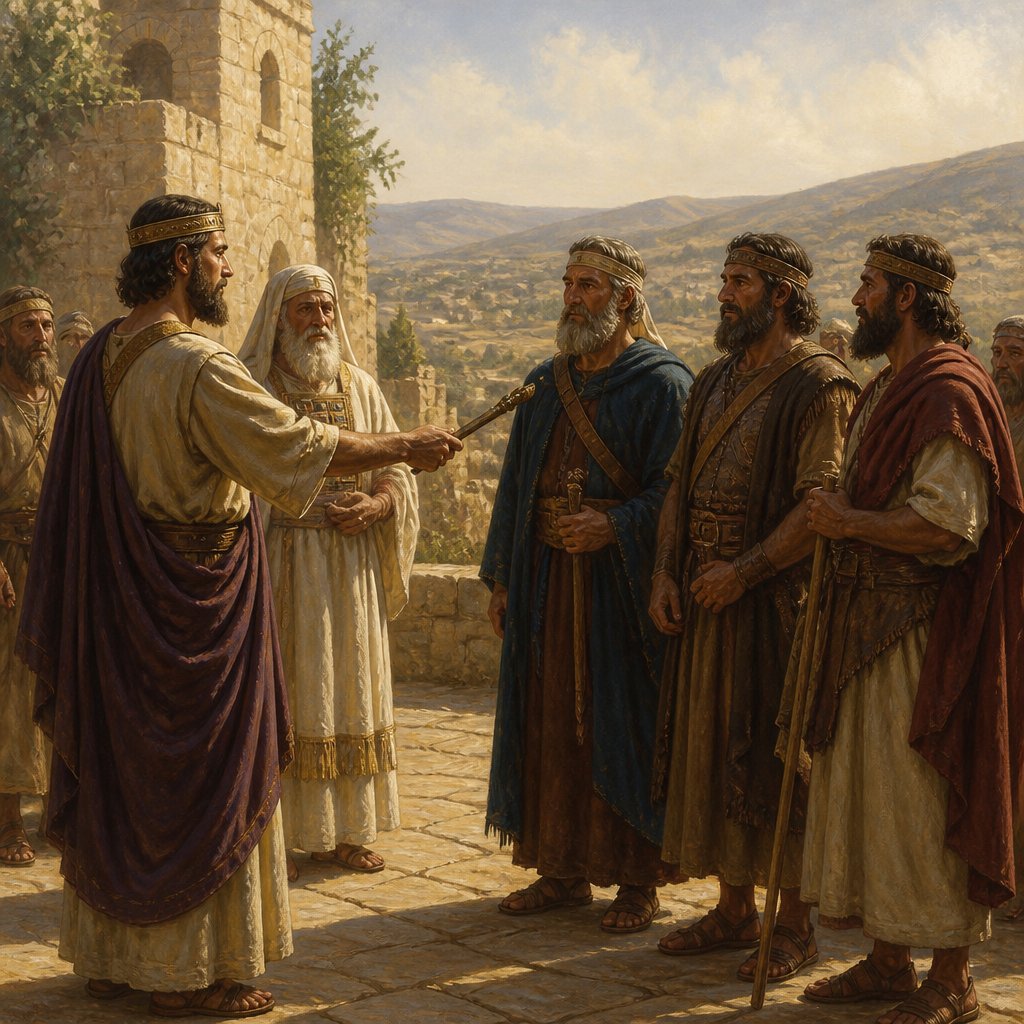
The Bible verse 1 Chronicles 26:32 in the King James Version reads: "And his brethren, men of valour, were two thousand and seven hundred chief fathers, whom king David made rulers over the Reubenites, the Gadites, and the half tribe of Manasseh, for every matter pertaining to God, and affairs of the king."
This verse comes from the book of 1 Chronicles, which is a historical narrative that traces the genealogy of the Israelites and their history from the time of Adam to the Babylonian exile. In this particular verse, the writer is detailing the group of David's kinsmen who were appointed as officers or leaders over the tribes of Reuben, Gad, and the half tribe of Manasseh. These men were chosen by King David to oversee matters related to God as well as the affairs of the king.
The theme of leadership and responsibility is central to this verse. King David, a man after God's own heart, understood the importance of having Godly leaders in positions of authority. He recognized the need for faithful, capable men to oversee the spiritual and governmental affairs of the tribes of Israel. David's decision to appoint these men as rulers over the Reubenites, the Gadites, and the half tribe of Manasseh reflects his wisdom and discernment in selecting individuals who would uphold the values and principles of God in their leadership roles.
Furthermore, this verse also highlights the significance of the division of labor and responsibilities within the community. The two thousand and seven hundred chief fathers were not simply appointed as rulers for the sake of it, but were given specific duties and areas of jurisdiction. The allocation of roles and responsibilities within the community was crucial for maintaining order and ensuring that both the spiritual and practical needs of the people were met.
Symbolically, this verse can be seen as a representation of God's desire for His people to be led by individuals who are honorable, courageous, and devoted to Him. The leaders appointed by David were not chosen arbitrarily, but were men of valor who possessed the qualities necessary to govern and guide the people in accordance with God's will. This can be seen as a foreshadowing of the leadership qualities that God desires in His people, both in ancient Israel and in the present day.
From a historical context, this verse also serves as a reminder of the united kingdom of Israel under the reign of King David. The tribes of Reuben, Gad, and the half tribe of Manasseh were part of the larger nation of Israel, and David's appointment of leaders over these tribes helped to solidify the unity and cohesion of the kingdom. By involving these tribal leaders in matters pertaining to God and the affairs of the king, David sought to create a sense of unity and shared responsibility among the different tribes.
In conclusion, 1 Chronicles 26:32 is a verse that speaks to the importance of godly leadership, the division of labor and responsibilities, and the unity of the nation of Israel under King David. It serves as a testament to the wisdom of David in selecting capable leaders to oversee the spiritual and practical needs of the people, and highlights the symbolic significance of having leaders who are devoted to God and His principles. This verse not only provides historical insight into the reign of King David, but also offers timeless lessons on the qualities and responsibilities of effective leaders within the community of faith.
Have questions about 1 Chronicles 26:32?
Dive deeper into this scripture with Bible Chat — an AI-powered tool for exploring God's Word through conversation. Ask questions, get context, and grow in your understanding of the Bible.
Get Our Apps


1 Chronicles 26:32 Artwork
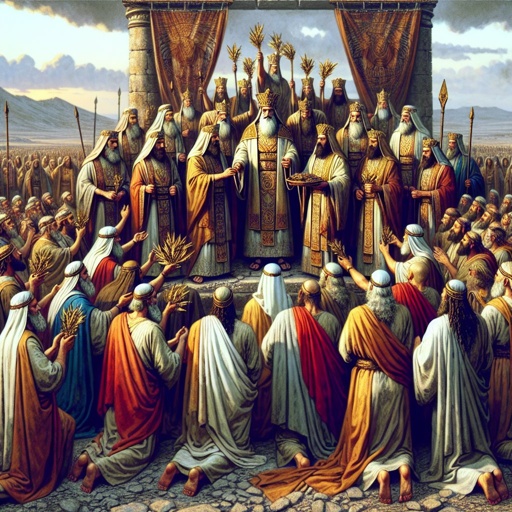
1 Chronicles 26:32 - "And his brethren, men of valour, were two thousand and seven hundred chief fathers, whom king David made rulers over the Reubenites, the Gadites, and the half tribe of Manasseh, for every matter pertaining to God, and affairs of the king."
"And his brethren, men of valour, were two thousand and seven hundred chief fathers, whom king David made rulers over the Reubenites, the Gadites, and the half tribe of Manasseh, for every matter pertaining to God, and affairs of the king." - 1 Chronicles 26:32

1 Chronicles 1:26 - "Serug, Nahor, Terah,"

1 Chronicles 11:32 - "Hurai of the brooks of Gaash, Abiel the Arbathite,"

1 Chronicles 7:32 - "And Heber begat Japhlet, and Shomer, and Hotham, and Shua their sister."

1 Chronicles 8:26 - "And Shamsherai, and Shehariah, and Athaliah,"

1 Chronicles 26:23 - "Of the Amramites, and the Izharites, the Hebronites, and the Uzzielites:"

1 Chronicles 4:32 - "And their villages were, Etam, and Ain, Rimmon, and Tochen, and Ashan, five cities:"

1 Chronicles 26:1 - "Concerning the divisions of the porters: Of the Korhites was Meshelemiah the son of Kore, of the sons of Asaph."

1 Chronicles 16:32 - "Let the sea roar, and the fulness thereof: let the fields rejoice, and all that is therein."

1 Chronicles 9:32 - "And other of their brethren, of the sons of the Kohathites, were over the shewbread, to prepare it every sabbath."

"Serug, Nahor, Terah," - 1 Chronicles 1:26

1 Chronicles 2:32 - "And the sons of Jada the brother of Shammai; Jether, and Jonathan: and Jether died without children."

1 Chronicles 8:32 - "And Mikloth begat Shimeah. And these also dwelt with their brethren in Jerusalem, over against them."

1 Chronicles 12:26 - "Of the children of Levi four thousand and six hundred."

1 Chronicles 26:18 - "At Parbar westward, four at the causeway, and two at Parbar."

1 Chronicles 26:3 - "Elam the fifth, Jehohanan the sixth, Elioenai the seventh."

1 Chronicles 26:24 - "And Shebuel the son of Gershom, the son of Moses, was ruler of the treasures."

1 Chronicles 26:9 - "And Meshelemiah had sons and brethren, strong men, eighteen."

1 Chronicles 16:26 - "For all the gods of the people are idols: but the LORD made the heavens."

1 Chronicles 26:15 - "To Obed-edom southward; and to his sons the house of Asuppim."

1 Chronicles 1:32 - "¶ Now the sons of Keturah, Abraham's concubine: she bare Zimran, and Jokshan, and Medan, and Midian, and Ishbak, and Shuah. And the sons of Jokshan; Sheba, and Dedan."

1 Chronicles 29:26 - "¶ Thus David the son of Jesse reigned over all Israel."

1 Chronicles 26:19 - "These are the divisions of the porters among the sons of Kore, and among the sons of Merari."

1 Chronicles 24:26 - "The sons of Merari were Mahli and Mushi: the sons of Jaaziah; Beno."

1 Chronicles 27:32 - "Also Jonathan David's uncle was a counsellor, a wise man, and a scribe: and Jehiel the son of Hachmoni was with the king's sons:"

"Hurai of the brooks of Gaash, Abiel the Arbathite," - 1 Chronicles 11:32

1 Chronicles 7:26 - "Laadan his son, Ammihud his son, Elishama his son,"

1 Chronicles 25:26 - "The nineteenth to Mallothi, he, his sons, and his brethren, were twelve:"

1 Chronicles 26:27 - "Out of the spoils won in battles did they dedicate to maintain the house of the LORD."