What does 1 Chronicles 26:12 mean?
"Among these were the divisions of the porters, even among the chief men, having wards one against another, to minister in the house of the LORD." - 1 Chronicles 26:12
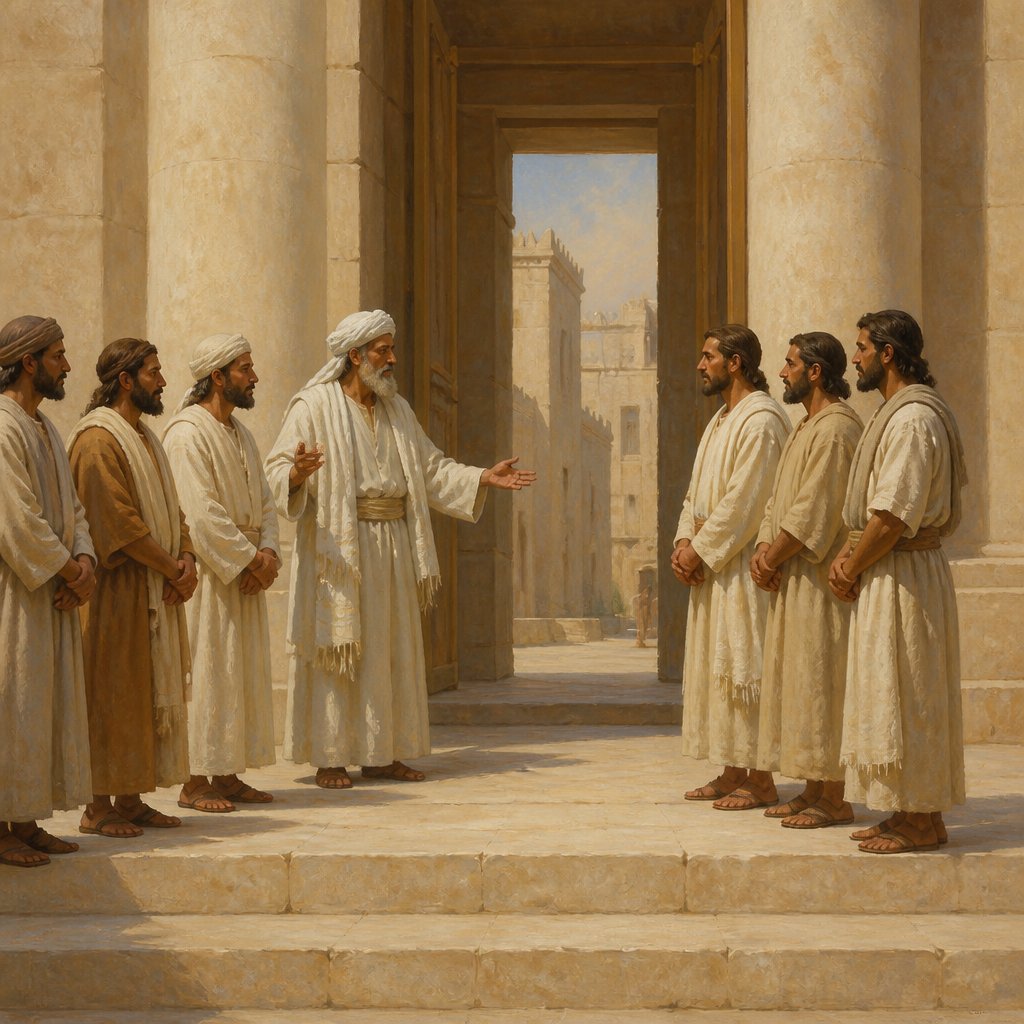
1 Chronicles 26:12 (KJV) - "Among these were the divisions of the porters, even among the chief men, having wards one against another, to minister in the house of the Lord."
The book of 1 Chronicles is a historical narrative that traces the lineage of the Israelite people and recounts their achievements and failures. In chapter 26, the focus is on the organization and duties of the Levites who were responsible for the service of the temple. This verse specifically mentions the divisions of the porters, or gatekeepers, and their organization within the temple. The verse describes how they were divided among the chief men, having wards one against another, to minister in the house of the Lord.
To truly understand the depth and significance of this verse, it is important to consider the context in which it was written. The Israelites had just completed the construction of the temple in Jerusalem, and King David had made provisions for the organization and administration of the temple services. The porters were responsible for guarding the entrances and maintaining order within the temple. Their duties were crucial in upholding the sanctity of the sacred space and ensuring that only those who were ritually pure could enter.
The organization of the porters into divisions and wards reflects the meticulous and orderly nature of the Israelite worship. Each division had specific responsibilities and territories to guard, and they worked together to ensure the smooth functioning of the temple. This arrangement highlights the importance of structure and discipline in the service of the Lord. It also emphasizes the idea of shared responsibility and collaboration among the Levites in their service to God.
One of the key themes of this verse is the idea of ministering in the house of the Lord. The term "minister" here refers to the act of serving or attending to the needs of the temple. The porters were not just gatekeepers, but they were also actively involved in the worship and maintenance of the temple. This underscores the concept of active participation and dedication in the service of God. It was not enough to simply guard the gates; the porters were also expected to contribute to the spiritual life of the temple and to minister to the needs of the community.
The mention of "chief men" among the porters also highlights the importance of leadership within the religious community. The chief men would have been responsible for overseeing the divisions and ensuring that the duties of the porters were carried out effectively. Their role as leaders underscores the need for wise and capable individuals to guide and direct the service of the Lord. This theme of leadership and responsibility is a recurring motif throughout the Bible, and it is reflected here in the organization of the porters.
In addition to the practical and organizational aspects of this verse, there is also a deeper symbolic meaning at play. The temple itself was a symbol of God's presence among his people, and the duties of the porters were symbolic of the spiritual guardianship necessary to maintain that presence. The divisions and wards of the porters can also be seen as a metaphor for the spiritual watchfulness and vigilance required of the faithful in their worship and devotion to God. This verse challenges us to consider the ways in which we "guard the gates" of our spiritual lives and maintain the sanctity of our relationship with God.
In conclusion, 1 Chronicles 26:12 offers a rich and multi-layered exploration of the themes of organization, service, leadership, and spiritual vigilance within the context of the temple. The verse provides valuable insights into the practical and symbolic dimensions of the Israelite worship and invites us to reflect on our own role in ministering in the house of the Lord. It serves as a reminder of the importance of structure and discipline in our spiritual lives and calls us to embrace our responsibilities as active participants in the service of God.
Have questions about 1 Chronicles 26:12?
Dive deeper into this scripture with Bible Chat — an AI-powered tool for exploring God's Word through conversation. Ask questions, get context, and grow in your understanding of the Bible.
Get Our Apps


1 Chronicles 26:12 Artwork

1 Chronicles 26:12 - "Among these were the divisions of the porters, even among the chief men, having wards one against another, to minister in the house of the LORD."
"Among these were the divisions of the porters, even among the chief men, having wards one against another, to minister in the house of the LORD." - 1 Chronicles 26:12

1 Chronicles 12:26 - "Of the children of Levi four thousand and six hundred."
"Of the children of Levi four thousand and six hundred." - 1 Chronicles 12:26

1 Chronicles 1:26 - "Serug, Nahor, Terah,"

2 Chronicles 26:12 - "The whole number of the chief of the fathers of the mighty men of valour were two thousand and six hundred."

1 Chronicles 8:26 - "And Shamsherai, and Shehariah, and Athaliah,"

Genisis 26:12

1 Chronicles 26:23 - "Of the Amramites, and the Izharites, the Hebronites, and the Uzzielites:"

1 Chronicles 12:12 - "Johanan the eighth, Elzabad the ninth,"

1 Chronicles 26:1 - "Concerning the divisions of the porters: Of the Korhites was Meshelemiah the son of Kore, of the sons of Asaph."

"Serug, Nahor, Terah," - 1 Chronicles 1:26

1 Chronicles 26:3 - "Elam the fifth, Jehohanan the sixth, Elioenai the seventh."

1 Chronicles 26:18 - "At Parbar westward, four at the causeway, and two at Parbar."

1 Chronicles 26:24 - "And Shebuel the son of Gershom, the son of Moses, was ruler of the treasures."

1 Chronicles 26:9 - "And Meshelemiah had sons and brethren, strong men, eighteen."

1 Chronicles 16:26 - "For all the gods of the people are idols: but the LORD made the heavens."

1 Chronicles 26:15 - "To Obed-edom southward; and to his sons the house of Asuppim."

1 Chronicles 29:26 - "¶ Thus David the son of Jesse reigned over all Israel."

1 Chronicles 26:19 - "These are the divisions of the porters among the sons of Kore, and among the sons of Merari."

1 Chronicles 24:26 - "The sons of Merari were Mahli and Mushi: the sons of Jaaziah; Beno."

1 Chronicles 1:12 - "And Pathrusim, and Casluhim, (of whom came the Philistines,) and Caphthorim."

1 Chronicles 7:26 - "Laadan his son, Ammihud his son, Elishama his son,"

1 Chronicles 26:27 - "Out of the spoils won in battles did they dedicate to maintain the house of the LORD."

1 Chronicles 26:5 - "Ammiel the sixth, Issachar the seventh, Peulthai the eighth: for God blessed him."

1 Chronicles 25:26 - "The nineteenth to Mallothi, he, his sons, and his brethren, were twelve:"

1 chronicles 12:8

1 Chronicles 6:26 - "As for Elkanah: the sons of Elkanah; Zophai his son, and Nahath his son,"

"And Shamsherai, and Shehariah, and Athaliah," - 1 Chronicles 8:26

1 Chronicles 27:26 - "And over them that did the work of the field for tillage of the ground was Ezri the son of Chelub:"