What does 1 Chronicles 24:16 mean?
"The nineteenth to Pethahiah, the twentieth to Jehezekel," - 1 Chronicles 24:16
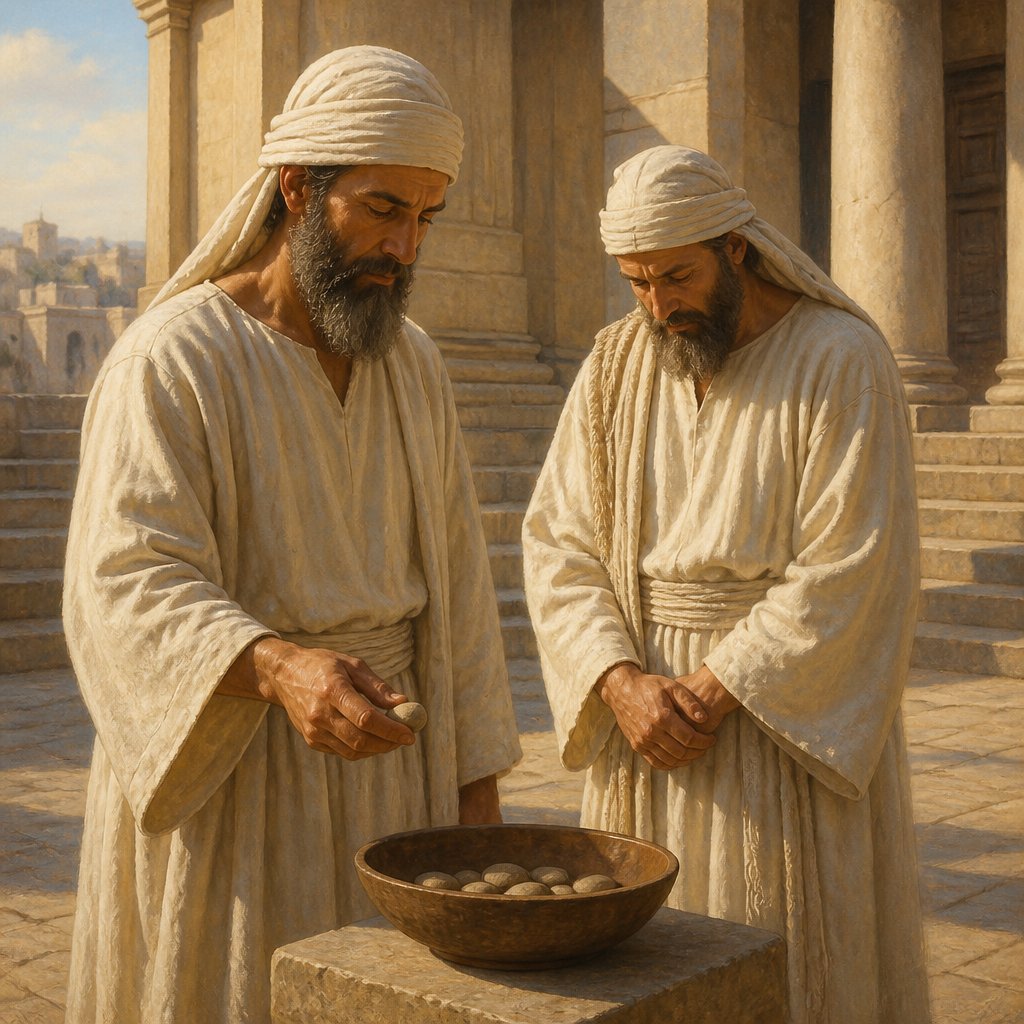
1 Chronicles 24:16 (KJV) "The nineteenth to Pethahiah, the twentieth to Jehezekel,"
In order to understand the meaning and significance of this specific verse from the book of 1 Chronicles, it is important to first examine the context in which it is found. The book of 1 Chronicles is a part of the Hebrew Bible, and it is also included in the Old Testament of the Christian Bible. It is believed to have been written by Ezra, and it serves as a historical record of the genealogy of the Israelites, as well as an account of the reign of King David and the establishment of the Temple in Jerusalem.
The specific verse 1 Chronicles 24:16 is part of a list of the divisions of the priests who were assigned to serve in the Temple. The passage contains the names of the priests and the specific order in which they were to carry out their duties. In this case, the verse mentions two individuals, Pethahiah and Jehezekel, and assigns them the 19th and 20th positions within the priestly divisions.
From a broader perspective, the book of 1 Chronicles is concerned with the establishment and organization of the worship of Yahweh, the God of the Israelites. The detailed record of the priestly divisions and their assignments reflects the importance of order and structure in the religious life of the Israelite community. It also emphasizes the idea of honoring and upholding the responsibilities and traditions associated with the priesthood.
The significance of the verse 1 Chronicles 24:16 lies in its underlying themes of responsibility, order, and divine service. The assignment of specific roles to the priests indicates a sense of duty and accountability within the religious community. Each individual priest had a designated position and set of responsibilities, and they were expected to fulfill their duties with diligence and reverence. This concept of divine service is central to the religious beliefs of the Israelites, as it reflects their commitment to honoring and worshiping Yahweh in a disciplined and organized manner.
Furthermore, the mention of the names Pethahiah and Jehezekel in the verse serves as a reminder of the personal significance of each priest within the larger religious community. These were not just arbitrary positions, but rather roles that were filled by specific individuals with their own identities and contributions to the priestly service. By including their names in the scripture, the verse acknowledges the unique value and importance of each priest in their service to God.
In terms of symbolism, the verse can be seen as representing the idea of divine order and the fulfillment of God's will. The precise organization of the priestly divisions reflects a sense of symmetry and balance, suggesting a harmony within the religious structure. This symbolism underscores the belief in the divine guidance and providence that governed the lives of the Israelites, as well as the idea of a higher purpose and plan that was being carried out through the obedience and dedication of the priesthood.
In conclusion, 1 Chronicles 24:16 is a verse that holds both historical and theological significance within the larger context of the book of 1 Chronicles. It serves as a testament to the disciplined and organized nature of the religious life of the Israelites, as well as the sense of responsibility and duty that characterized the priestly service. The verse also conveys a deeper symbolism of divine order and providence, emphasizing the belief in the guidance and purpose of God in the lives of his people. Overall, 1 Chronicles 24:16 carries a message of reverence, diligence, and obedience in the service of Yahweh, and it reflects the enduring values of faith and tradition within the religious community.
Have questions about 1 Chronicles 24:16?
Dive deeper into this scripture with Bible Chat — an AI-powered tool for exploring God's Word through conversation. Ask questions, get context, and grow in your understanding of the Bible.
Get Our Apps


1 Chronicles 24:16 Artwork

1 Chronicles 24:16 - "The nineteenth to Pethahiah, the twentieth to Jehezekel,"
"The nineteenth to Pethahiah, the twentieth to Jehezekel," - 1 Chronicles 24:16

1 Chronicles 16:24 - "Declare his glory among the heathen; his marvellous works among all nations."

1 Chronicles 24:24 - "Of the sons of Uzziel; Michah: of the sons of Michah; Shamir."

1 Chronicles 1:24 - "¶ Shem, Arphaxad, Shelah,"

"Declare his glory among the heathen; his marvellous works among all nations." - 1 Chronicles 16:24

Exodus 24:16

1 Chronicles 8:24 - "And Hananiah, and Elam, and Antothijah,"

1 Chronicles 1:16 - "And the Arvadite, and the Zemarite, and the Hamathite."

1 Chronicles 24:15 - "The seventeenth to Hezir, the eighteenth to Aphses,"

1 Chronicles 24:11 - "The ninth to Jeshua, the tenth to Shecaniah,"

1 Chronicles 24:14 - "The fifteenth to Bilgah, the sixteenth to Immer,"

1 Chronicles 24:9 - "The fifth to Malchijah, the sixth to Mijamin,"

1 Chronicles 24:13 - "The thirteenth to Huppah, the fourteenth to Jeshebeab,"

1 Chronicles 24:10 - "The seventh to Hakkoz, the eighth to Abijah,"

1 Chronicles 24:8 - "The third to Harim, the fourth to Seorim,"

1 Chronicles 24:12 - "The eleventh to Eliashib, the twelfth to Jakim,"

1 Chronicles 24:22 - "Of the Izharites; Shelomoth: of the sons of Shelomoth; Jahath."

1 Chronicles 24:29 - "Concerning Kish: the son of Kish was Jerahmeel."

"¶ Shem, Arphaxad, Shelah," - 1 Chronicles 1:24

1 Chronicles 24:25 - "The brother of Michah was Isshiah: of the sons of Isshiah; Zechariah."

1 Chronicles 24:18 - "The three and twentieth to Delaiah, the four and twentieth to Maaziah."

1 Chronicles 24:21 - "Concerning Rehabiah: of the sons of Rehabiah, the first was Isshiah."

1 Chronicles 24:28 - "Of Mahli came Eleazar, who had no sons."

1 Chronicles 24:17 - "The one and twentieth to Jachin, the two and twentieth to Gamul,"

1 Chronicles 24:1 - "Now these are the divisions of the sons of Aaron. The sons of Aaron; Nadab, and Abihu, Eleazar, and Ithamar."

1 Chronicles 16:16 - "Even of the covenant which he made with Abraham, and of his oath unto Isaac;"

2 Chronicles 24:16 - "And they buried him in the city of David among the kings, because he had done good in Israel, both toward God, and toward his house."

1 Chronicles 26:24 - "And Shebuel the son of Gershom, the son of Moses, was ruler of the treasures."

1 Chronicles 24:27 - "¶ The sons of Merari by Jaaziah; Beno, and Shoham, and Zaccur, and Ibri."