What does 1 Chronicles 21:29 mean?
"For the tabernacle of the LORD, which Moses made in the wilderness, and the altar of the burnt offering, were at that season in the high place at Gibeon." - 1 Chronicles 21:29
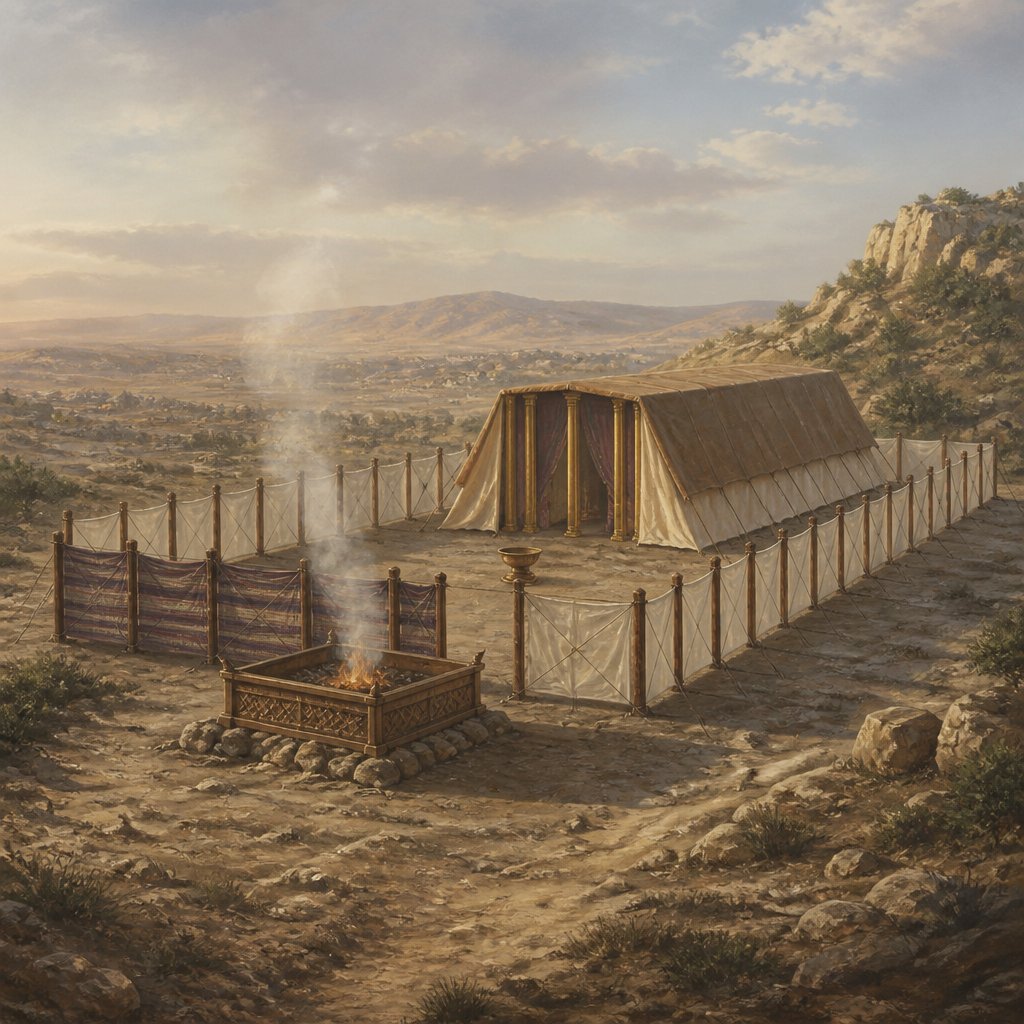
The Bible verse 1 Chronicles 21:29 from the King James Version (KJV) states, “For the tabernacle of the Lord, which Moses made in the wilderness, and the altar of the burnt offering, were at that season in the high place at Gibeon.” This verse is part of a larger passage that recounts the story of King David’s sin of numbering the people of Israel. In this verse, David is instructed by God to build an altar on the threshing floor of Araunah the Jebusite, after God had sent a plague upon Israel as a consequence of David’s sin.
To fully understand the significance and meaning of this verse, it is important to look at the broader context in which it appears. The story of King David’s sin of numbering the people is an essential part of the historical narrative of Israel’s kings as recorded in the books of Samuel and Chronicles. In this particular passage, David’s sin is a demonstration of his pride and lack of trust in God. Instead of relying on God’s protection and provision for his kingdom, David seeks to assess his own power and military strength by taking a census of his people. This is a direct violation of God’s command, and as a result, God sends a devastating plague upon Israel.
Upon realizing the gravity of his sin and the consequences it has brought upon his people, David repents and seeks to make amends. This leads to the events described in 1 Chronicles 21:29, where David is instructed to build an altar on the threshing floor of Araunah the Jebusite. This site later becomes the location of the temple that David’s son, King Solomon, builds as the permanent dwelling place for the Ark of the Covenant.
In 1 Chronicles 21:29, the mention of the tabernacle of the Lord and the altar of the burnt offering in Gibeon is significant in several ways. First, it serves as a reminder of the sacred spaces and religious practices that were established during the time of Moses in the wilderness. The tabernacle, which was a portable tent used for worship and sacrifices, was a central part of Israel’s religious life. The altar of the burnt offering was where animals were sacrificed as atonement for sin and as an act of worship to God. By referencing these elements, the verse connects David’s actions to the broader religious heritage of Israel and its worship practices.
Additionally, the mention of Gibeon as the location of the tabernacle and altar is significant. Gibeon was a city in the territory of the tribe of Benjamin, and it held historical significance as a place of religious worship. After the conquest of Canaan, the tabernacle and the altar of burnt offering were set up in Gibeon, and it became a prominent site for the worship of God. By referencing Gibeon, the verse highlights the continuity of Israel’s religious traditions and the importance of maintaining sacred spaces for worship and sacrifice.
Symbolically, the building of the altar on the threshing floor of Araunah the Jebusite represents David’s repentance and his desire to seek reconciliation with God. The act of offering sacrifices on the altar was a tangible expression of David’s repentance and his acknowledgment of God’s sovereignty. The placement of the altar on the threshing floor also carries symbolic significance, as the threshing floor was a place of separation and purification. By building the altar on this site, David demonstrates his commitment to turning away from sin and dedicating himself to God in a renewed and purified state.
In conclusion, 1 Chronicles 21:29 from the King James Version of the Bible carries rich historical, religious, and symbolic significance. It is a powerful reminder of the consequences of sin, the importance of repentance, and the significance of sacred spaces and religious rituals in the worship of God. This passage serves as a poignant illustration of God’s grace and mercy, as well as the transformative power of genuine repentance and reconciliation with Him.
Have questions about 1 Chronicles 21:29?
Dive deeper into this scripture with Bible Chat — an AI-powered tool for exploring God's Word through conversation. Ask questions, get context, and grow in your understanding of the Bible.
Get Our Apps


1 Chronicles 21:29 Artwork

1 Chronicles 21:29 - "For the tabernacle of the LORD, which Moses made in the wilderness, and the altar of the burnt offering, were at that season in the high place at Gibeon."
"For the tabernacle of the LORD, which Moses made in the wilderness, and the altar of the burnt offering, were at that season in the high place at Gibeon." - 1 Chronicles 21:29
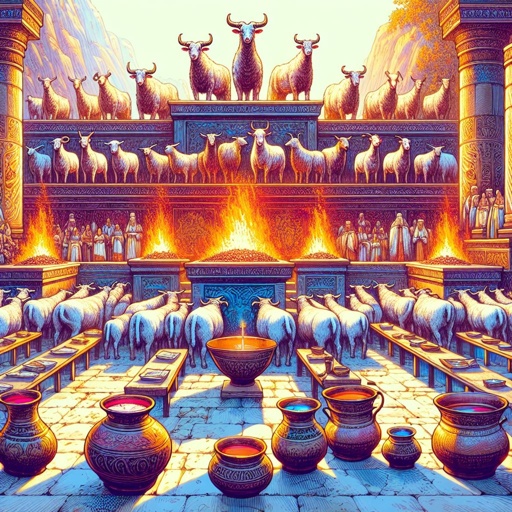
1 Chronicles 29:21 - "And they sacrificed sacrifices unto the LORD, and offered burnt offerings unto the LORD, on the morrow after that day, even a thousand bullocks, a thousand rams, and a thousand lambs, with their drink offerings, and sacrifices in abundance for all Israel:"

1 Chronicles 4:29 - "And at Bilhah, and at Ezem, and at Tolad,"

1 Chronicles 1:29 - "¶ These are their generations: The firstborn of Ishmael, Nebaioth; then Kedar, and Adbeel, and Mibsam,"

1 Chronicles 11:29 - "Sibbecai the Hushathite, Ilai the Ahohite,"

1 Chronicles 24:29 - "Concerning Kish: the son of Kish was Jerahmeel."

1 Chronicles 1:21 - "Hadoram also, and Uzal, and Diklah,"

1 Chronicles 29:29 - "Now the acts of David the king, first and last, behold, they are written in the book of Samuel the seer, and in the book of Nathan the prophet, and in the book of Gad the seer,"

1 Chronicles 29:26 - "¶ Thus David the son of Jesse reigned over all Israel."

1 Chronicles 8:29 - "And at Gibeon dwelt the father of Gibeon; whose wife's name was Maachah:"

1 Chronicles 2:29 - "And the name of the wife of Abishur was Abihail, and she bare him Ahban, and Molid."

"And at Bilhah, and at Ezem, and at Tolad," - 1 Chronicles 4:29

1 Chronicles 25:29 - "The two and twentieth to Giddalti, he, his sons, and his brethren, were twelve:"

1 Chronicles 8:21 - "And Adaiah, and Beraiah, and Shimrath, the sons of Shimhi;"

1 Chronicles 21:1 - "And Satan stood up against Israel, and provoked David to number Israel."

2 Chronicles 29:21 - "And they brought seven bullocks, and seven rams, and seven lambs, and seven he goats, for a sin offering for the kingdom, and for the sanctuary, and for Judah. And he commanded the priests the sons of Aaron to offer them on the altar of the LORD."

2 Chronicles 29:21 (KJVA) 21 And they brought seven bullocks, and seven rams, and seven lambs, and seven he goats, for a sin offering for the kingdom, and for the sanctuary, and for Judah. And he commanded the priests the sons of Aaron to offer them on the altar of the LORD.

1 Chronicles 16:29 – "Ascribe to the Lord the glory due his name; bring an offering and come before him."

1 Chronicles 29:13 - "Now therefore, our God, we thank thee, and praise thy glorious name."

1 Chronicles 26:29 - "¶ Of the Izharites, Chenaniah and his sons were for the outward business over Israel, for officers and judges."

"Sibbecai the Hushathite, Ilai the Ahohite," - 1 Chronicles 11:29

1 Chronicles 24:21 - "Concerning Rehabiah: of the sons of Rehabiah, the first was Isshiah."

1 Chronicles 6:29 - "The sons of Merari; Mahli, Libni his son, Shimei his son, Uzza his son,"

1 Kings 14:29 - "¶ Now the rest of the acts of Rehoboam, and all that he did, are they not written in the book of the chronicles of the kings of Judah?"

1 Chronicles 9:21 - "And Zechariah the son of Meshelemiah was porter of the door of the tabernacle of the congregation."

1 Chronicles 21:7 - "And God was displeased with this thing; therefore he smote Israel."

1 Chronicles 21:9 - "¶ And the LORD spake unto Gad, David's seer, saying,"

"Hadoram also, and Uzal, and Diklah," - 1 Chronicles 1:21

1 Chronicles 21:21 - "And as David came to Ornan, Ornan looked and saw David, and went out of the threshingfloor, and bowed himself to David with his face to the ground."