What does 1 Chronicles 1:5 mean?
"¶ The sons of Japheth; Gomer, and Magog, and Madai, and Javan, and Tubal, and Meshech, and Tiras." - 1 Chronicles 1:5
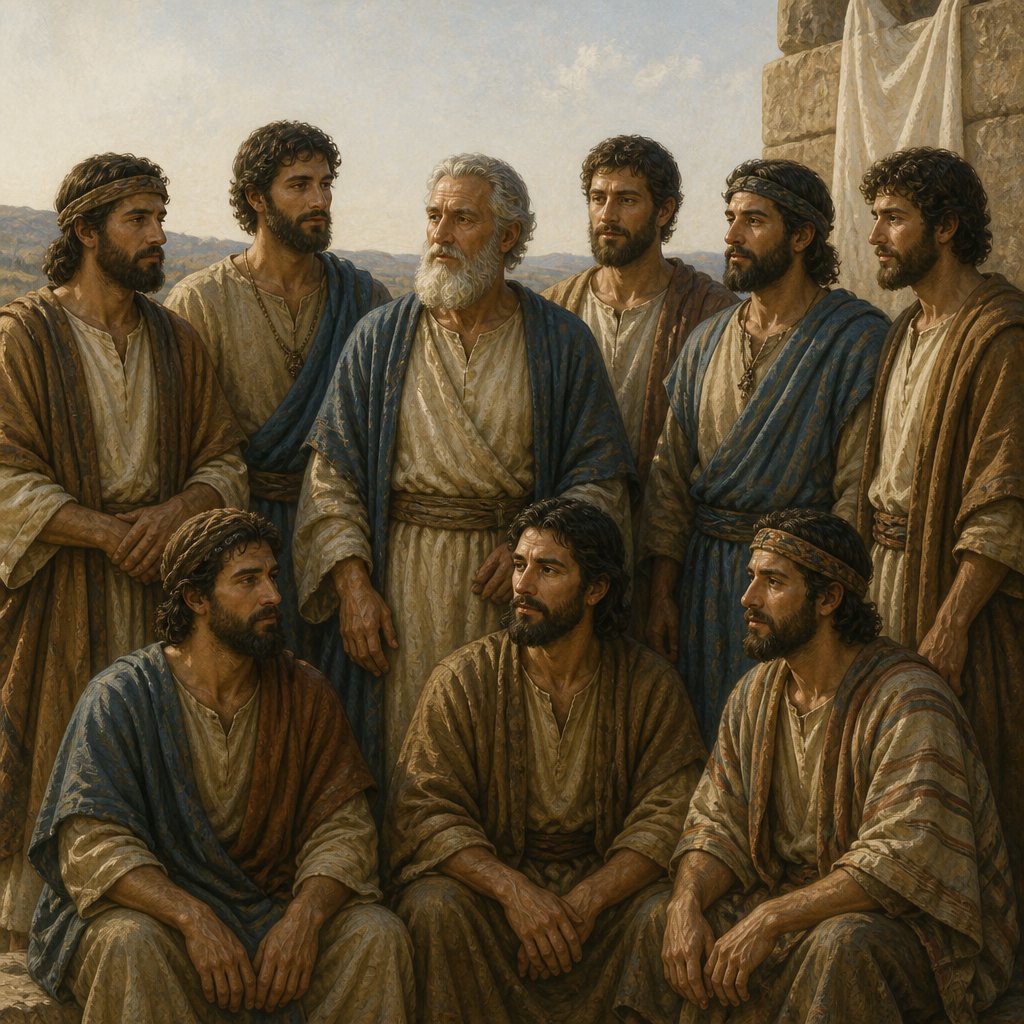
The verse 1 Chronicles 1:5 from the King James Version (KJV) reads: "The sons of Japheth; Gomer, and Magog, and Madai, and Javan, and Tubal, and Meshech, and Tiras."
This verse is part of a genealogical list found in the first chapter of the book of 1 Chronicles. Genealogy was significant in ancient Israel, as it established a person's lineage and heritage, and validated their standing within the community. In this passage, the descendants of Japheth, one of the sons of Noah, are listed. Japheth is mentioned in the book of Genesis as one of the three sons of Noah who survived the flood.
The context of this verse is important for understanding its meaning and significance. The book of 1 Chronicles is part of the Hebrew Bible and the Christian Old Testament, and it is believed to have been written after the Babylonian exile, during a time when the Israelites were trying to reconnect with their history and establish their identity as a people. The genealogies found in 1 Chronicles served as a way to trace the lineage of the Israelites back to the patriarchs and the earliest ancestors, reinforcing their sense of continuity and heritage.
The genealogy of Japheth's descendants serves multiple purposes in the biblical narrative. Firstly, it establishes the connection between the Israelites and the nations surrounding them. By tracing their lineage back to Japheth, who is associated with the nations of the ancient world, the Israelites are positioned within a broader human history, affirming their place in the world. Additionally, the inclusion of the descendants of Japheth reflects the biblical understanding of the diversity of humanity and the abundance of nations that emerged from the sons of Noah after the flood.
Symbolism plays a significant role in this verse, as the names of Japheth's sons and their descendants carry symbolic and historical weight. Gomer, for example, is associated with the ancient people of Gomer, who were believed to have inhabited territory in what is now modern-day Turkey. Magog, similarly, is linked to a people group mentioned in the book of Ezekiel, and Madai is believed to represent the Medes, an ancient Iranian people. Javan is often associated with the Greeks, while Tubal and Meshech are identified with regions in Asia Minor.
The inclusion of these names and their associations with specific nations and territories underscores the biblical understanding of the interconnectedness of nations and the diversity of human culture. The genealogical list serves to highlight the rich tapestry of human history and the multitude of nations that make up the world. It also reflects the ancient Israelite view of the world as populated by a variety of peoples, each with their own distinct identity and heritage.
Moreover, the genealogy of Japheth's descendants contributes to the broader themes of unity and diversity found throughout the Bible. While the descendants of Japheth are depicted as distinct nations with their own histories and cultures, they are also part of the broader human family descended from Noah. This reflects the biblical conception of all humanity as sharing a common ancestry and being interconnected, despite their differences.
In conclusion, the verse 1 Chronicles 1:5 from the King James Version offers a glimpse into the ancient Israelite understanding of lineage, history, and the diversity of human culture. It serves to situate the Israelites within the broader context of human history and emphasizes the interconnectedness of nations. The symbolism and themes present in this verse contribute to the Bible's broader message of unity, diversity, and the common ancestry of all humanity.
Have questions about 1 Chronicles 1:5?
Dive deeper into this scripture with Bible Chat — an AI-powered tool for exploring God's Word through conversation. Ask questions, get context, and grow in your understanding of the Bible.
Get Our Apps


1 Chronicles 1:5 Artwork

1 Chronicles 1:5 - "¶ The sons of Japheth; Gomer, and Magog, and Madai, and Javan, and Tubal, and Meshech, and Tiras."

"¶ The sons of Japheth; Gomer, and Magog, and Madai, and Javan, and Tubal, and Meshech, and Tiras." - 1 Chronicles 1:5

1 Chronicles 8:5 - "And Gera, and Shephuphan, and Huram."

1 Chronicles 14:5 - "And Ibhar, and Elishua, and Elpalet,"

1 Chronicles 5:5 - "Micah his son, Reaia his son, Baal his son,"

1 Chronicles 2:5 - "The sons of Pharez; Hezron, and Hamul."

1 Chronicles 9:5 - "And of the Shilonites; Asaiah the firstborn, and his sons."

1 Chronicles 12:5 - "Eluzai, and Jerimoth, and Bealiah, and Shemariah, and Shephatiah the Haruphite,"

1 Chronicles 5:19 - "And they made war with the Hagarites, with Jetur, and Nephish, and Nodab."

1 Chronicles 6:5 - "And Abishua begat Bukki, and Bukki begat Uzzi,"

1 Chronicles 5:12 - "Joel the chief, and Shapham the next, and Jaanai, and Shaphat in Bashan."

1 Chronicles 5:15 - "Ahi the son of Abdiel, the son of Guni, chief of the house of their fathers."

1 Chronicles 15:5 - "Of the sons of Kohath; Uriel the chief, and his brethren an hundred and twenty:"

1 Chronicles 4:5 - "¶ And Ashur the father of Tekoa had two wives, Helah and Naarah."

1 Chronicles 26:5 - "Ammiel the sixth, Issachar the seventh, Peulthai the eighth: for God blessed him."

"And Gera, and Shephuphan, and Huram." - 1 Chronicles 8:5

"And Ibhar, and Elishua, and Elpalet," - 1 Chronicles 14:5

1 Chronicles 5:11 - "¶ And the children of Gad dwelt over against them, in the land of Bashan unto Salchah:"

1 Chronicles 5:16 - "And they dwelt in Gilead in Bashan, and in her towns, and in all the suburbs of Sharon, upon their borders."

1 Chronicles 10:5 - "And when his armourbearer saw that Saul was dead, he fell likewise on the sword, and died."

1 Chronicles 5:4 - "The sons of Joel; Shemaiah his son, Gog his son, Shimei his son,"

1 Chronicles 5:2 - "For Judah prevailed above his brethren, and of him came the chief ruler; but the birthright was Joseph's:)"

1 Chronicles 5:7 - "And his brethren by their families, when the genealogy of their generations was reckoned, were the chief, Jeiel, and Zechariah,"

1 Chronicles 5:3 - "The sons, I say, of Reuben the firstborn of Israel were, Hanoch, and Pallu, Hezron, and Carmi."

1 Chronicles 5:22 - "For there fell down many slain, because the war was of God. And they dwelt in their steads until the captivity."

"The sons of Pharez; Hezron, and Hamul." - 1 Chronicles 2:5

1 Chronicles 5:13 - "And their brethren of the house of their fathers were, Michael, and Meshullam, and Sheba, and Jorai, and Jachan, and Zia, and Heber, seven."

1 Chronicles 5:17 - "All these were reckoned by genealogies in the days of Jotham king of Judah, and in the days of Jeroboam king of Israel."

"And of the Shilonites; Asaiah the firstborn, and his sons." - 1 Chronicles 9:5

1 Kings 16:5 - "Now the rest of the acts of Baasha, and what he did, and his might, are they not written in the book of the chronicles of the kings of Israel?"