What does 1 Chronicles 1:47 mean?
"And when Hadad was dead, Samlah of Masrekah reigned in his stead." - 1 Chronicles 1:47
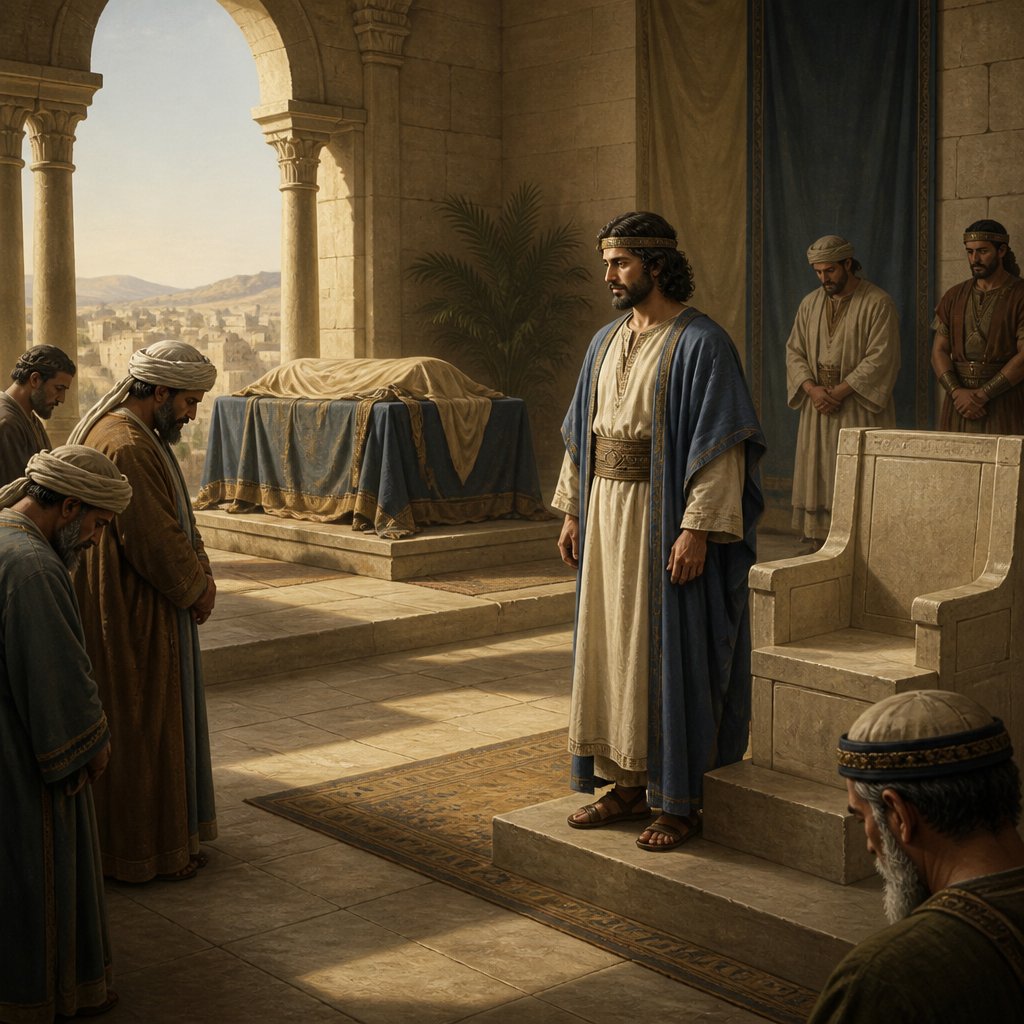
The Bible verse 1 Chronicles 1:47 is a relatively short verse, but it is packed with historical and genealogical significance. It reads, "And when Hadad was dead, Samlah of Masrekah reigned in his stead." At first glance, this verse may seem insignificant, but when placed in its proper context and understood alongside the broader themes and symbolism of the Bible, it becomes evident that this verse holds great importance.
To truly understand the significance of 1 Chronicles 1:47, it is essential to examine the broader context of the Book of Chronicles and the historical and cultural context in which it was written. The Book of Chronicles is a historical account that traces the genealogy of Israel from Adam to the time of the Babylonian exile. It emphasizes the continuity of God's promises and the faithfulness of His covenant over the centuries. The verse in question, 1 Chronicles 1:47, is part of a lengthy genealogy that serves to establish the lineage of various nations and peoples, including the descendants of Esau.
The verse specifically mentions the death of Hadad and the rise of Samlah of Masrekah to power. While this may seem like a mere political transition, it reflects a broader theme found throughout the Bible - the rise and fall of earthly kingdoms and rulers. This theme is a constant reminder of the transient nature of human power and the enduring sovereignty of God. It directs the reader's attention to the ultimate authority and dominion of God over the affairs of humanity.
Furthermore, the mention of these rulers serves as a reminder of the consequences of sin and the fallen nature of humanity. Hadad and Samlah are portrayed as mere mortal men who come and go, highlighting the fleeting nature of power and the consequences of human pride and disobedience. Their rise and fall are a reflection of the impermanence of worldly power and the ultimate futility of seeking fulfillment and security in earthly pursuits.
Symbolically, these rulers can also be seen as representative of the broader struggles and conflicts that have characterized human history. Their reigns symbolize the constant cycle of conquest, warfare, and the pursuit of power that has marked human civilization. In this sense, these rulers serve as a reminder of the brokenness and fallenness of the world, emphasizing the need for redemption and restoration.
The historical and cultural context of this verse is also significant. The reference to Hadad and Samlah would have held particular significance for the original audience of the Book of Chronicles, as they were figures of importance in the ancient Near Eastern world. By including these names in the genealogy, the author of Chronicles would have been highlighting the interconnectedness of Israel with the broader historical and cultural context in which they lived. This would have served to affirm Israel's place within the broader narrative of human history, while also emphasizing the distinctiveness of Israel as God's chosen people.
In conclusion, while 1 Chronicles 1:47 may appear to be a simple mention of a change in rulership, when examined in its broader context and in light of the themes and symbolism of the Bible, it becomes clear that this verse carries significant historical, cultural, and theological implications. It serves as a reminder of the transient nature of human power, the consequences of sin, and the broader historical and cultural context in which the people of Israel lived. Ultimately, this verse points to the enduring sovereignty of God and the need for redemption and restoration in a fallen world.
Have questions about 1 Chronicles 1:47?
Dive deeper into this scripture with Bible Chat — an AI-powered tool for exploring God's Word through conversation. Ask questions, get context, and grow in your understanding of the Bible.
Get Our Apps


1 Chronicles 1:47 Artwork

1 Chronicles 1:47 - "And when Hadad was dead, Samlah of Masrekah reigned in his stead."

"And when Hadad was dead, Samlah of Masrekah reigned in his stead." - 1 Chronicles 1:47

1 Chronicles 11:47 - "Eliel, and Obed, and Jasiel the Mesobaite."

1 Chronicles 2:47 - "And the sons of Jahdai; Regem, and Jotham, and Gesham, and Pelet, and Ephah, and Shaaph."

1 Chronicles 6:47 - "The son of Mahli, the son of Mushi, the son of Merari, the son of Levi."

"Eliel, and Obed, and Jasiel the Mesobaite." - 1 Chronicles 11:47

"The son of Mahli, the son of Mushi, the son of Merari, the son of Levi." - 1 Chronicles 6:47

"And the sons of Jahdai; Regem, and Jotham, and Gesham, and Pelet, and Ephah, and Shaaph." - 1 Chronicles 2:47

ezekiel 47:1-12

ezekiel 47:1-12

ezekiel 47:1-12

ezekiel 47:1-12

ezekiel 47:1-12

Ezekiel 47:1-12

ezekiel 47:1-12

ezekiel 47:1-12

ezekiel 47:1-12

ezekiel 47:1-12

ezekiel 47:1-12

ezekiel 47:1-12

ezekiel 47:1-12

ezekiel 47:1-12

1 Kings 22:47 - "There was then no king in Edom: a deputy was king."

Ezequiel 47, 1-9. 12

Ezekiel 47:1-9, 12

Luke 1:47 - "And my spirit hath rejoiced in God my Saviour."

Numbers 1:47 - "¶ But the Levites after the tribe of their fathers were not numbered among them."

1 Corinthians 15:47 - "The first man is of the earth, earthy: the second man is the Lord from heaven."

Jeremiah 47:1 - "The word of the LORD that came to Jeremiah the prophet against the Philistines, before that Pharaoh smote Gaza."

1 Chronicles 1:15