What does 1 Chronicles 1:10 mean?
"And Cush begat Nimrod: he began to be mighty upon the earth." - 1 Chronicles 1:10
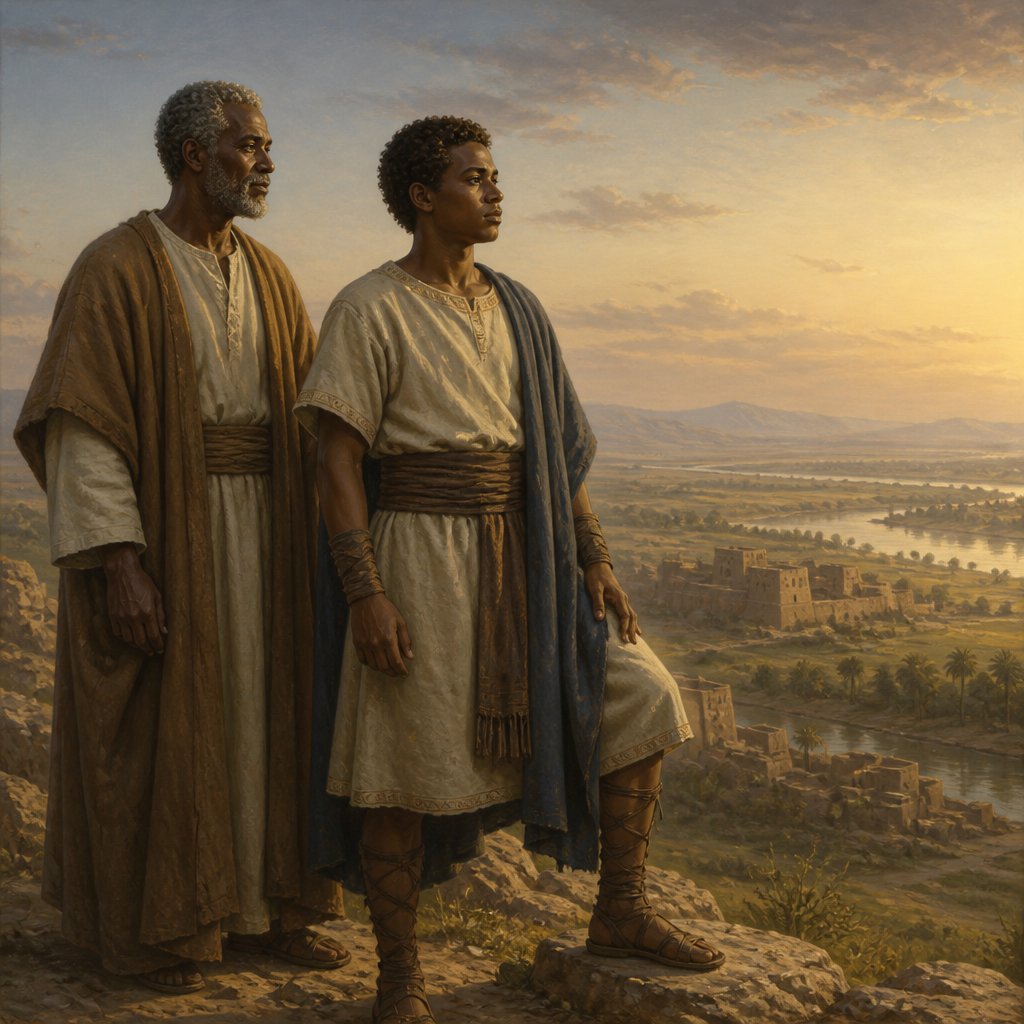
The Bible verse 1 Chronicles 1:10 in the King James Version (KJV) states, "And Cush begat Nimrod: he began to be mighty upon the earth." This verse is part of a genealogical record in the first chapter of the book of 1 Chronicles. It lists the descendants of Shem, the son of Noah, and provides a historical account of the lineage of the Israelites.
The name "Cush" in this verse refers to a son of Ham, who was one of Noah's three sons. According to the biblical account, Cush was the father of Nimrod, who is described as a mighty figure in the ancient world. The verse intriguingly states that Nimrod "began to be mighty upon the earth," suggesting that his rise to power and influence was gradual and intentional.
Nimrod's significance in this verse has been the subject of much discussion and interpretation among theologians and scholars. The name "Nimrod" is often associated with rebellion and defiance, as he is mentioned in the Book of Genesis as a "mighty hunter" and a builder of cities, including Babel (Genesis 10:8-12). Some commentators depict him as a tyrannical figure who sought to defy God and establish his own kingdom in opposition to divine authority.
In a broader historical and cultural context, the mention of Nimrod in 1 Chronicles 1:10 reflects the ancient Israelites' awareness of the influential figures and rulers of other nations. Beyond its genealogical significance, this verse serves to situate the Israelites within the wider landscape of human history and to underscore the connections between different peoples and cultures.
From a thematic perspective, this verse highlights the complexities of human ambition and power. Nimrod is described as "mighty upon the earth," a phrase that suggests his growing influence and authority. This portrayal of human agency and achievement raises questions about the nature of power and the motivations driving individuals to seek dominion over others. It also invites reflection on the ways in which human endeavors can be directed towards both constructive and destructive ends.
The symbolism in this verse can be interpreted in different ways. Some see Nimrod as a symbol of human pride and hubris, representing the desire for autonomy and self-glorification. His ambitious projects and quest for dominance may be seen as a cautionary tale about the pitfalls of unchecked ambition and the corrupting effects of power. On the other hand, the mention of Nimrod may also be seen as a reminder of the enduring nature of human enterprise and the capacity for individuals to leave a lasting impact on the world.
Furthermore, the verse can be read as a testament to the providence of God in human history. Despite the efforts of powerful figures like Nimrod to carve out their own destinies, the overarching narrative of the Bible affirms the ultimate sovereignty of God over human affairs. From this perspective, Nimrod's rise to power serves as a backdrop to the unfolding drama of divine redemption and salvation, in which the Creator's purposes ultimately prevail.
In conclusion, 1 Chronicles 1:10 offers a glimpse into the ancient lineage of the Israelites and sheds light on the figure of Nimrod, a formidable and enigmatic figure in biblical history. This verse prompts us to consider the complexities of human ambition, the interplay of power and providence, and the enduring legacy of influential figures in shaping the course of human events. It invites readers to ponder the nature of power, the dynamics of human endeavor, and the unfolding drama of divine purpose in the midst of human history.
Have questions about 1 Chronicles 1:10?
Dive deeper into this scripture with Bible Chat — an AI-powered tool for exploring God's Word through conversation. Ask questions, get context, and grow in your understanding of the Bible.
Get Our Apps


1 Chronicles 1:10 Artwork

1 Chronicles 1:10 - "And Cush begat Nimrod: he began to be mighty upon the earth."
"And Cush begat Nimrod: he began to be mighty upon the earth." - 1 Chronicles 1:10

1 Chronicles 4 : 10

1 Chronicles 9:10 - "¶ And of the priests; Jedaiah, and Jehoiarib, and Jachin,"

1 Chronicles 12:10 - "Mishmannah the fourth, Jeremiah the fifth,"

1 Chronicles 24:10 - "The seventh to Hakkoz, the eighth to Abijah,"

1 Chronicles 10:10 - "And they put his armour in the house of their gods, and fastened his head in the temple of Dagon."

1 Chronicles 15:10 - "Of the sons of Uzziel; Amminadab the chief, and his brethren an hundred and twelve."

1 Chronicles 8:10 - "And Jeuz, and Shachia, and Mirma. These were his sons, heads of the fathers."

1 Chronicles 10:1 - "Now the Philistines fought against Israel; and the men of Israel fled from before the Philistines, and fell down slain in mount Gilboa."

1 Chronicles 2:10 - "And Ram begat Amminadab; and Amminadab begat Nahshon, prince of the children of Judah;"

1 Chronicles 25:10 - "The third to Zaccur, he, his sons, and his brethren, were twelve:"

1 Chronicles 10:11 - "¶ And when all Jabesh-gilead heard all that the Philistines had done to Saul,"

2 Chronicles 10:1 - "And Rehoboam went to Shechem: for to Shechem were all Israel come to make him king."

1 Chronicles 6:10 - "And Johanan begat Azariah, (he it is that executed the priest's office in the temple that Solomon built in Jerusalem:)"

1 Chronicles 23:10 - "And the sons of Shimei were, Jahath, Zina, and Jeush, and Beriah. These four were the sons of Shimei."

1 Chronicles 10:6 - "So Saul died, and his three sons, and all his house died together."

1 Chronicles 10:5 - "And when his armourbearer saw that Saul was dead, he fell likewise on the sword, and died."

1 Chronicles 16:10 - "Glory ye in his holy name: let the heart of them rejoice that seek the LORD."

1 Chronicles 10:3 - "And the battle went sore against Saul, and the archers hit him, and he was wounded of the archers."
"¶ And of the priests; Jedaiah, and Jehoiarib, and Jachin," - 1 Chronicles 9:10

"Mishmannah the fourth, Jeremiah the fifth," - 1 Chronicles 12:10

"The seventh to Hakkoz, the eighth to Abijah," - 1 Chronicles 24:10

1 Chronicles 3:10 - "¶ And Solomon's son was Rehoboam, Abia his son, Asa his son, Jehoshaphat his son,"

1 Chronicles 10:14 - "And enquired not of the LORD: therefore he slew him, and turned the kingdom unto David the son of Jesse."

1 Chronicles 28:10 - "Take heed now; for the LORD hath chosen thee to build an house for the sanctuary: be strong, and do it."

1 Chronicles 7:10 - "The sons also of Jediael; Bilhan: and the sons of Bilhan; Jeush, and Benjamin, and Ehud, and Chenaanah, and Zethan, and Tharshish, and Ahishahar."

1 Chronicles 27:10 - "The seventh captain for the seventh month was Helez the Pelonite, of the children of Ephraim: and in his course were twenty and four thousand."

1 Chronicles 5:10 - "And in the days of Saul they made war with the Hagarites, who fell by their hand: and they dwelt in their tents throughout all the east land of Gilead."

1 Chronicles 1:15