What does 1 Chronicles 13:3 mean?
"And let us bring again the ark of our God to us: for we enquired not at it in the days of Saul." - 1 Chronicles 13:3
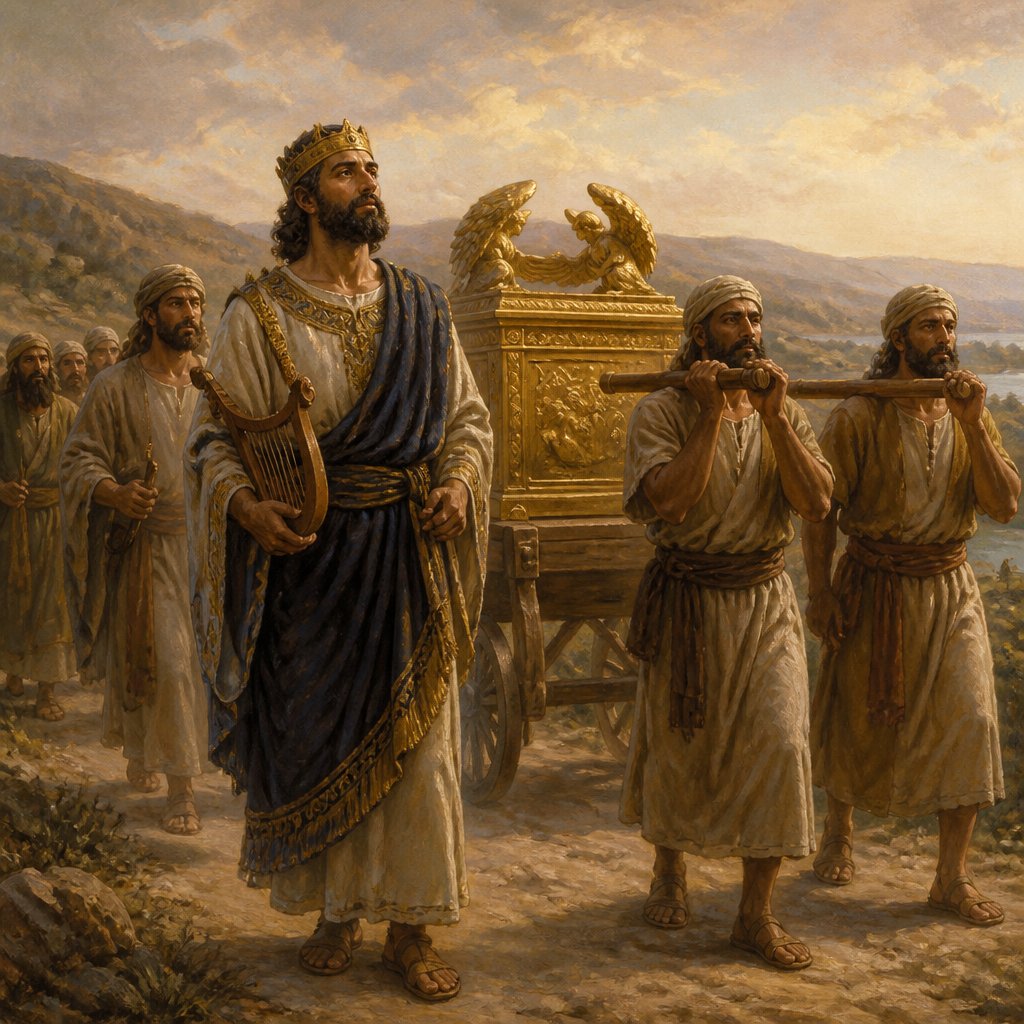
The Bible verse 1 Chronicles 13:3 in the King James Version (KJV) states, "And let us bring again the ark of our God to us: for we inquired not at it in the days of Saul." This verse is a part of the Old Testament, and it takes place during the reign of King David. This particular verse is a part of a larger story that illustrates the significance of the Ark of the Covenant in the history of Israel.
To truly grasp the depth of this verse, it is important to understand the historical and cultural context in which it takes place. The Ark of the Covenant held immense significance for the people of Israel. It was a sacred chest that housed the tablets inscribed with the Ten Commandments, as well as other holy relics. The Ark was considered the physical representation of God's presence among the people of Israel, and it held great spiritual and symbolic importance.
During the time of King David, the Ark of the Covenant had been neglected and forgotten. The verse references the fact that the people had not inquired of the Ark during the days of Saul, David's predecessor. In bringing the Ark back into focus, David sought to restore the spiritual center of the nation and acknowledge the presence of God in their midst. This verse serves as a call to action, urging the people to bring the Ark of God back into their lives and reestablish their relationship with Him.
One of the key themes of this verse is the idea of restoration. The neglect of the Ark represents a neglect of their spiritual heritage and relationship with God. Through the actions of King David and the people of Israel in bringing back the Ark, there is a sense of spiritual renewal and revival. This theme of restoration is a common motif throughout the Bible, illustrating the mercy and grace of God in allowing for the renewal of faith and relationship with Him.
Another important theme in this verse is the significance of seeking God's presence. The people of Israel had neglected the Ark, failing to seek guidance and direction from God. By bringing the Ark back into focus, there is a renewed emphasis on seeking God's presence and guidance in all aspects of life. This theme serves as a reminder of the importance of acknowledging and honoring God in all things.
The symbolism in this verse is profound and multi-layered. The Ark of the Covenant represents the tangible presence of God among His people. By neglecting the Ark, the people had distanced themselves from God. The act of bringing the Ark back represents a desire to restore that closeness and connection. The symbolism of the Ark also represents the holiness and righteousness of God, and the act of bringing it back signifies a return to honoring and revering God.
In conclusion, 1 Chronicles 13:3 in the KJV version serves as a powerful reminder of the importance of seeking and restoring God's presence in our lives. It speaks to the themes of restoration, seeking God's presence, and the powerful symbolism of the Ark of the Covenant. This verse holds a timeless message that continues to resonate with believers today, serving as a call to renew and restore our relationship with God.
Have questions about 1 Chronicles 13:3?
Dive deeper into this scripture with Bible Chat — an AI-powered tool for exploring God's Word through conversation. Ask questions, get context, and grow in your understanding of the Bible.
Get Our Apps


1 Chronicles 13:3 Artwork

1 Chronicles 13:3 - "And let us bring again the ark of our God to us: for we enquired not at it in the days of Saul."

"And let us bring again the ark of our God to us: for we enquired not at it in the days of Saul." - 1 Chronicles 13:3

1 Chronicles 3:13 - "Ahaz his son, Hezekiah his son, Manasseh his son,"

"Ahaz his son, Hezekiah his son, Manasseh his son," - 1 Chronicles 3:13

1 Chronicles 1:13 - "And Canaan begat Zidon his firstborn, and Heth,"

1 Chronicles 1:3 - "Henoch, Methuselah, Lamech,"

1 Chronicles 13:1 - "And David consulted with the captains of thousands and hundreds, and with every leader."

1 Chronicles 24:13 - "The thirteenth to Huppah, the fourteenth to Jeshebeab,"

1 Chronicles 12:13 - "Jeremiah the tenth, Machbanai the eleventh."

2 Chronicles 3:13 - "The wings of these cherubims spread themselves forth twenty cubits: and they stood on their feet, and their faces were inward."

1 Chronicles 3:3 - "The fifth, Shephatiah of Abital: the sixth, Ithream by Eglah his wife."

1 Chronicles 6:13 - "And Shallum begat Hilkiah, and Hilkiah begat Azariah,"

1 Thessalonians 3:13

1 Thessalonians 3:13

1 Chronicles 3:7 - "And Nogah, and Nepheg, and Japhia,"

1 Thessalonians 3:13

1 Thessalonians 3:13

1 Thessalonians 3:13

1 Chronicles 13:13 - "So David brought not the ark home to himself to the city of David, but carried it aside into the house of Obed-edom the Gittite."

Lamentations 3:13

Colossians 3:13

1 Chronicles 4:13 - "And the sons of Kenaz; Othniel, and Seraiah: and the sons of Othniel; Hathath."

1 Chronicles 14:13 - "And the Philistines yet again spread themselves abroad in the valley."

1 Chronicles 3:8 - "And Elishama, and Eliada, and Eliphelet, nine."

1 Chronicles 3:6 - "Ibhar also, and Elishama, and Eliphelet,"

1 Chronicles 7:13 - "¶ The sons of Naphtali; Jahziel, and Guni, and Jezer, and Shallum, the sons of Bilhah."

1 Thessalonians 3:13

1 Thessalonians 3:13

1 Thessalonians 3:13

"Henoch, Methuselah, Lamech," - 1 Chronicles 1:3