What does 1 Chronicles 12:38 mean?
"All these men of war, that could keep rank, came with a perfect heart to Hebron, to make David king over all Israel: and all the rest also of Israel were of one heart to make David king." - 1 Chronicles 12:38
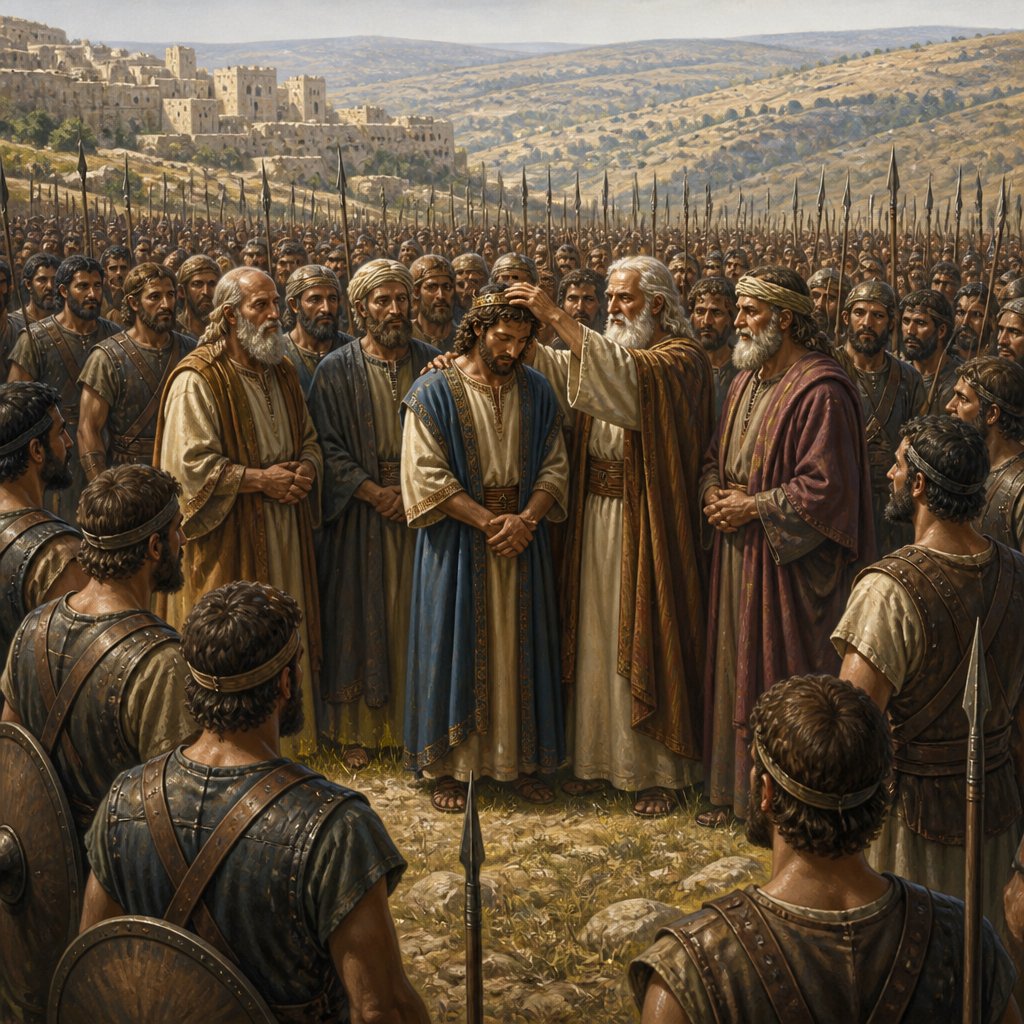
1 Chronicles 12:38 (KJV) states, "All these men of war, that could keep rank, came with a perfect heart to Hebron, to make David king over all Israel: and all the rest also of Israel were of one heart to make David king."
This verse from the book of 1 Chronicles provides insight into the unity and loyalty of the warriors who supported David, the future king of Israel. The verse speaks of the men who were not only skilled in war but also had a perfect heart, indicating their unwavering devotion and commitment to David's leadership. The mention of Hebron as the gathering place holds historical significance as it was a significant city in ancient Israel and held symbolic meaning in the transition of power and authority.
Contextually, 1 Chronicles 12:38 occurs during a pivotal time in David's life. After years of battling enemies and facing adversity, David is on the brink of assuming the throne as the king of Israel. The verse serves as a testament to David's leadership and the unity among his supporters. It reflects the loyalty and allegiance of the warriors who came together in Hebron to show their support for David's kingship. The verse conveys the unified purpose and determination of the people of Israel in their collective decision to anoint David as their king.
The theme of unity and loyalty is central to this verse. The men who gathered in Hebron were not only skilled warriors, but they were also united in their devotion to David. Their perfect hearts symbolize their pure and genuine intentions, devoid of any ulterior motives or personal agendas. Their commitment to David's kingship illustrates the importance of loyalty and unity in achieving a common goal. This theme of unity and loyalty is an enduring moral lesson that transcends time and resonates with readers today.
Moreover, the verse also highlights the significance of the city of Hebron. In the biblical narrative, Hebron is a location of great importance, often associated with moments of transition, revelation, and divine promises. It was in Hebron that Abraham received the promise of descendants and land from God (Genesis 13:18). Furthermore, Hebron became the first capital of David's kingdom before he established Jerusalem as the political and religious center. Thus, the choice of Hebron as the gathering place for David's anointing adds a layer of symbolism and historical significance to the verse.
Symbolically, the perfection of heart mentioned in the verse represents the inner purity and sincerity of the warriors' intentions. It implies a wholehearted devotion and commitment to David's cause. This idea of purity of heart is consistent with biblical teachings that emphasize the importance of sincerity and authenticity in one's faith and actions. The phrase "to make David king over all Israel" not only points to the political event of David's anointing but also holds deeper spiritual significance. It symbolizes the establishment of God's chosen leader to rule over His people, in accordance with His divine plan and purpose.
In conclusion, 1 Chronicles 12:38 is a verse that encapsulates themes of unity, loyalty, and divine purpose within a historical and symbolic context. It portrays the unyielding support of the warriors who gathered in Hebron, their unwavering devotion to David, and the profound significance of their actions in the biblical narrative. The verse offers valuable insights into the qualities of true leadership, the power of unity, and the importance of wholehearted commitment in fulfilling God's ordained purposes. Overall, this verse serves as a timeless reminder of the enduring virtues of loyalty, sincerity, and unity in the pursuit of righteous and noble endeavors.
Have questions about 1 Chronicles 12:38?
Dive deeper into this scripture with Bible Chat — an AI-powered tool for exploring God's Word through conversation. Ask questions, get context, and grow in your understanding of the Bible.
Get Our Apps


1 Chronicles 12:38 Artwork

1 Chronicles 12:38 - "All these men of war, that could keep rank, came with a perfect heart to Hebron, to make David king over all Israel: and all the rest also of Israel were of one heart to make David king."
"All these men of war, that could keep rank, came with a perfect heart to Hebron, to make David king over all Israel: and all the rest also of Israel were of one heart to make David king." - 1 Chronicles 12:38

1 Chronicles 7:38 - "And the sons of Jether; Jephunneh, and Pispah, and Ara."

1 Chronicles 2:38 - "And Obed begat Jehu, and Jehu begat Azariah,"

1 Chronicles 1:38 - "And the sons of Seir; Lotan, and Shobal, and Zibeon, and Anah, and Dishon, and Ezer, and Dishan."

1 Chronicles 11:38 - "Joel the brother of Nathan, Mibhar the son of Haggeri,"

1 Chronicles 6:38 - "The son of Izhar, the son of Kohath, the son of Levi, the son of Israel."

1 Chronicles 4:38 - "These mentioned by their names were princes in their families: and the house of their fathers increased greatly."

1 Chronicles 9:38 - "And Mikloth begat Shimeam. And they also dwelt with their brethren at Jerusalem, over against their brethren."

1 Chronicles 16:38 - "And Obed-edom with their brethren, threescore and eight; Obed-edom also the son of Jeduthun and Hosah to be porters:"

1 chronicles 12:8

"And the sons of Jether; Jephunneh, and Pispah, and Ara." - 1 Chronicles 7:38

1 Chronicles 12:12 - "Johanan the eighth, Elzabad the ninth,"

"Joel the brother of Nathan, Mibhar the son of Haggeri," - 1 Chronicles 11:38

"And Obed begat Jehu, and Jehu begat Azariah," - 1 Chronicles 2:38

1 Chronicles 8:38 - "And Azel had six sons, whose names are these, Azrikam, Bocheru, and Ishmael, and Sheariah, and Obadiah, and Hanan. All these were the sons of Azel."

"And the sons of Seir; Lotan, and Shobal, and Zibeon, and Anah, and Dishon, and Ezer, and Dishan." - 1 Chronicles 1:38

1 Chronicles 1:12 - "And Pathrusim, and Casluhim, (of whom came the Philistines,) and Caphthorim."

1 Chronicles 12:10 - "Mishmannah the fourth, Jeremiah the fifth,"

1 Chronicles 12:13 - "Jeremiah the tenth, Machbanai the eleventh."

1 Chronicles 12:11 - "Attai the sixth, Eliel the seventh,"

1 Chronicles 24:12 - "The eleventh to Eliashib, the twelfth to Jakim,"

"The son of Izhar, the son of Kohath, the son of Levi, the son of Israel." - 1 Chronicles 6:38

"Johanan the eighth, Elzabad the ninth," - 1 Chronicles 12:12

1 Chronicles 12:7 - "And Joelah, and Zebadiah, the sons of Jeroham of Gedor."

"These mentioned by their names were princes in their families: and the house of their fathers increased greatly." - 1 Chronicles 4:38

1 Chronicles 6:12 - "And Ahitub begat Zadok, and Zadok begat Shallum,"

1 Chronicles 12:26 - "Of the children of Levi four thousand and six hundred."

1 Chronicles 12:9 - "Ezer the first, Obadiah the second, Eliab the third,"

1 Chronicles 12:6 - "Elkanah, and Jesiah, and Azareel, and Joezer, and Jashobeam, the Korhites,"