What does 1 Chronicles 12:3 mean?
"The chief was Ahiezer, then Joash, the sons of Shemaah the Gibeathite; and Jeziel, and Pelet, the sons of Azmaveth; and Berachah, and Jehu the Antothite," - 1 Chronicles 12:3
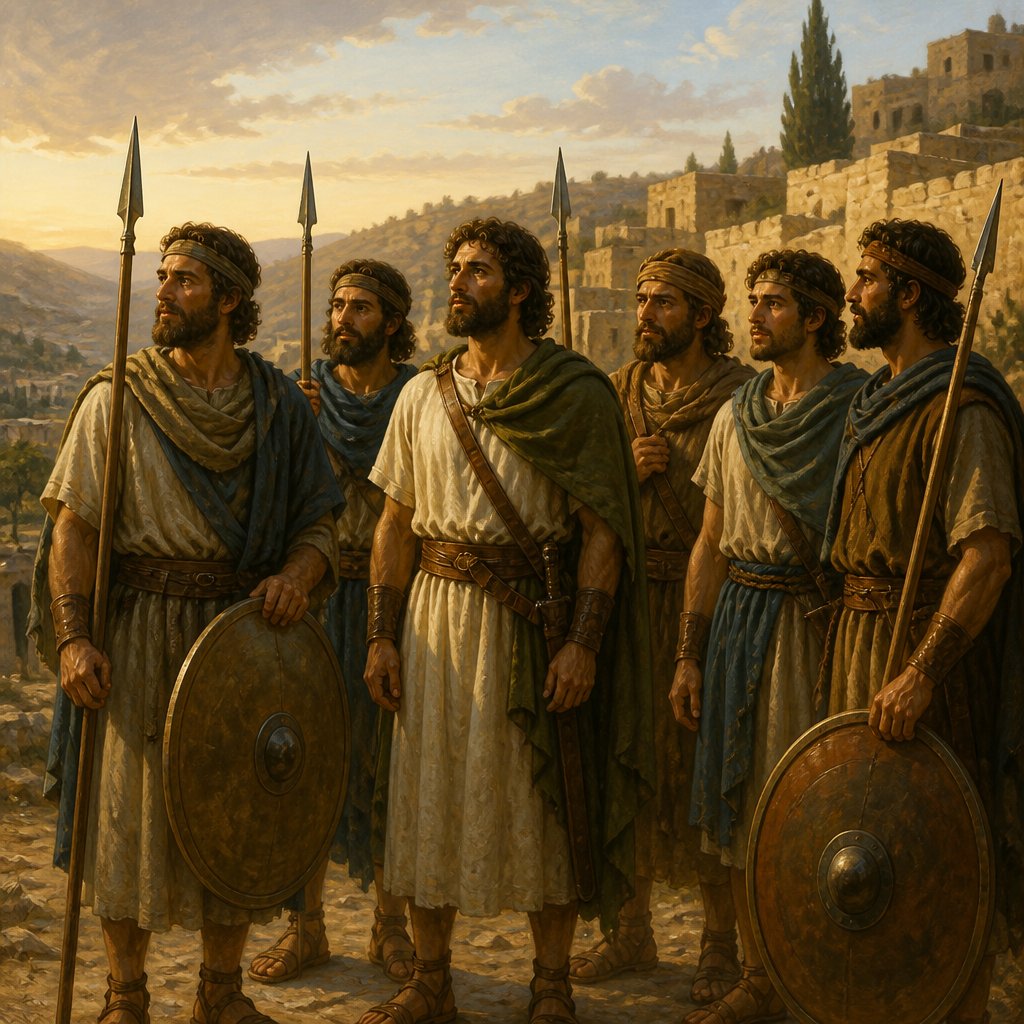
1 Chronicles 12:3 (KJV) says, "The chief was Ahiezer, then Joash, the sons of Shemaah the Gibeathite; and Jeziel, and Pelet, the sons of Azmaveth; and Berachah, and Jehu the Antothite." This verse is part of a larger passage that lists the men who came to join David at Hebron to support him in becoming king over all Israel.
This verse is part of the historical and genealogical account of the events leading up to David's reign as king over all Israel. It serves as a reminder of the loyalty and support David received from various tribes and clans, as well as the key individuals who played a significant role in establishing his kingship. This verse specifically mentions the leaders and warriors who came from the tribe of Benjamin to join David.
It is important to understand the context of this verse within the larger narrative of the book of 1 Chronicles. This book is largely genealogical and historical in nature, tracing the lineage of the Israelites from Adam to the time of King David. The purpose of this specific verse is to highlight the support David received from the tribe of Benjamin and to emphasize the significance of these individuals in the establishment of his reign.
The themes present in this verse revolve around loyalty, leadership, and unity. The leaders mentioned in this verse were instrumental in rallying their tribesmen to support David as the rightful king of all Israel. Their allegiance to David demonstrated their commitment to the unity and prosperity of the nation, as well as their willingness to follow the leadership of a chosen king.
Symbolism in this verse can be found in the names of the mentioned individuals. For example, the name Ahiezer means "brother of help," which symbolizes the support and assistance these leaders provided to David. The name Jeziel means "whom God divides," indicating that these individuals were divinely appointed to assist in the establishment of David's kingship. The name Berachah means "blessing," signifying the favor and blessings that came upon the nation through the unity and support of these leaders.
Furthermore, the tribe of Benjamin has significance in the history of Israel. Benjamin was one of the twelve sons of Jacob, and his descendants formed one of the twelve tribes of Israel. The tribe of Benjamin was known for producing skilled warriors, as well as their close association with the tribe of Judah. The fact that leaders from Benjamin rallied to support David is a testament to the unity and strength of the nation under his leadership.
In conclusion, 1 Chronicles 12:3 (KJV) serves as a reminder of the loyalty and support David received from the tribe of Benjamin as he established his reign as king over all Israel. The verse emphasizes the significance of these leaders and warriors in the unity and prosperity of the nation, as well as their willingness to follow the leadership of a chosen king. The symbolism in the names of the mentioned individuals further highlights the divine significance of their support. This verse stands as a testament to the faithfulness of God in establishing His chosen leaders and the unity and strength of His people.
Have questions about 1 Chronicles 12:3?
Dive deeper into this scripture with Bible Chat — an AI-powered tool for exploring God's Word through conversation. Ask questions, get context, and grow in your understanding of the Bible.
Get Our Apps


1 Chronicles 12:3 Artwork

1 Chronicles 12:3 - "The chief was Ahiezer, then Joash, the sons of Shemaah the Gibeathite; and Jeziel, and Pelet, the sons of Azmaveth; and Berachah, and Jehu the Antothite,"
"The chief was Ahiezer, then Joash, the sons of Shemaah the Gibeathite; and Jeziel, and Pelet, the sons of Azmaveth; and Berachah, and Jehu the Antothite," - 1 Chronicles 12:3

1 Chronicles 3:12 - "Amaziah his son, Azariah his son, Jotham his son,"

1 chronicles 12:8

1 Chronicles 12:12 - "Johanan the eighth, Elzabad the ninth,"

"Amaziah his son, Azariah his son, Jotham his son," - 1 Chronicles 3:12

1 Chronicles 1:12 - "And Pathrusim, and Casluhim, (of whom came the Philistines,) and Caphthorim."

1 Chronicles 1:3 - "Henoch, Methuselah, Lamech,"

1 Chronicles 12:10 - "Mishmannah the fourth, Jeremiah the fifth,"

1 Chronicles 12:13 - "Jeremiah the tenth, Machbanai the eleventh."

1 Chronicles 12:11 - "Attai the sixth, Eliel the seventh,"

1 Chronicles 24:12 - "The eleventh to Eliashib, the twelfth to Jakim,"

"Johanan the eighth, Elzabad the ninth," - 1 Chronicles 12:12

1 Chronicles 12:7 - "And Joelah, and Zebadiah, the sons of Jeroham of Gedor."

1 Chronicles 3:3 - "The fifth, Shephatiah of Abital: the sixth, Ithream by Eglah his wife."

1 Chronicles 3:7 - "And Nogah, and Nepheg, and Japhia,"

1 Chronicles 6:12 - "And Ahitub begat Zadok, and Zadok begat Shallum,"

1 Chronicles 12:26 - "Of the children of Levi four thousand and six hundred."

1 Chronicles 12:9 - "Ezer the first, Obadiah the second, Eliab the third,"

1 Chronicles 12:6 - "Elkanah, and Jesiah, and Azareel, and Joezer, and Jashobeam, the Korhites,"

1 Chronicles 12:5 - "Eluzai, and Jerimoth, and Bealiah, and Shemariah, and Shephatiah the Haruphite,"

1 Chronicles 2:12 - "And Boaz begat Obed, and Obed begat Jesse,"

1 Chronicles 3:8 - "And Elishama, and Eliada, and Eliphelet, nine."
John 12:3

"Mishmannah the fourth, Jeremiah the fifth," - 1 Chronicles 12:10

"Attai the sixth, Eliel the seventh," - 1 Chronicles 12:11

1 Chronicles 5:12 - "Joel the chief, and Shapham the next, and Jaanai, and Shaphat in Bashan."

1 Chronicles 12:16 - "And there came of the children of Benjamin and Judah to the hold unto David."

1 Chronicles 23:12 - "¶ The sons of Kohath; Amram, Izhar, Hebron, and Uzziel, four."

1 Chronicles 3:6 - "Ibhar also, and Elishama, and Eliphelet,"