The Brilliance of God’s Order: Judah First
"The LORD also shall save the tents of Judah first, that the glory of the house of David and the glory of the inhabitants of Jerusalem do not magnify themselves against Judah." - Zechariah 12:7
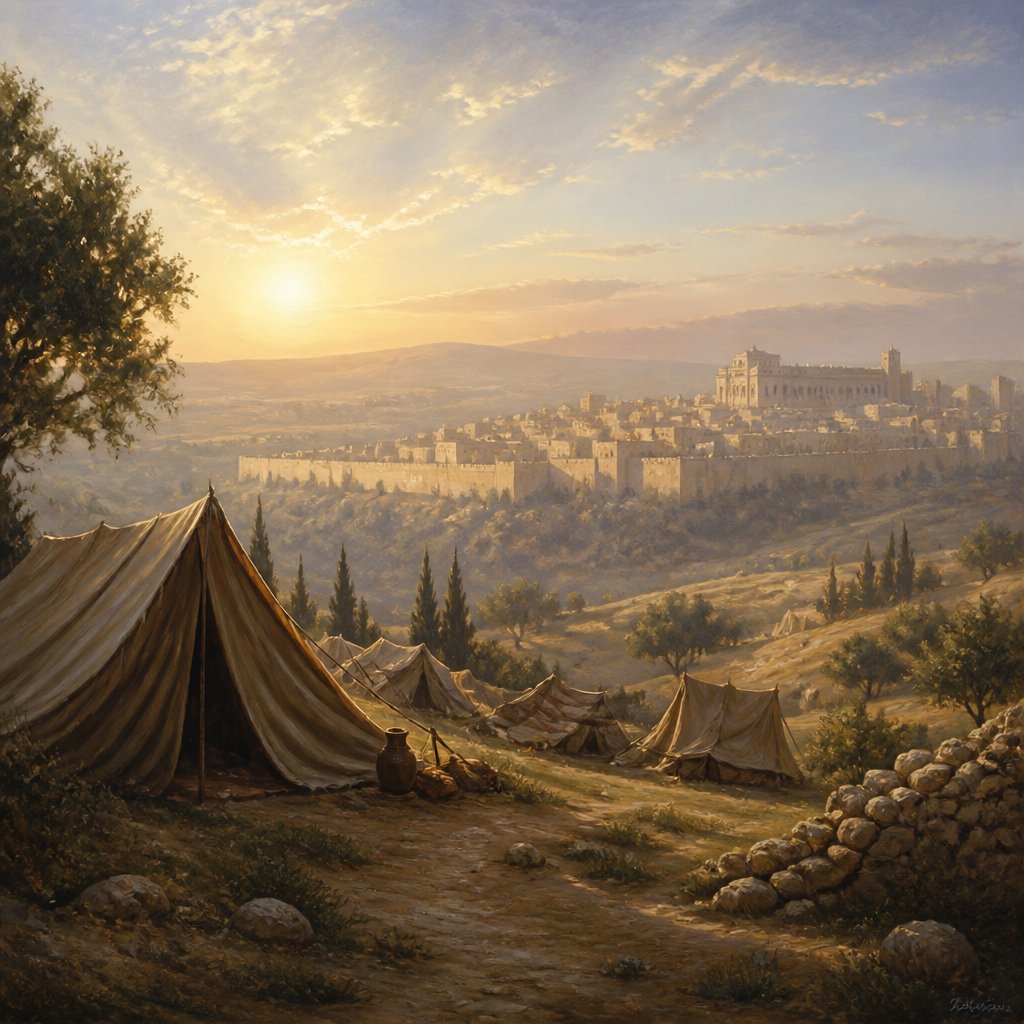
As we delve into Zechariah 12:7, which states, "The LORD also shall save the tents of Judah first, that the glory of the house of David and the glory of the inhabitants of Jerusalem do not magnify themselves against Judah," we are given profound insight into the nature of God’s justice, mercy, and prioritization in salvation. This scripture, nestled in an extraordinary prophecy of restoration, transports us to a spiritual landscape where God’s intention is clearly laid out: He acknowledges the tents of Judah as significant.
To understand this verse fully, we must consider the historical context. Judah was the southern kingdom of Israel, which had experienced conflict, exile, and a longing for restoration. With its capital in Jerusalem, which housed the temple, the people of Judah encountered not only external afflictions but also internal struggles with pride and self-importance. This verse tells us that the divine choice is to save the tents of Judah first, highlighting God's sovereign grace and purpose.
Why does God prioritize Judah? The answer is layered. First, it signifies God’s recognition of humility. Judah’s “tents,” representing both the families and individual houses, encompass a sense of vulnerability and dependence on the Lord. In Hebrew culture, tents were not merely physical shelter; they symbolized family, community, and the presence of God among His people. By choosing to save Judean families first, God emphasizes the importance of community under His divine wings. The act of saving the tent dwellers signifies His intention to redeem those who may feel less prominent or overshadowed in the grand narrative of His people.
Secondly, this verse speaks to God’s desire for equitable restoration. The divine intention is not to elevate one group against another, but rather to establish order and humility within the entire community. What does it mean that "the glory of the house of David and the glory of the inhabitants of Jerusalem do not magnify themselves against Judah"? God warns against pride and division among His people. Often, those who seem more glorious or prominent may be at risk of looking down on others. By saving Judah first, He prevents potential conflict and haughtiness from emerging within His own covenant people.
In our daily lives, we sometimes find ourselves in positions where we might feel overshadowed – whether in our families, workplaces, or social circles. The call of Zechariah 12:7 invites us to embrace humility and recognize our worth within God’s kingdom. Each 'tent' or person plays a crucial role in the fabric of community life. When we acknowledge and uplift those who may feel marginalized or unnoticed, we are acting in line with God’s desire for unity. God’s economy of grace does not prioritize the loudest or most powerful among us, but rather lifts up the meek and lowly, recognizing their invaluable contributions.
Moreover, we see that God’s actions point toward a grander plan of salvation. The saving of Judah is a precursor to greater restoration—the coming of the Messiah, who this very passage anticipates in the context of communal hope. Through Jesus Christ, the lineage of David, this promise is fulfilled—a fulfillment that reminds each of us of our place in God’s plan. Just as Judah was first in God’s heart, we too are called to recognize our position. We each bear the glory of God, and our calling is to introduce others to this glory, to manifest it through acts of love and service.
As we meditate on this verse today, may we reflect on how we can actively support and save the 'Judah' near us—the broken, the humble, the least of these. Let us honor God’s ordering by uplifting those around us and fostering unity rather than division. In doing so, we participate in God’s divine economy, as conduits for His love and grace, much like the tents that hold together a flourishing community.
Want to reflect more on Zechariah 12:7?
Continue your spiritual journey with Bible Chat — an AI-powered tool for exploring God's Word through conversation. Ask questions, discover connections, and deepen your understanding.
Get Our Apps


Zechariah 12:7 Artwork

Zechariah 12:7 - "The LORD also shall save the tents of Judah first, that the glory of the house of David and the glory of the inhabitants of Jerusalem do not magnify themselves against Judah."
"The LORD also shall save the tents of Judah first, that the glory of the house of David and the glory of the inhabitants of Jerusalem do not magnify themselves against Judah." - Zechariah 12:7

Zechariah 7:8 - "¶ And the word of the LORD came unto Zechariah, saying,"

Zechariah 7:12 - "Yea, they made their hearts as an adamant stone, lest they should hear the law, and the words which the LORD of hosts hath sent in his spirit by the former prophets: therefore came a great wrath from the LORD of hosts."

Zechariah 13:7

"¶ And the word of the LORD came unto Zechariah, saying," - Zechariah 7:8

Nehemiah 12:16 - "Of Iddo, Zechariah; of Ginnethon, Meshullam;"

Zechariah 7:1 - "And it came to pass in the fourth year of king Darius, that the word of the LORD came unto Zechariah in the fourth day of the ninth month, even in Chisleu;"

Zechariah 12:14 - "All the families that remain, every family apart, and their wives apart."

Zechariah 12:11 - "In that day shall there be a great mourning in Jerusalem, as the mourning of Hadadrimmon in the valley of Megiddon."

Zechariah 7:4 - "¶ Then came the word of the LORD of hosts unto me, saying,"

Zechariah 2:7 - "Deliver thyself, O Zion, that dwellest with the daughter of Babylon."

Zechariah 1:7 - "¶ Upon the four and twentieth day of the eleventh month, which is the month Sebat, in the second year of Darius, came the word of the LORD unto Zechariah, the son of Berechiah, the son of Iddo the prophet, saying,"

"Of Iddo, Zechariah; of Ginnethon, Meshullam;" - Nehemiah 12:16

Nehemiah 12:41 - "And the priests; Eliakim, Maaseiah, Miniamin, Michaiah, Elioenai, Zechariah, and Hananiah, with trumpets;"

Zechariah 12:12 - "And the land shall mourn, every family apart; the family of the house of David apart, and their wives apart; the family of the house of Nathan apart, and their wives apart;"

Zechariah 7:11 - "But they refused to hearken, and pulled away the shoulder, and stopped their ears, that they should not hear."

Zechariah 5:7 - "And, behold, there was lifted up a talent of lead: and this is a woman that sitteth in the midst of the ephah."

Zechariah 12:13 - "The family of the house of Levi apart, and their wives apart; the family of Shimei apart, and their wives apart;"

Zechariah 10:12 - "And I will strengthen them in the LORD; and they shall walk up and down in his name, saith the LORD."

Zechariah 12:9 - "¶ And it shall come to pass in that day, that I will seek to destroy all the nations that come against Jerusalem."

Zechariah 2:12 - "And the LORD shall inherit Judah his portion in the holy land, and shall choose Jerusalem again."

Zechariah 12:5 - "And the governors of Judah shall say in their heart, The inhabitants of Jerusalem shall be my strength in the LORD of hosts their God."

1 Chronicles 5:7 - "And his brethren by their families, when the genealogy of their generations was reckoned, were the chief, Jeiel, and Zechariah,"

Zechariah 7:8-10 - "And the word of the Lord came again to Zechariah: “This is what the Lord Almighty said: ‘Administer true justice; show mercy and compassion to one another. Do not oppress the widow or the fatherless, the foreigner or the poor. Do not plot evil against each other.’"

Zechariah 5:7 (Brenton) 7 And behold a talent of lead lifted up: and behold a woman sat in the midst of the measure.

Luke 1:11-12

Zechariah 5:7 (Brenton) 7 And behold a talent of lead lifted up: and behold a woman sat in the midst of the measure.

Zechariah 7:2 - "When they had sent unto the house of God Sherezer and Regem-melech, and their men, to pray before the LORD,"

Zechariah 7:6 - "And when ye did eat, and when ye did drink, did not ye eat for yourselves, and drink for yourselves?"