Under the Banner of Love: Welcomed into the King’s Banqueting House
"He brought me to the banqueting house, and his banner over me was love." - Song of Solomon 2:4
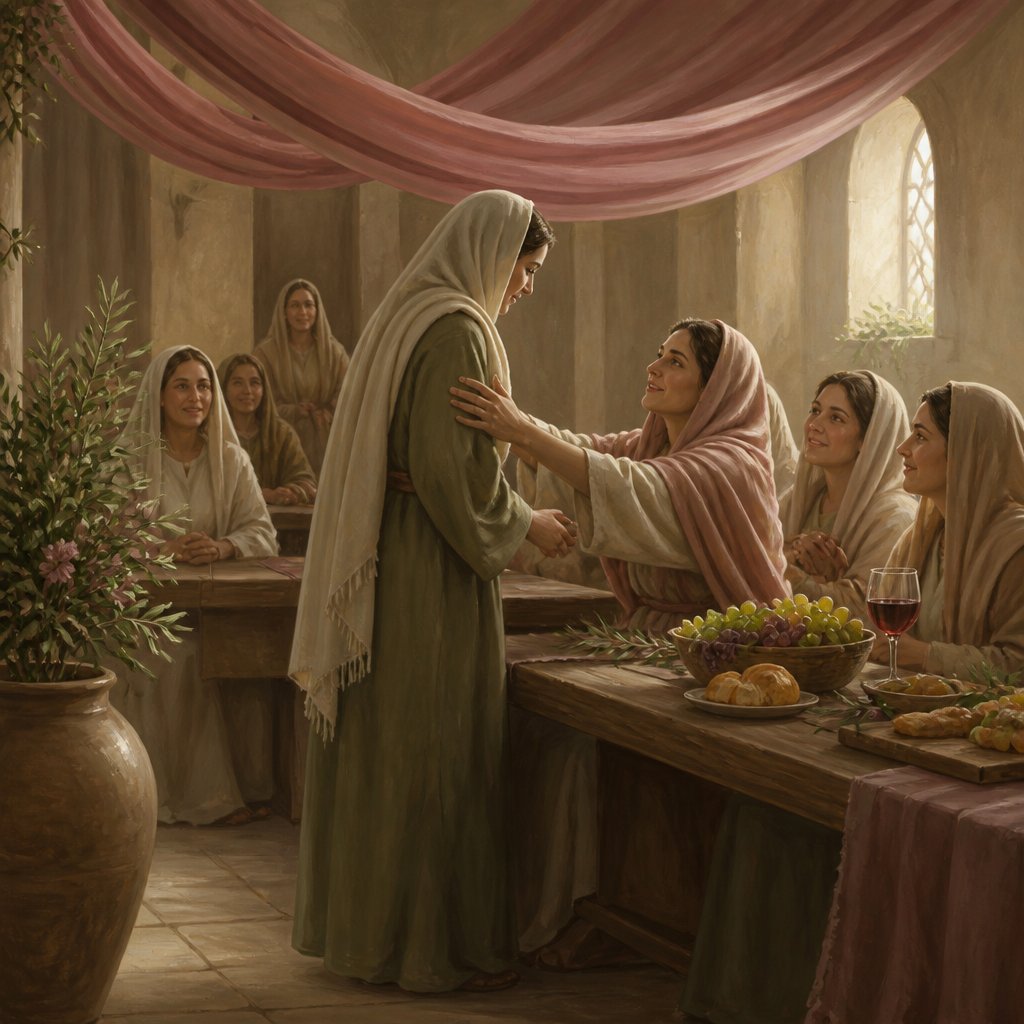
“He brought me to the banqueting house, and his banner over me was love.” (Song of Solomon 2:4, KJV)
Song of Solomon 2:4 gives us a tender picture: a beloved one is not merely allowed to stand at the edge of the doorway, but is brought in—led, welcomed, and seated where abundance is spread. The verse does not say, “I found my way into the banqueting house,” as though love were an achievement of human effort. It says, “He brought me.” The initiative belongs to the One who loves. The beloved is guided into a place of provision and fellowship, a place where love is not a theory but an experienced reality.
The “banqueting house” is a place of satisfaction. It is where hunger is answered with food, weakness is met with strength, and emptiness is filled with richness. Spiritually, it reminds us that God does not call us into a life of mere survival—scraping by with just enough grace to endure—but into communion with Him. There is sustenance in His presence. There is nourishment in His words. There is strengthening in His promises. The banqueting house tells our anxious hearts: God is not stingy with what is good, and the soul that comes near to Him is not dismissed.
Yet what makes this scene truly astonishing is the second half: “and his banner over me was love.” A banner is public. A banner is lifted high so that others can see whose territory this is, whose people these are, and what defines them. Under a banner there is belonging and identity. When the verse says, “his banner over me was love,” it speaks of an announced affection, not a reluctant tolerance. It is not, “his banner over me was disappointment,” nor “his banner over me was suspicion,” nor even “his banner over me was distance.” The word is “love.” This is not love whispered in secret while shame continues to shout—this is love raised overhead, love declared.
Many believers struggle to accept this. We know our failures; we can list them without hesitation. We remember prayers we neglected, words we regretted, obedience we postponed. Because of this, we often approach God like servants who have broken something valuable, hoping not to be noticed. But Song of Solomon 2:4 paints the opposite: the loved one is brought in, and over her is a banner—not a threat, not a condemnation, but love. That means we are not meant to relate to God primarily through dread or endless self-accusation. Repentance is real and necessary, but the heart of God toward His people is not cold. His posture is love.
Notice also that the banner is “over me.” Love is not vague; it is personal. It is not merely that love exists somewhere in the universe, or that love is God’s general disposition toward humanity in the abstract. The verse is intimate: “over me.” There is a particularity to divine affection that addresses the soul in its loneliness. You are not lost in the crowd. You are not a name in a ledger. The beloved can look up and see what is above her—love.
In daily life, competing banners try to fly over our minds: performance, comparison, fear of man, shame, bitterness, unanswered questions. These banners claim authority, shaping how we interpret everything. If the banner is performance, we feel safe only when we succeed. If the banner is shame, we feel dirty even after forgiveness is offered. If the banner is fear, we expect harm in every quiet moment. But Song of Solomon 2:4 invites us to lift our eyes: God’s desire is that we live under His banner, and that banner is love.
To live under that banner is not to deny hardship. Even those welcomed to the banqueting house still live in a world where grief and trial exist. But it is to interpret hardship differently. Under the banner of love, correction is not rejection; it is care. Waiting is not abandonment; it is wise timing. Conviction is not humiliation; it is cleansing. Under the banner of love, we can bring our whole selves—our weariness, our confusion, our longings—into God’s presence, trusting that His heart is not against us.
Pray this verse back to the Lord. When you feel unworthy, say, “He brought me.” When you feel exposed, say, “his banner over me was love.” Ask God to retrain your instincts so you do not flee His presence, but rest in it. The banqueting house is not a reward for the flawless; it is the welcome given by the loving One. And the banner is not earned; it is raised by grace.
Meditation: What banner have you been living under lately—fear, shame, striving, or love? Look up again by faith and choose to dwell where God brings you.
Prayer: Lord, bring me into Your banqueting house. Teach my heart to believe what You have declared: that Your banner over me is love. Help me rest under that banner today. Amen.
Want to reflect more on Song of Solomon 2:4?
Continue your spiritual journey with Bible Chat — an AI-powered tool for exploring God's Word through conversation. Ask questions, discover connections, and deepen your understanding.
Get Our Apps


Song of Solomon 2:4 Artwork

Song of Solomon 2:4 - "He brought me to the banqueting house, and his banner over me was love."
!["He brought me to the banqueting house, and his banner over me [was] love." - Song of Solomon 2:4](https://media.bible.art/bd0457ec-32cc-4654-9106-4fc12fea703b-thumbnail.jpg)
"He brought me to the banqueting house, and his banner over me [was] love." - Song of Solomon 2:4
"He brought me to the banqueting house, and his banner over me was love." - Song of Solomon 2:4

Song of Solomon 2:3

Song of Solomon 2:15

Song of Solomon 2:15

Song of Solomon 1:4

Song of Solomon 1:4

Song of Solomon 3:4

Song of Solomon 2:2 - "As the lily among thorns, so is my love among the daughters."

Song of Solomon 2:11 - "For, lo, the winter is past, the rain is over and gone;"

Song of Solomon 2:1 - "I am the rose of Sharon, and the lily of the valleys."

Song of Solomon 2:5 - "Stay me with flagons, comfort me with apples: for I am sick of love."

Song of Solomon 2:16 - "¶ My beloved is mine, and I am his: he feedeth among the lilies."

Song of Solomon 2:6 - "His left hand is under my head, and his right hand doth embrace me."

Song of Solomon 2:8 - "¶ The voice of my beloved! behold, he cometh leaping upon the mountains, skipping upon the hills."

Song of Solomon 2:10 - "My beloved spake, and said unto me, Rise up, my love, my fair one, and come away."

Song of Solomon 2:15 - "Take us the foxes, the little foxes, that spoil the vines: for our vines have tender grapes."

Song of Solomon 2:1 – "I am a rose of Sharon, a lily of the valleys."

Song of Solomon 4:13 - "Thy plants are an orchard of pomegranates, with pleasant fruits; camphire, with spikenard,"
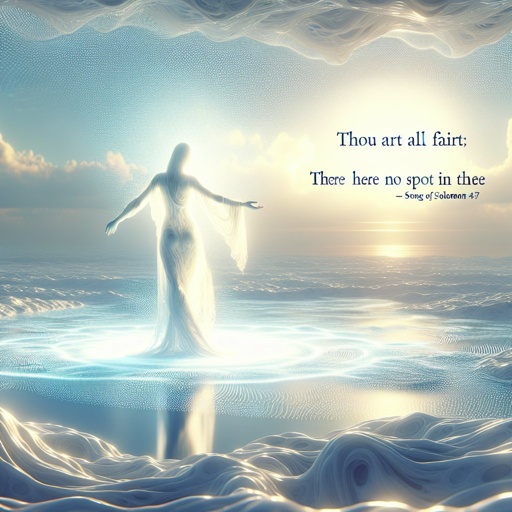
Song of Solomon 4:7 - "Thou art all fair, my love; there is no spot in thee."

Song of Solomon 4:15 - "A fountain of gardens, a well of living waters, and streams from Lebanon."

"I am the rose of Sharon, and the lily of the valleys." - Song of Solomon 2:1

Song of Solomon 4:2 - "Thy teeth are like a flock of sheep that are even shorn, which came up from the washing; whereof every one bear twins, and none is barren among them."

Songs of Solomon 1:2

"As the lily among thorns, so is my love among the daughters." - Song of Solomon 2:2

"For, lo, the winter is past, the rain is over and gone;" - Song of Solomon 2:11

"I am the rose of Sharon, and the lily of the valleys." - Song of Solomon 2:1

"¶ My beloved is mine, and I am his: he feedeth among the lilies." - Song of Solomon 2:16

Song of Solomon 4:4 - "Thy neck is like the tower of David builded for an armoury, whereon there hang a thousand bucklers, all shields of mighty men."