Awakening in the Vineyards of Love
"Let us get up early to the vineyards; let us see if the vine flourish, whether the tender grape appear, and the pomegranates bud forth: there will I give thee my loves." - Song of Solomon 7:12
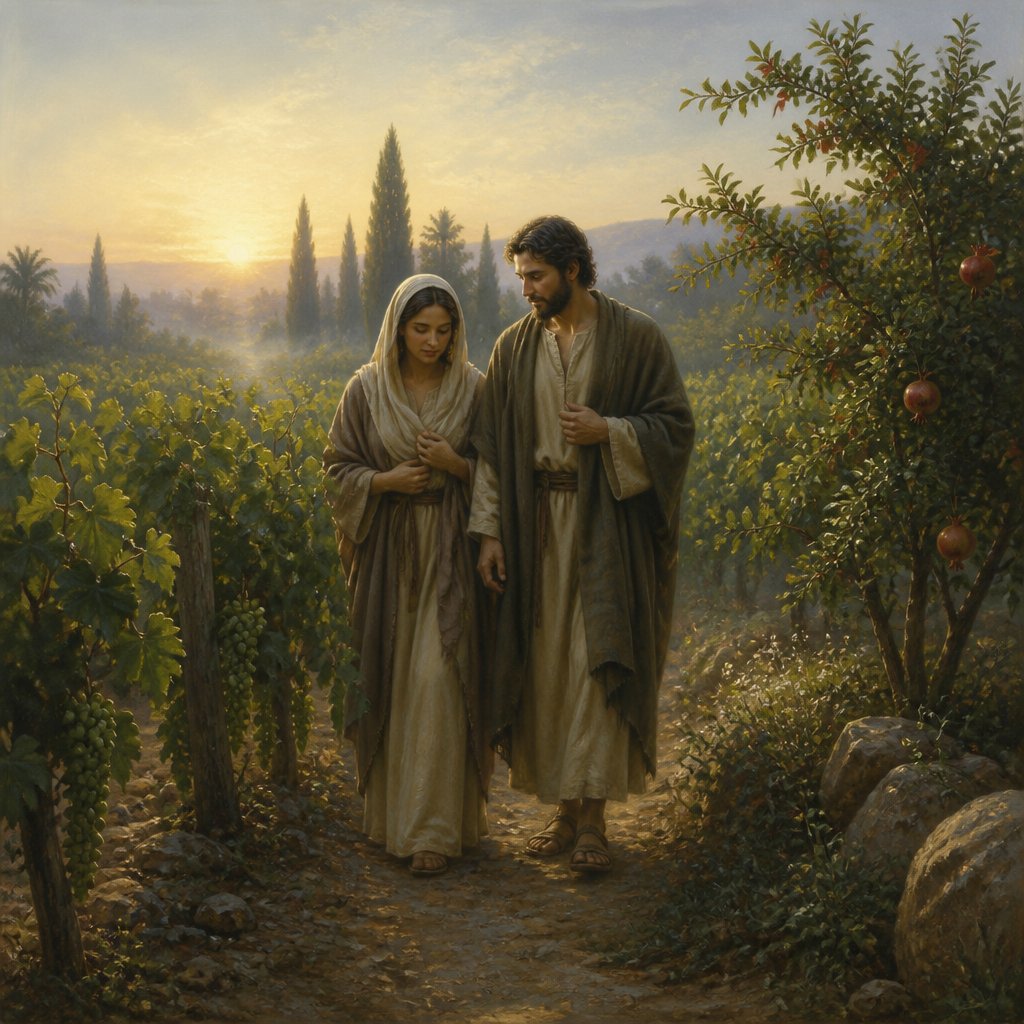
The Song of Solomon, a book celebrated for its poetic beauty and exploration of love, beckons us to embrace the delicate intricacies of our relationships. The verse from Song of Solomon 7:12 (KJV) states, "Let us get up early to the vineyards; let us see if the vine flourish, whether the tender grape appear, and the pomegranates bud forth: there will I give thee my loves." This poignant invitation invites us to reflect on more than mere romantic love; it invites us to witness the flourishing nature of our spiritual lives and the deep affection God has for us.
The call to “get up early” signifies a commitment to beginning our day with intention and purpose, seeking first the beauty and fruitfulness of the vineyards. In biblical times, vineyards were highly valued for their fruit, representing abundance and prosperity. They required attention and labor, and the act of tending to the vines paralleled the way we must nurture our relationships and spiritual growth. By rising early, we acknowledge the importance of prioritizing our time with God as the sun rises over the horizon, shedding light on the beauty that surrounds us.
When we "see if the vine flourish," we are reminded that growth takes time and patience. Just as the vines need seasons to bloom and bear fruit, so too do our spirits require seasons of cultivation—prayer, meditation, and fellowship. As we seek to nurture our relationships, both with God and each other, we must check in on the health of our spiritual vines. Are we flourishing? Are we nurturing the connections with those we love? We ought to monitor our hearts as we would a garden, observing whether we are producing the sweet fruits of love, peace, and joy.
The mention of the "tender grape" and "pomegranates bud forth" emphasizes that love develops gradually. The tender grape, in its early stage, symbolizes the gentle beginnings of love, full of hope and potential. It signifies that love, much like the vineyard, begins as a small seed and requires time, care, and a nurturing environment to blossom into something more significant. It reminds us to cherish those early moments in love, friendships, and relationships, cultivating a bond that can grow deeper with time.
Next, we encounter the images of the pomegranates. A pomegranate is rich in seeds, often seen as a symbol of fertility and abundance in biblical literature. Its blossoming indicates the promise of future growth. In our spiritual context, it suggests that as we nurture our love for God and one another, we become vessels of immense fruitfulness. We learn to share our experiences and witness the ways God blesses us, inviting His abundance into our lives.
What does it mean to "give thee my loves?" In this expression, we see the depth of personal commitment that arises from tending to our relationships. Love is not merely an emotion but an act of will—a decision to care for others and to be intentional in building lasting connections. The love referenced here is a reflection of God's love towards us. In our own lives, as we invest time and effort, we see that love is reciprocated. It blooms in the hearts of others, nourished by kindness, patience, and genuine affection.
As we ponder this verse, let us set our hearts to awaken each day with the resolve to explore the vineyards of our lives. Let us commit ourselves to observing the flourishing nature of our souls. Are we gracious and nurturing? Are we cultivating love in our relationships? May we continually find ourselves at the heart of God’s vineyard, experiencing the abundance He pours into our lives and sharing this profound love with others. Remember, dear friends, love requires effort; but in those efforts, we find the sweetest fruit.
Want to reflect more on Song of Solomon 7:12?
Continue your spiritual journey with Bible Chat — an AI-powered tool for exploring God's Word through conversation. Ask questions, discover connections, and deepen your understanding.
Get Our Apps


Song of Solomon 7:12 Artwork

Song of Solomon 7:12 - "Let us get up early to the vineyards; let us see if the vine flourish, whether the tender grape appear, and the pomegranates bud forth: there will I give thee my loves."
"Let us get up early to the vineyards; let us see if the vine flourish, whether the tender grape appear, and the pomegranates bud forth: there will I give thee my loves." - Song of Solomon 7:12

Song of Solomon 7:6 - "How fair and how pleasant art thou, O love, for delights!"

Song of Solomon 7:10 - "¶ I am my beloved's, and his desire is toward me."

Songs of Solomon 1:2

Song of Solomon 7:3 - "Thy two breasts are like two young roes that are twins."

Song of Solomon 7:11 - "Come, my beloved, let us go forth into the field; let us lodge in the villages."
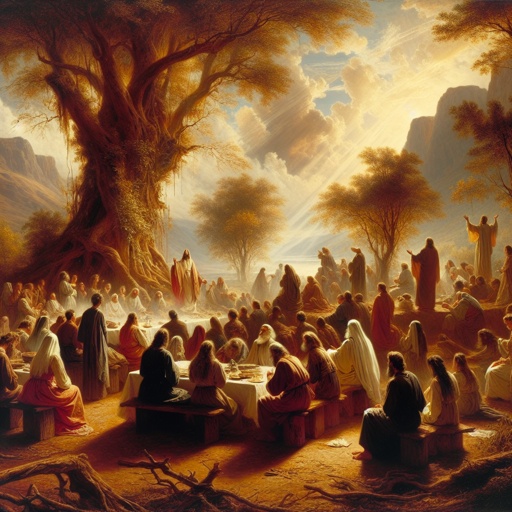
1 songs of Solomon 1:2
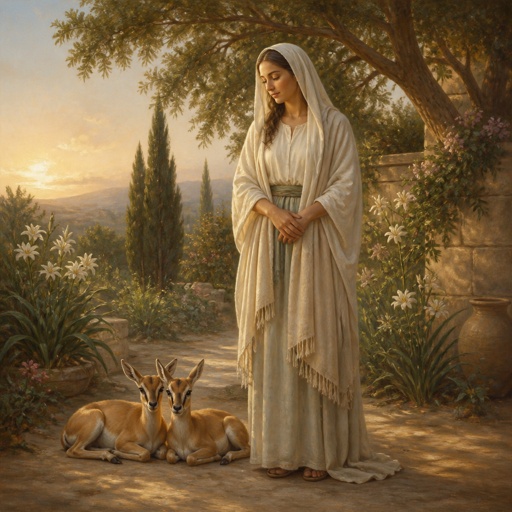
"Thy two breasts are like two young roes that are twins." - Song of Solomon 7:3

Song of Solomon 7:7 - "This thy stature is like to a palm tree, and thy breasts to clusters of grapes."
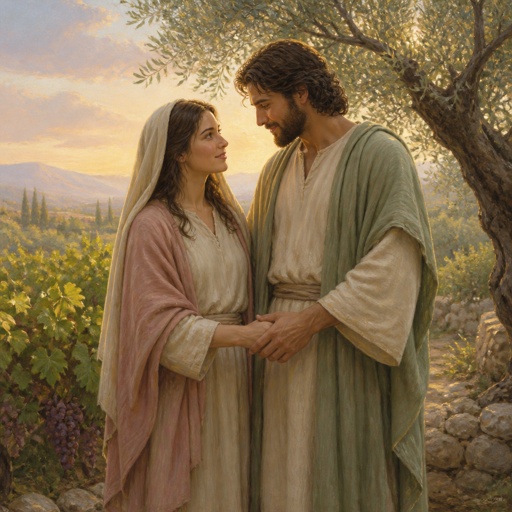
"¶ I am my beloved's, and his desire is toward me." - Song of Solomon 7:10

Song of Solomon 6:7 - "As a piece of a pomegranate are thy temples within thy locks."
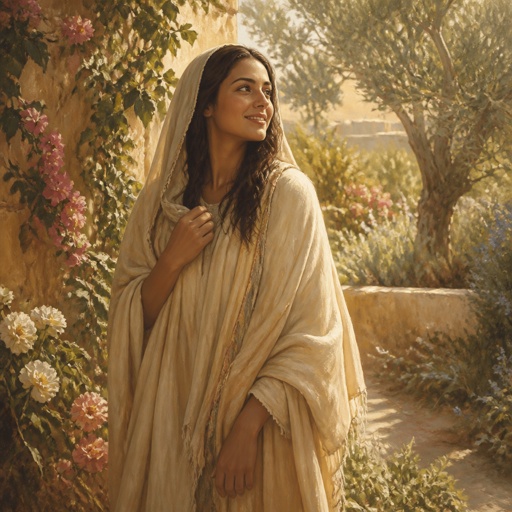
"How fair and how pleasant art thou, O love, for delights!" - Song of Solomon 7:6

Song of Solomon 4:7 - "Thou art all fair, my love; there is no spot in thee."

Song of Solomon 5:12 - "His eyes are as the eyes of doves by the rivers of waters, washed with milk, and fitly set."

Song of Solomon 6:12 - "Or ever I was aware, my soul made me like the chariots of Amminadib."

Song of Solomon 8:12 - "My vineyard, which is mine, is before me: thou, O Solomon, must have a thousand, and those that keep the fruit thereof two hundred."

Song of Solomon 3:7 - "Behold his bed, which is Solomon's; threescore valiant men are about it, of the valiant of Israel."

Song of Solomon 7:5 - "Thine head upon thee is like Carmel, and the hair of thine head like purple; the king is held in the galleries."

Song of Solomon 1:12 - "¶ While the king sitteth at his table, my spikenard sendeth forth the smell thereof."

Song of Solomon 4:12 - "A garden inclosed is my sister, my spouse; a spring shut up, a fountain sealed."
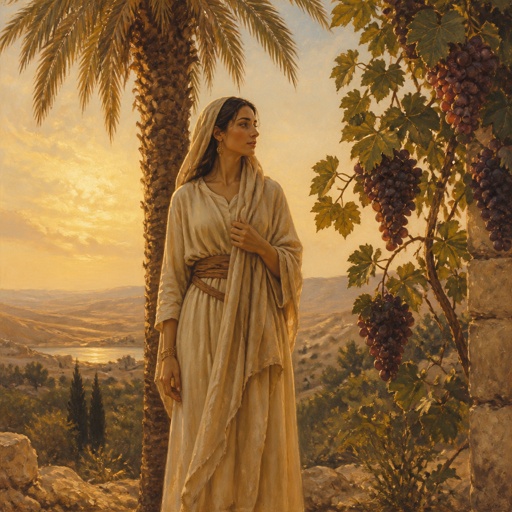
"This thy stature is like to a palm tree, and thy breasts to clusters of grapes." - Song of Solomon 7:7

Song of Solomon 7:2 - "Thy navel is like a round goblet, which wanteth not liquor: thy belly is like an heap of wheat set about with lilies."

Song of Solomon 2:12 - "The flowers appear on the earth; the time of the singing of birds is come, and the voice of the turtle is heard in our land;"
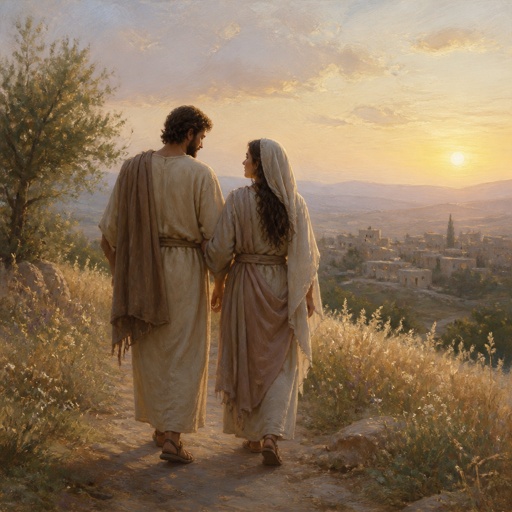
"Come, my beloved, let us go forth into the field; let us lodge in the villages." - Song of Solomon 7:11

Song of Solomon 1:1 - "The song of songs, which is Solomon's."

Song of Solomon 7:1 - "How beautiful are thy feet with shoes, O prince's daughter! the joints of thy thighs are like jewels, the work of the hands of a cunning workman."
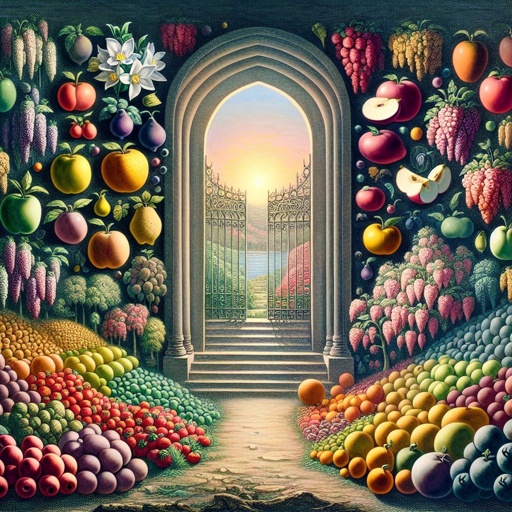
Song of Solomon 7:13 - "The mandrakes give a smell, and at our gates are all manner of pleasant fruits, new and old, which I have laid up for thee, O my beloved."
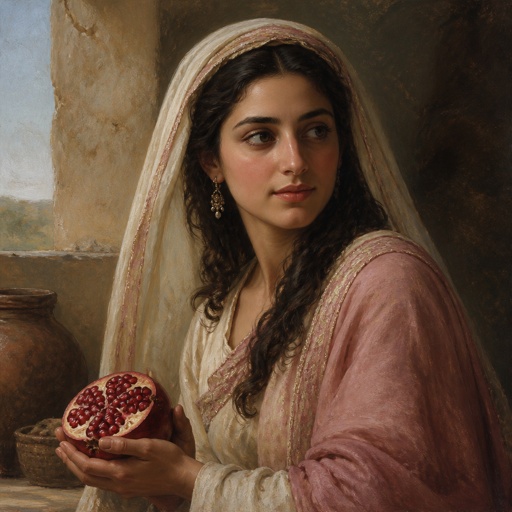
"As a piece of a pomegranate are thy temples within thy locks." - Song of Solomon 6:7

Song of Solomon 7:4 - "Thy neck is as a tower of ivory; thine eyes like the fishpools in Heshbon, by the gate of Bath-rabbim: thy nose is as the tower of Lebanon which looketh toward Damascus."