All Fair: A Reflection on Divine Love and Human Perfection
"Thou art all fair, my love; there is no spot in thee." - Song of Solomon 4:7
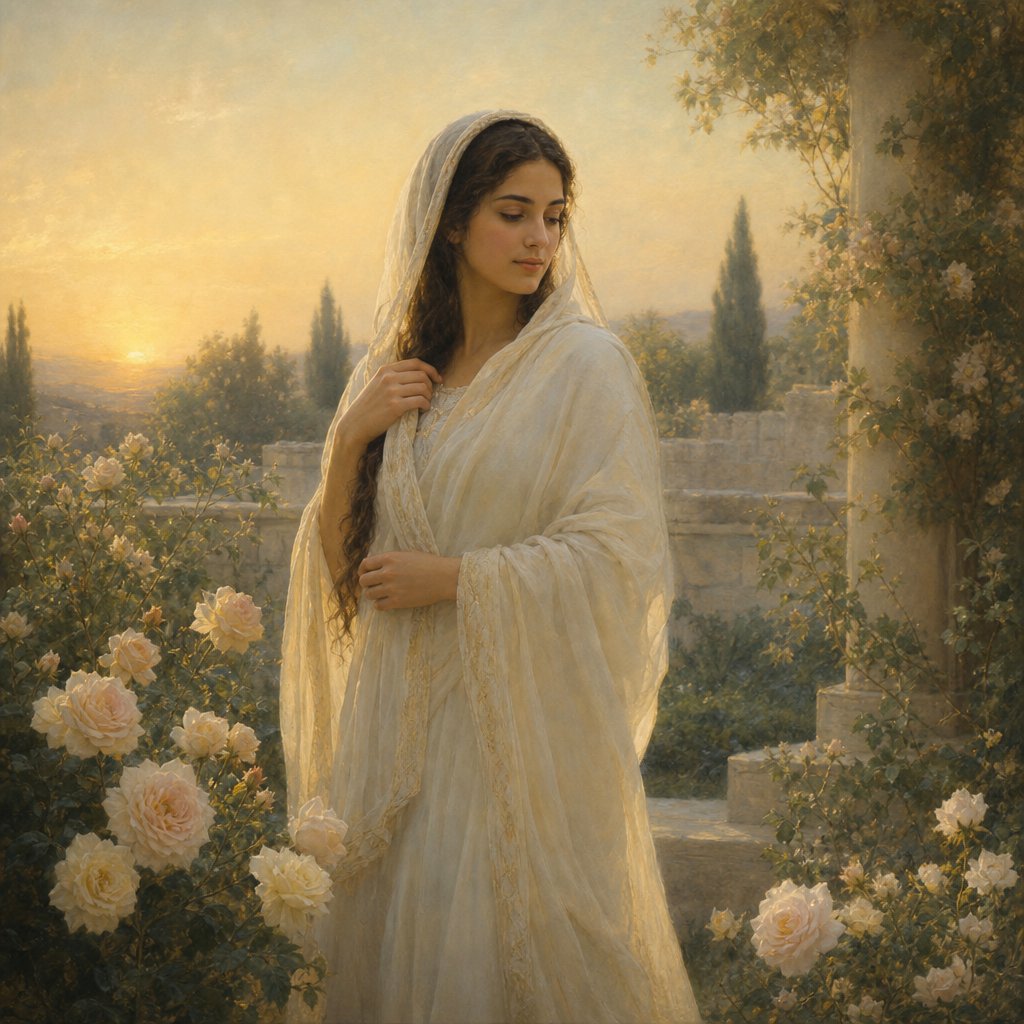
The Song of Solomon is one of the most beautifully poetic books in the Bible, celebrating love in its many forms and the intimacy that comes from a deep, passionate relationship. Song of Solomon 4:7 eloquently states, "Thou art all fair, my love; there is no spot in thee." This verse encapsulates both the ideal of love and the deeply intimate connection between lovers, illustrating a profound truth about divine love as well.
When we hear the words "Thou art all fair," we are invited into a space of adoration. The speaker’s declaration points to the beloved's beauty, implying completeness and perfection. In a world where we often see ourselves through the lenses of inadequacy and imperfection, this phrase challenges us to shift our perspective. What does it mean to be "all fair"? To be all fair is to embody beauty that transcends the physical; it speaks to the purity of the heart, the clarity of intentions, and the depth of character.
The later part of the verse, "there is no spot in thee," emphasizes flawlessness. This expression necessitates reflection. In our fallen state, we often carry the weights of our past mistakes, scars from emotional wounds, and insecurities that mar our self-perception. Yet, when the beloved is seen through the eyes of love, all imperfections are hidden beneath the mantle of grace. The implication here is that true love sees beyond the outward appearances and flaws, recognizing a deeper beauty rooted in the spirit.
In Christian theology, this passage also resonates deeply with how God sees His beloved people. Zephaniah 3:17 reminds us that, "The Lord thy God in the midst of thee is mighty; he will save, he will rejoice over thee with joy; he will rest in his love, he will joy over thee with singing." Just as the speaker in Song of Solomon declares the beloved as flawless, God sees us through the lens of Christ’s redemption. His love allows us to shed the burdens of guilt and shame, clothes us in righteousness, and identifies us as His beloved.
The transformative nature of love is profound. When we begin to grasp the depth of being fully accepted and adored by God, we start to view ourselves in a new light. It frees us to embrace who we truly are—children of God, made in His image, worthy of love and grace. Furthermore, this divine gaze shifts our own perspective when we look at others. It encourages us to see them as God sees them: free from spots, sin, and wrong, redeemed and beautiful. It compels us to love others with that same unwavering acceptance and to cultivate relationships that elevate rather than degrade.
In marriage, the message of this verse takes on another layer of meaning. It becomes a call to see our spouse through the eyes of love, to uplift and celebrate the qualities that make them uniquely beautiful. The commitment to see our partners as "all fair" transforms mundane interactions into opportunities for grace, kindness, and encouragement. In the transformative process of loving others as God loves us, we create an environment that fosters growth, nurtures respect, and affirms the best in one another.
As we ponder the richness of Song of Solomon 4:7, let us carry this affirmation into our daily lives: We are all fair in the eyes of our Creator, marked by His love, devoid of condemnation. May this realization inspire us to reflect His love in our relationships, seeing the beauty in ourselves and others, fostering a spirit of acceptance, and dedicating ourselves to uplifting one another. Let us embrace this calling, reminding ourselves daily that in love, there indeed is no spot.
Want to reflect more on Song of Solomon 4:7?
Continue your spiritual journey with Bible Chat — an AI-powered tool for exploring God's Word through conversation. Ask questions, discover connections, and deepen your understanding.
Get Our Apps


Song of Solomon 4:7 Artwork
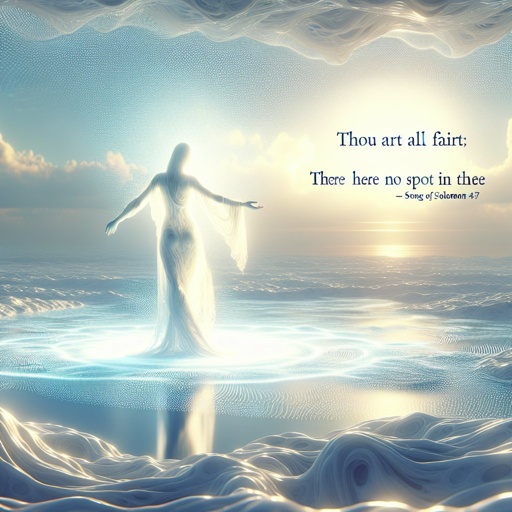
Song of Solomon 4:7 - "Thou art all fair, my love; there is no spot in thee."
"Thou art all fair, my love; there is no spot in thee." - Song of Solomon 4:7

Song of Solomon 1:4

Song of Solomon 1:4

Song of Solomon 3:4

Song of Solomon 4:13 - "Thy plants are an orchard of pomegranates, with pleasant fruits; camphire, with spikenard,"

Song of Solomon 4:15 - "A fountain of gardens, a well of living waters, and streams from Lebanon."

Song of Solomon 7:4 - "Thy neck is as a tower of ivory; thine eyes like the fishpools in Heshbon, by the gate of Bath-rabbim: thy nose is as the tower of Lebanon which looketh toward Damascus."

Song of Solomon 7:7 - "This thy stature is like to a palm tree, and thy breasts to clusters of grapes."

Song of Solomon 4:12 - "A garden inclosed is my sister, my spouse; a spring shut up, a fountain sealed."

Song of Solomon 4:5 - "Thy two breasts are like two young roes that are twins, which feed among the lilies."

Song of Solomon 6:7 - "As a piece of a pomegranate are thy temples within thy locks."

Song of Solomon 4:14 - "Spikenard and saffron; calamus and cinnamon, with all trees of frankincense; myrrh and aloes, with all the chief spices:"

Song of Solomon 7:3 - "Thy two breasts are like two young roes that are twins."

Song of Solomon 7:10 - "¶ I am my beloved's, and his desire is toward me."

Song of Solomon 7:6 - "How fair and how pleasant art thou, O love, for delights!"

"A fountain of gardens, a well of living waters, and streams from Lebanon." - Song of Solomon 4:15

Song of Solomon 3:7 - "Behold his bed, which is Solomon's; threescore valiant men are about it, of the valiant of Israel."

Song of Solomon 4:6 - "Until the day break, and the shadows flee away, I will get me to the mountain of myrrh, and to the hill of frankincense."

Song of Solomon 4:3 - "Thy lips are like a thread of scarlet, and thy speech is comely: thy temples are like a piece of a pomegranate within thy locks."

"Thy plants are an orchard of pomegranates, with pleasant fruits; camphire, with spikenard," - Song of Solomon 4:13

"A fountain of gardens, a well of living waters, and streams from Lebanon." - Song of Solomon 4:15

Song of Solomon 2:4 - "He brought me to the banqueting house, and his banner over me was love."

Song of Solomon 4:4 - "Thy neck is like the tower of David builded for an armoury, whereon there hang a thousand bucklers, all shields of mighty men."

Song of Solomon 4:9 - "Thou hast ravished my heart, my sister, my spouse; thou hast ravished my heart with one of thine eyes, with one chain of thy neck."

Song of Solomon 7:11 - "Come, my beloved, let us go forth into the field; let us lodge in the villages."

Song of Solomon 1:1 - "The song of songs, which is Solomon's."

Song of Solomon 4:2 - "Thy teeth are like a flock of sheep that are even shorn, which came up from the washing; whereof every one bear twins, and none is barren among them."

Song of Solomon 5:4 - "My beloved put in his hand by the hole of the door, and my bowels were moved for him."

Song of Solomon 6:4 - "¶ Thou art beautiful, O my love, as Tirzah, comely as Jerusalem, terrible as an army with banners."