Seeing Beauty Through Divine Eyes
"Behold, thou art fair, my love; behold, thou art fair; thou hast doves' eyes within thy locks: thy hair is as a flock of goats, that appear from mount Gilead." - Song of Solomon 4:1
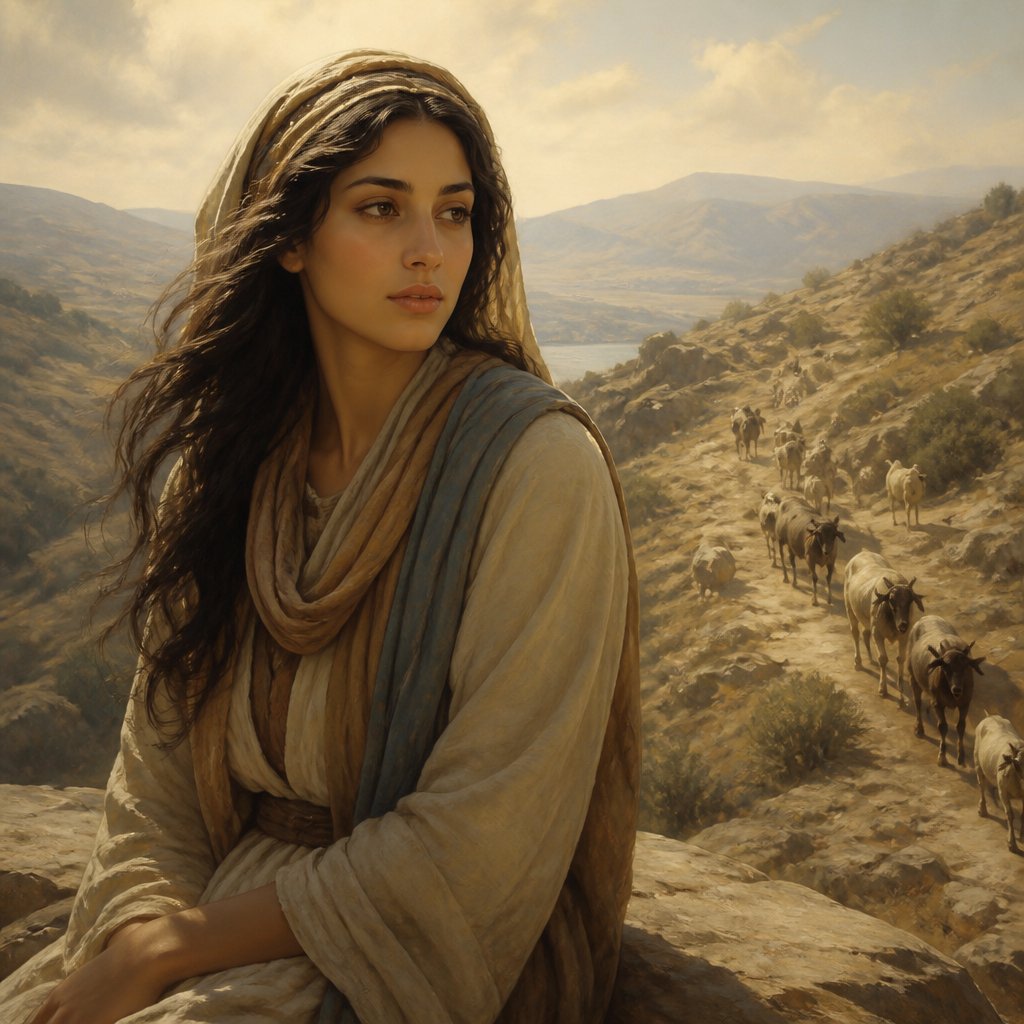
The Song of Solomon, often embraced as a lyrical celebration of romantic love, transcends mere poetic expression and invites us into a deeper understanding of God's perspective on beauty and love. One striking verse, Song of Solomon 4:1 states, "Behold, thou art fair, my love; behold, thou art fair; thou hast doves' eyes within thy locks: thy hair is as a flock of goats, that appear from mount Gilead." This chapter invites us to contemplate both physical beauty and the deeper spiritual facets of love found in this divinely inspired text.
As we digest the significance of this verse, we ought to first appreciate the language used. The repetition of "behold, thou art fair" emphasizes the speaker's admiration and affirmation of beauty. The term "fair" in this context extends beyond the superficial and carries a deep acknowledgment of the beloved’s worth. It signals a gaze that goes beyond an exterior glance; it suggests an appreciation rooted in the character, dignity, and essence of the beloved. God, in His infinite wisdom, invites us to recognize the inherent beauty in others as He perceives it. This verse echoes the way God sees individual hearts—He sees potential, love, and beauty that we might often overlook in ourselves and others.
However, the imagery that follows heightens this metaphor of beauty. When the speaker refers to "doves' eyes within thy locks," it serves as a reminder that true beauty often resides within, characterized by purity and gentleness. Doves have long symbolized innocence and love in scriptural texts. The mention of "doves' eyes" can be seen to allude to a soul that possesses a gentleness and an affectionate spirit—qualities that should nod toward how we ought to love and cherish others. This verse challenges us to consider what lies within ourselves and those around us—beyond physical attributes—and invites us to cultivate and honor the inner beauty that comes from kindness, compassion, and integrity.
The next portion of the verse presents the captivating comparison of the beloved’s hair to "a flock of goats, that appear from mount Gilead." This imagery may seem odd to contemporary readers, but in the cultural context of ancient Israel, the flocks of goats grazing upon the heights would have been a sight of tranquility and beauty. They symbolize prosperity and a vibrant life. In referencing Mount Gilead, known for its lush pastures, the verse also suggests the beloved’s hair is not only beautiful but thriving and rich in texture—like the landscape that provides sustenance and life. The juxtaposition between a flock of goats and the beloved is striking; it communicates that love and admiration encompass both simplicity and the extraordinary. There is something divine about seeing beauty in unexpected places, reminding us that love is often found in the most ordinary—like a flock of goats traversing a mountain pass.
Reflecting upon this passage, we are encouraged to cultivate our own sense of beauty, both internally and externally. In a world where external beauty is often idolized over substance, we must remember that true beauty shines forth from a heart modeled after Christ’s love. We are called to embrace who we are—flaws and all—while also loving others through the lens of acceptance and appreciation for their unique beauty.
As we meditate on Song of Solomon 4:1, let us allow this verse to ignite within us a transformative way to see—both ourselves and those around us. May we recognize the doves' eyes within our locks and commit ourselves to reflecting God’s love and grace, celebrating the beauty that resides in the hearts of everyone we encounter. In a world that often magnifies superficiality, let our love be akin to the purity and gentleness represented in the doves, and may we always seek to appreciate and honor the profound beauty found in the love of God.
Want to reflect more on Song of Solomon 4:1?
Continue your spiritual journey with Bible Chat — an AI-powered tool for exploring God's Word through conversation. Ask questions, discover connections, and deepen your understanding.
Get Our Apps


Song of Solomon 4:1 Artwork

Song of Solomon 4:1 - "Behold, thou art fair, my love; behold, thou art fair; thou hast doves' eyes within thy locks: thy hair is as a flock of goats, that appear from mount Gilead."
"Behold, thou art fair, my love; behold, thou art fair; thou hast doves' eyes within thy locks: thy hair is as a flock of goats, that appear from mount Gilead." - Song of Solomon 4:1

Song of Solomon 1:4

Song of Solomon 1:4

Song of Solomon 1:1 - "The song of songs, which is Solomon's."

Song of Solomon 3:4

Song of Solomon 4:13 - "Thy plants are an orchard of pomegranates, with pleasant fruits; camphire, with spikenard,"
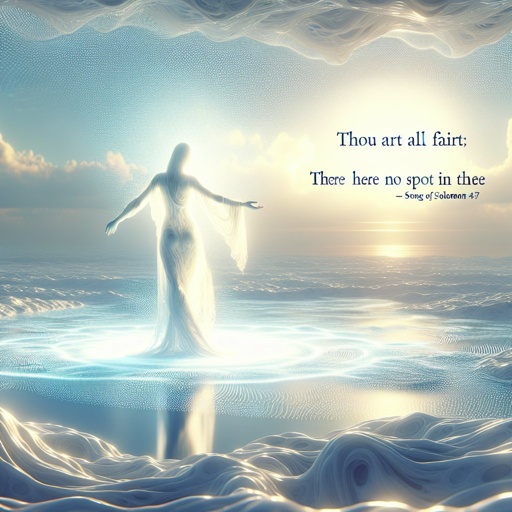
Song of Solomon 4:7 - "Thou art all fair, my love; there is no spot in thee."
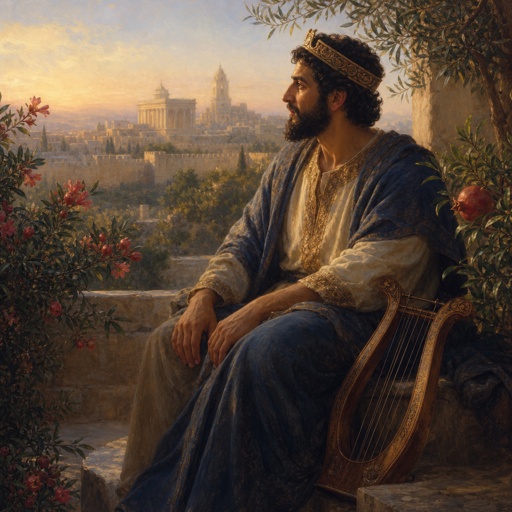
"The song of songs, which is Solomon's." - Song of Solomon 1:1

Song of Solomon 4:15 - "A fountain of gardens, a well of living waters, and streams from Lebanon."

Song of Solomon 4:12 - "A garden inclosed is my sister, my spouse; a spring shut up, a fountain sealed."

Song of Solomon 4:5 - "Thy two breasts are like two young roes that are twins, which feed among the lilies."

Song of Solomon 2:15

Song of Solomon 5:11

Song of Solomon 2:3

Song of Solomon 2:15

Song of Solomon 4:14 - "Spikenard and saffron; calamus and cinnamon, with all trees of frankincense; myrrh and aloes, with all the chief spices:"
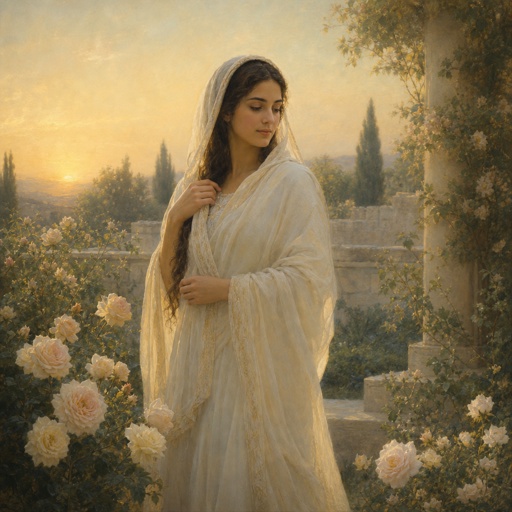
"Thou art all fair, my love; there is no spot in thee." - Song of Solomon 4:7
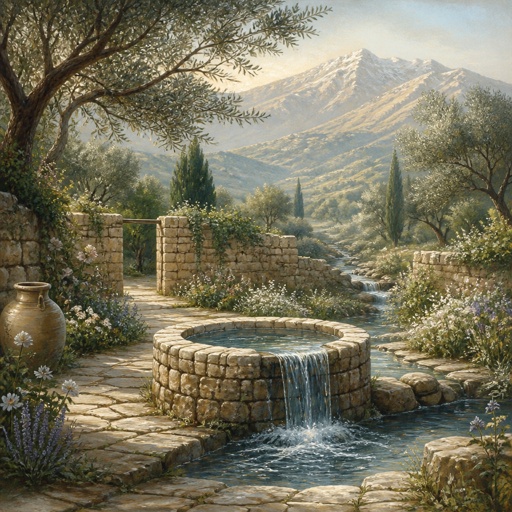
"A fountain of gardens, a well of living waters, and streams from Lebanon." - Song of Solomon 4:15

Song of Solomon 4:6 - "Until the day break, and the shadows flee away, I will get me to the mountain of myrrh, and to the hill of frankincense."

Song of Solomon 4:3 - "Thy lips are like a thread of scarlet, and thy speech is comely: thy temples are like a piece of a pomegranate within thy locks."

Song of Solomon 1:5 - "I am black, but comely, O ye daughters of Jerusalem, as the tents of Kedar, as the curtains of Solomon."
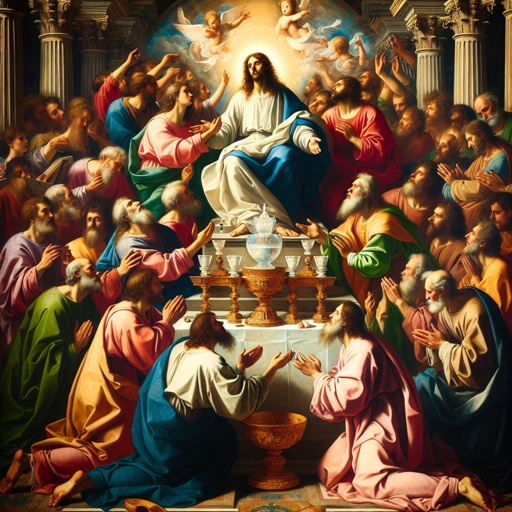
1 Songs of Solomon 1:1
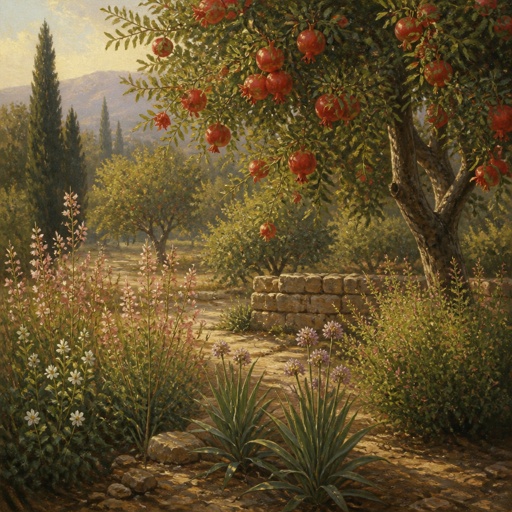
"Thy plants are an orchard of pomegranates, with pleasant fruits; camphire, with spikenard," - Song of Solomon 4:13
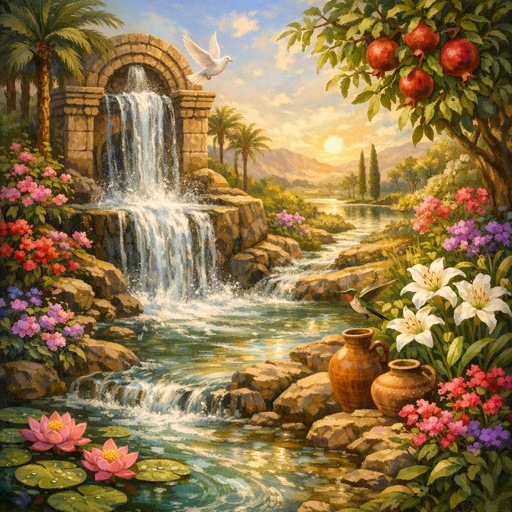
"A fountain of gardens, a well of living waters, and streams from Lebanon." - Song of Solomon 4:15

Song of Solomon 2:4 - "He brought me to the banqueting house, and his banner over me was love."

Song of Solomon 4:4 - "Thy neck is like the tower of David builded for an armoury, whereon there hang a thousand bucklers, all shields of mighty men."

Song of Solomon 4:9 - "Thou hast ravished my heart, my sister, my spouse; thou hast ravished my heart with one of thine eyes, with one chain of thy neck."

Songs of Solomon 1:2
1 songs of Solomon 1:2