The Redemption of Land and Legacy
"And he said unto the kinsman, Naomi, that is come again out of the country of Moab, selleth a parcel of land, which was our brother Elimelech's:" - Ruth 4:3
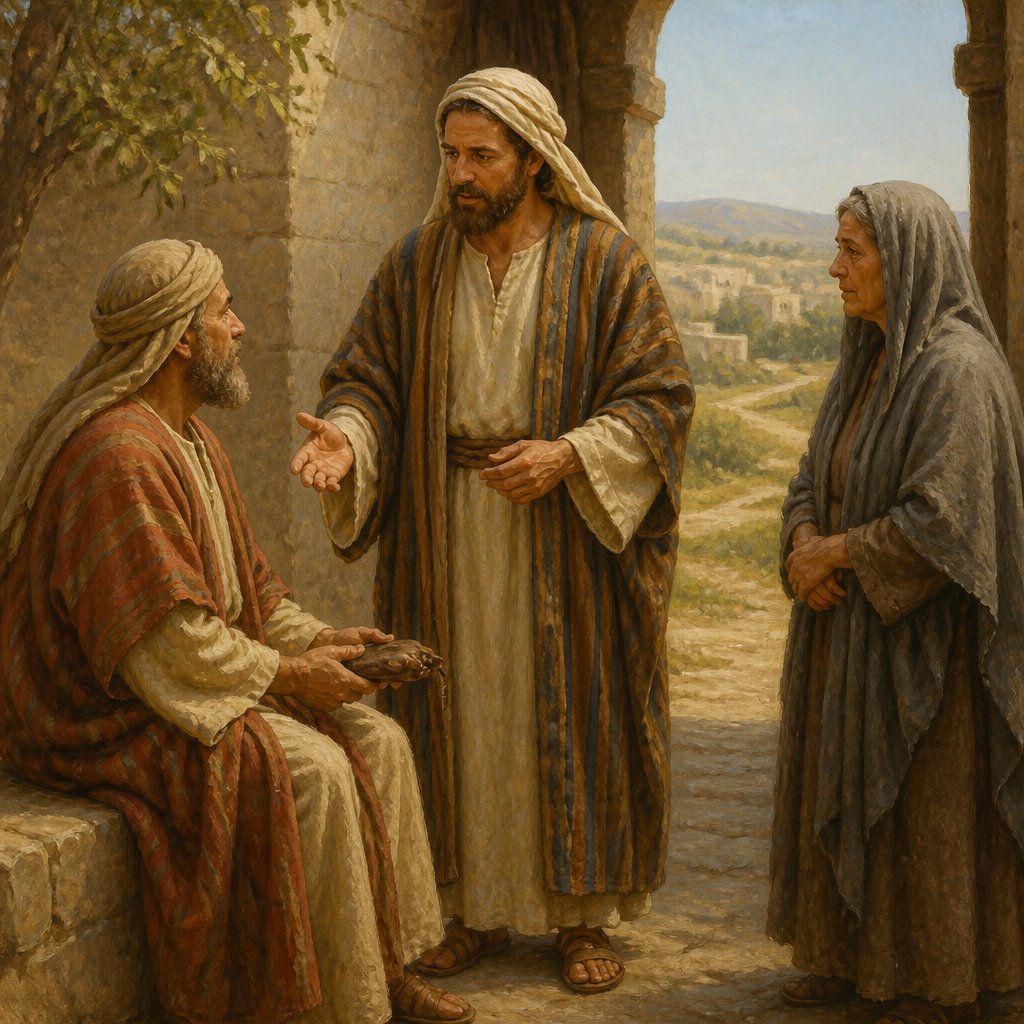
As we delve into Ruth 4:3—"And he said unto the kinsman, Naomi, that is come again out of the country of Moab, selleth a parcel of land, which was our brother Elimelech's"—we encounter a pivotal moment in the narrative of redemption, both literal and spiritual. Here, the story of Ruth crescendos into a profound illustration of God’s providence and the redemptive power of familial responsibility.
This passage occurs after a series of heartbreaking events: famine in Bethlehem, the death of Naomi’s husband, Elimelech, and the subsequent death of her two sons, leaving her widowed and childless. Naomi’s return to Bethlehem marks a significant turning point, as she comes back from Moab with Ruth, her Moabite daughter-in-law, whose loyalty to her mother-in-law speaks volumes about love and commitment. The phrase "that is come again out of the country of Moab" encapsulates the weight of Naomi’s struggles and her return to her roots.
The mention of land in this verse transcends mere property—it symbolizes heritage, identity, and belonging. In ancient Israel, land was more than a possession; it was tied deeply to the family's legacy and covenantal promise from God. By stating that Naomi is selling a parcel of land that belonged to Elimelech, we are reminded of the importance of sustaining the family lineage and the community. The land serves as a physical reminder of Elimelech’s legacy and by extension, God’s covenant faithfulness.
What stands out in this verse is the role of the kinsman-redeemer, a critical concept throughout the Book of Ruth. A kinsman-redeemer had the duty to protect the family name and property by marrying the widow of a deceased relative, thereby keeping the line alive and retaining the land within the family. This responsibility reflects God’s justice and mercy, ensuring that no family would be left destitute.
The transaction of land isn’t simply a business deal; it’s an act of love and commitment to God’s law and the preservation of family lineage. As we consider this aspect of kinsman redemption, we see a parallel to our spiritual lives. Each of us, through the kinsman redeemer, Jesus Christ, has been offered redemption. Just as Naomi had lost everything, we too were estranged from God due to sin. Yet, through Christ’s sacrificial act on the cross, we are offered a chance to reclaim our identity as children of the Most High, inheritors of the promises entwined in God’s eternal covenant.
The act of Naomi selling the land signifies her acknowledgment of the losses she has endured, yet it simultaneously introduces the opportunity for Ruth and Boaz to develop a new narrative—a narrative of hope, restoration, and redemption. God’s hand is at work here, using human actions and decisions to weave together a tapestry of grace. Through the faithful decisions of Ruth and the actions of Boaz, we see how God transforms calamity into beauty.
As modern-day readers of this ancient narrative, we should reflect upon our own lives and the legacies we hold. Do we honor the memory of those who have come before us? How do we invest in the people and communities around us? The resolution of the kinsman dilemma leading to Ruth’s marriage to Boaz becomes a broader metaphor for the lengths to which God goes to bring us back to Him. God’s faithfulness knows no bounds, transforming loss into gain, mourning into joy, and scarcity into abundance. This should inspire us to seek redemption in our relationships and embrace the call to be kinsman-redeemers in our families and communities, lifting others in devotion and love.
Want to reflect more on Ruth 4:3?
Continue your spiritual journey with Bible Chat — an AI-powered tool for exploring God's Word through conversation. Ask questions, discover connections, and deepen your understanding.
Get Our Apps


Ruth 4:3 Artwork

Ruth 4:3 - "And he said unto the kinsman, Naomi, that is come again out of the country of Moab, selleth a parcel of land, which was our brother Elimelech's:"
"And he said unto the kinsman, Naomi, that is come again out of the country of Moab, selleth a parcel of land, which was our brother Elimelech's:" - Ruth 4:3

Ruth 1:4 - "And they took them wives of the women of Moab; the name of the one was Orpah, and the name of the other Ruth: and they dwelled there about ten years."

Ruth 4:13 - "¶ So Boaz took Ruth, and she was his wife: and when he went in unto her, the LORD gave her conception, and she bare a son."

Ruth 4:18 - "¶ Now these are the generations of Pharez: Pharez begat Hezron,"

Ruth 4:20 - "And Amminadab begat Nahshon, and Nahshon begat Salmon,"

Ruth 4:21 - "And Salmon begat Boaz, and Boaz begat Obed,"

Ruth 4:19 - "And Hezron begat Ram, and Ram begat Amminadab,"

Ruth 4:22 - "And Obed begat Jesse, and Jesse begat David."

Ruth 3:9 - "And he said, Who art thou? And she answered, I am Ruth thine handmaid: spread therefore thy skirt over thine handmaid; for thou art a near kinsman."

Ruth 3:4 - "And it shall be, when he lieth down, that thou shalt mark the place where he shall lie, and thou shalt go in, and uncover his feet, and lay thee down; and he will tell thee what thou shalt do."

Ruth 4:5 - "Then said Boaz, What day thou buyest the field of the hand of Naomi, thou must buy it also of Ruth the Moabitess, the wife of the dead, to raise up the name of the dead upon his inheritance."

Ruth 2:3 – "So she went out, entered a field and began to glean behind the harvesters."

Ruth 1:3 - "And Elimelech Naomi's husband died; and she was left, and her two sons."

Ruth 4:16 - "And Naomi took the child, and laid it in her bosom, and became nurse unto it."

Ruth 3:1 - "Then Naomi her mother in law said unto her, My daughter, shall I not seek rest for thee, that it may be well with thee?"

Ruth 3:5 - "And she said unto her, All that thou sayest unto me I will do."

Ruth 3:8 - "¶ And it came to pass at midnight, that the man was afraid, and turned himself: and, behold, a woman lay at his feet."

Ruth 3:12 - "And now it is true that I am thy near kinsman: howbeit there is a kinsman nearer than I."

Ruth 4:10 - "Moreover Ruth the Moabitess, the wife of Mahlon, have I purchased to be my wife, to raise up the name of the dead upon his inheritance, that the name of the dead be not cut off from among his brethren, and from the gate of his place: ye are witnesses this day."
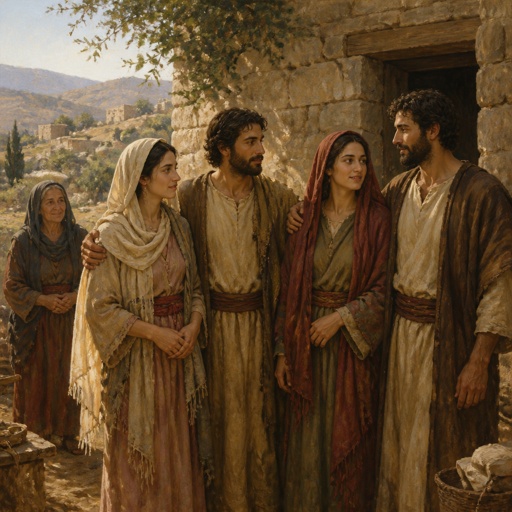
"And they took them wives of the women of Moab; the name of the one was Orpah, and the name of the other Ruth: and they dwelled there about ten years." - Ruth 1:4

Ruth 4:8 - "Therefore the kinsman said unto Boaz, Buy it for thee. So he drew off his shoe."

Ruth 4:2 - "And he took ten men of the elders of the city, and said, Sit ye down here. And they sat down."

Ruth 3:6 - "¶ And she went down unto the floor, and did according to all that her mother in law bade her."
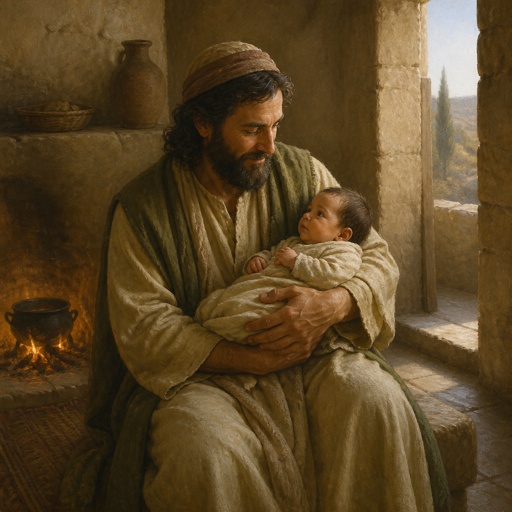
"¶ Now these are the generations of Pharez: Pharez begat Hezron," - Ruth 4:18
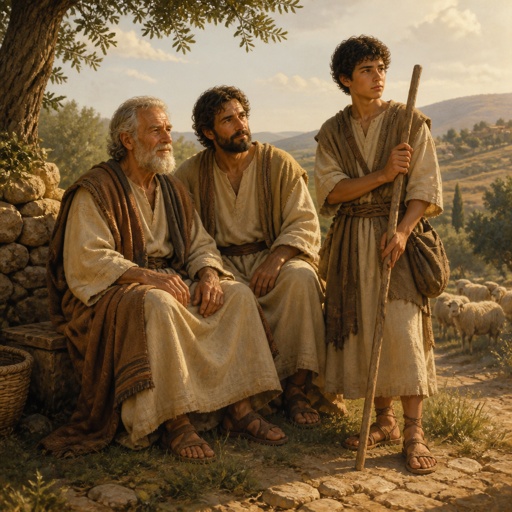
"And Obed begat Jesse, and Jesse begat David." - Ruth 4:22
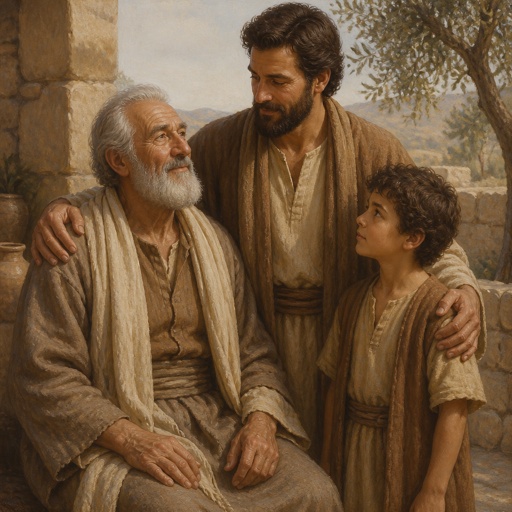
"And Hezron begat Ram, and Ram begat Amminadab," - Ruth 4:19
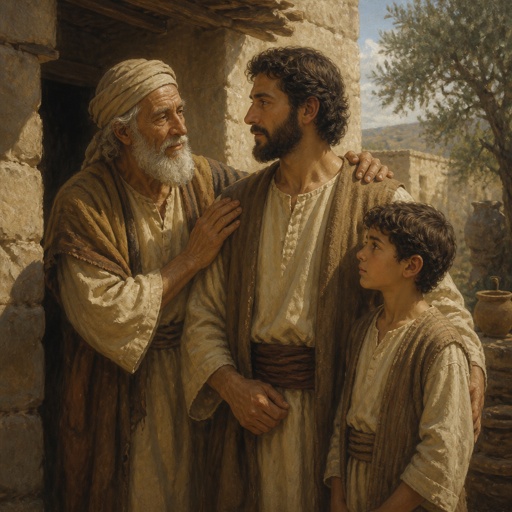
"And Amminadab begat Nahshon, and Nahshon begat Salmon," - Ruth 4:20
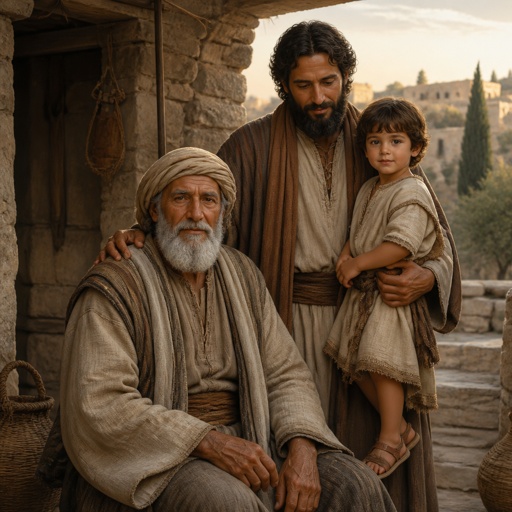
"And Salmon begat Boaz, and Boaz begat Obed," - Ruth 4:21

Ruth 3:2 - "And now is not Boaz of our kindred, with whose maidens thou wast? Behold, he winnoweth barley to night in the threshingfloor."