A New Covenant: Freedom and Faithfulness in Christ
"So then if, while her husband liveth, she be married to another man, she shall be called an adulteress: but if her husband be dead, she is free from that law; so that she is no adulteress, though she be married to another man." - Romans 7:3
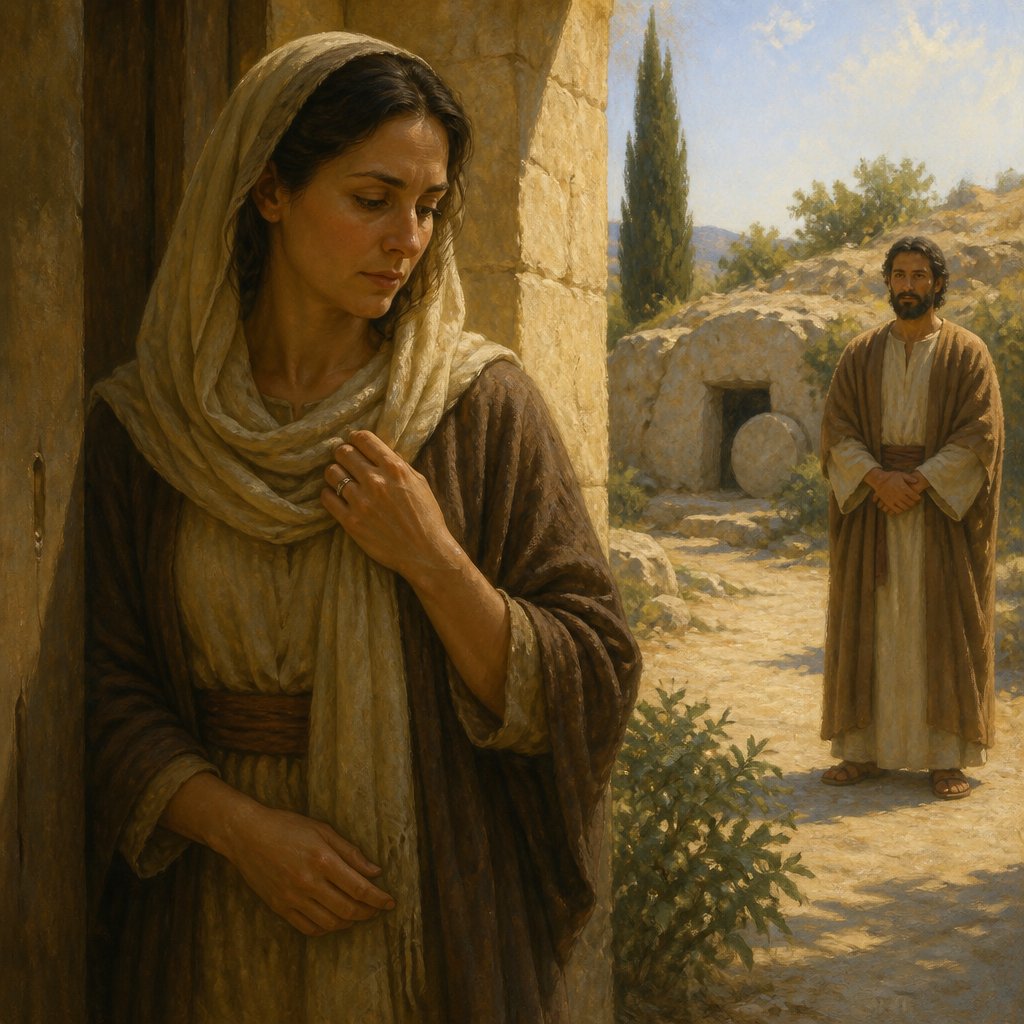
In Romans 7:3, Paul presents a profound insight into the interplay of law, marital fidelity, and spiritual freedom: "So then if, while her husband liveth, she be married to another man, she shall be called an adulteress: but if her husband be dead, she is free from that law; so that she is no adulteress, though she be married to another man."
This verse has intrigued scholars and laypeople alike, primarily because it highlights not only the cultural significance of marriage but also the theological implications of the law versus grace. In the context of Paul's letter to the Romans, he addresses a group of believers grappling with the concept of the law. Many Jewish converts were keen to uphold the law, but Paul drives home the heart of the Gospel: that the law is not the endpoint but a precursor to something greater—our relationship with Christ.
To understand this better, we must delve into the marital analogy Paul uses. Marriages in biblical times were binding contracts, established not just for love but often for family alliances and societal stability. The law of marriage was severe; a woman separated from her husband without his death was seen as committing adultery. Legally and culturally, she was bound to her husband unless he passed away. When Paul speaks of a woman being free from the law upon her husband's death, he's introducing a transformative truth.
Here, Paul is calling attention to the fundamental change that occurs when we come to Christ. Just as a woman is released from the law of marriage when her husband dies, believers have died to the law through Christ. Galatians 2:19-20 reinforces this idea by stating, “For I through the law am dead to the law, that I might live unto God. I am crucified with Christ: nevertheless I live; yet not I, but Christ liveth in me: and the life which I now live in the flesh I live by the faith of the Son of God, who loved me, and gave himself for me.” We are no longer bound by the law, tethered to sin but resurrected into a new life governed by grace.
Now, this freedom in Christ is dual-fold. On one hand, it is a release from the condemnation and limitations of the law. The law provided the understanding of sin but lacked the power to free us from it. On the other hand, this freedom requires a commitment of faithfulness. Just as a widow is free to remarry after the death of her husband, we are free to engage in a new relationship—one with Jesus Christ. He becomes our new husband, and we are called to live faithfully and devotedly, honoring our commitment to Him, who is the ultimate expression of love, grace, and fidelity.
Living in light of this freedom demands a response. It challenges us to reassess our allegiances. Are there "laws" or "relationships" in our lives that we cling to, even though they keep us from fully embracing our relationship with Christ? Just as a woman might be tempted to mourn the lost relationship, we too can find ourselves trepidatiously holding onto past behaviors or unholy attachments that stifle our walk with God.
This is where self-reflection comes into play. Today, we are called to evaluate our hearts. Have we married ourselves to the traditions, expectations, or sins that Christ has fully liberated us from? Or are we ready to embrace the new covenant, leaving behind the weight of the law and stepping into a life defined by love and grace?
Romans 7:3 reminds us of our transformed status in Christ. We are no longer under the law that leads to death; we are alive through the Spirit, called to bear fruit of righteousness and to experience the deeper reality of our identity as children of God. The challenge is then to live out that reality daily, encouraging one another in faithfulness to our new husband, Christ, who perfectly fulfills every requirement of the law on our behalf.
Want to reflect more on Romans 7:3?
Continue your spiritual journey with Bible Chat — an AI-powered tool for exploring God's Word through conversation. Ask questions, discover connections, and deepen your understanding.
Get Our Apps


Romans 7:3 Artwork

Romans 7:3 - "So then if, while her husband liveth, she be married to another man, she shall be called an adulteress: but if her husband be dead, she is free from that law; so that she is no adulteress, though she be married to another man."
"So then if, while her husband liveth, she be married to another man, she shall be called an adulteress: but if her husband be dead, she is free from that law; so that she is no adulteress, though she be married to another man." - Romans 7:3

Romans 3:7 - "For if the truth of God hath more abounded through my lie unto his glory; why yet am I also judged as a sinner?"

Romans 7:19

Romans 7:12

Romans 4:3

Romans 3:24

Romans 3:16 - "Destruction and misery are in their ways:"

Romans 6:7 - "For he that is dead is freed from sin."
Romans 3:17 - "And the way of peace have they not known:"

Romans 3:15 - "Their feet are swift to shed blood:"

Romans 3:10 - "As it is written, There is none righteous, no, not one:"

Romans 3:18 - "There is no fear of God before their eyes."

Romans 3:3 - "For what if some did not believe? shall their unbelief make the faith of God without effect?"

Romans 3:14 - "Whose mouth is full of cursing and bitterness:"

Romans 7:12 - "Wherefore the law is holy, and the commandment holy, and just, and good."

Romans 14:7 - "For none of us liveth to himself, and no man dieth to himself."

Romans 7:17 - "Now then it is no more I that do it, but sin that dwelleth in me."

Romans 7:22 - "For I delight in the law of God after the inward man:"

Romans 7:10 - "And the commandment, which was ordained to life, I found to be unto death."

Romans 4:7 - "Saying, Blessed are they whose iniquities are forgiven, and whose sins are covered."

Romans 3:11 - "There is none that understandeth, there is none that seeketh after God."

Romans 7:11 - "For sin, taking occasion by the commandment, deceived me, and by it slew me."

Romans 16:3 - "Greet Priscilla and Aquila my helpers in Christ Jesus:"

Romans 3:1 - "What advantage then hath the Jew? or what profit is there of circumcision?"

Romans 3:23 - "For all have sinned, and come short of the glory of God;"

Romans 3:6 - "God forbid: for then how shall God judge the world?"

"Destruction and misery are in their ways:" - Romans 3:16

Romans 12:7 - "Or ministry, let us wait on our ministering: or he that teacheth, on teaching;"

Romans 10:7 - "Or, Who shall descend into the deep? (that is, to bring up Christ again from the dead.)"