Unfathomable Love: A Reflection on Romans 5:8
"But God commendeth his love toward us, in that, while we were yet sinners, Christ died for us." - Romans 5:8

In the vast tapestry of Scripture, few verses encapsulate the essence of God's love and grace as poignantly as Romans 5:8: "But God commendeth his love toward us, in that, while we were yet sinners, Christ died for us." These words resonate deeply, reverberating through the ages to echo a truth that is both profound and personal—God's love for humanity is both unconditional and unmerited.
As we explore this scripture, let us first understand the context. The Apostle Paul, writing to the Roman church, communicates a remarkable revelation: our relationship with God is not predicated on our merits or deeds. Rather, it is a divine act of love that reached out to us in our most wretched state. Consider the gravity of the statement that while we were yet sinners, Christ died for us.
This prompts an essential reflection: What does it mean to be a sinner? It means to be separated from a perfect and holy God, to exist in rebellion against His righteousness, often blind to our own faults. Paul’s recognition of humanity's condition serves to vividly paint a picture of our need for salvation. Yet, in this very darkness, where one could expect condemnation, we encounter the remarkable character of God—a God who does not merely tolerate our imperfections but actively reaches toward us with love.
The term "commendeth" is particularly striking. It suggests a deliberate action, a demonstration of love that goes beyond mere words or pity. God does not simply tell us that He loves us; He shows us in the most dramatic way possible through the sacrifice of His Son, Jesus Christ. This act is historically and spiritually significant. The cross was not just a tragic event; it was the fulcrum of salvation history—a transaction that gives hope to the hopeless.
The phrase "while we were yet sinners" underscores the nature of God’s love as proactive and unending. It wasn’t after we cleaned ourselves up or sought after Him that Christ died; it was in our state of sinfulness, when we were lost, confused, and enemies of God. We did nothing to merit this act of love. In fact, our sinful nature often drives us further away from Him, yet in this very moment, God initiated reconciliation through Jesus.
Let this truth wash over you: God sees the man or woman that we are at our worst and still chose to die for us. This profound reality should ignite a fire of gratitude in our hearts. We are not condemned; we are beloved. In a world that frequently tries to define us by our failures, God sees our potential and extends grace. This grace rekindles what it means to be loved wholly and intimately by the Creator.
Moreover, Romans 5:8 challenges us to reflect on our response to this divine love. How often do we extend love to others in the same manner? Do we reserve our compassion for those who have earned it or those we deem worthy? The call of Christ is to love unconditionally, just as we have been loved.
As we meditate on this verse, let us cultivate a spirit of thankfulness and humility. Thankful for the grace that saved us, and humble in recognizing that we are all in need of the same grace, irrespective of our backgrounds, our sins, or our pasts. Let us also be compelled to share this good news with others who are still in bondage to sin. God’s love is a message that must be conveyed far and wide because it is transformative—it has the power to change lives, heal brokenness, and offer hope to the hopeless.
In conclusion, Romans 5:8 stands as both a reminder and a call to action. Let it inspire us to walk in the light of His love—exuding grace, forgiveness, and compassion. May we embody the very love that was first extended to us, reflecting the heart of Christ to a world in desperate need of redemption. As we go forth, let it always be said that we, too, commend our love toward others, just as God has commended His love toward us.
Want to reflect more on Romans 5:8?
Continue your spiritual journey with Bible Chat — an AI-powered tool for exploring God's Word through conversation. Ask questions, discover connections, and deepen your understanding.
Get Our Apps


Romans 5:8 Artwork

Romans 5:8

Romans 5:8

Romans 5:8
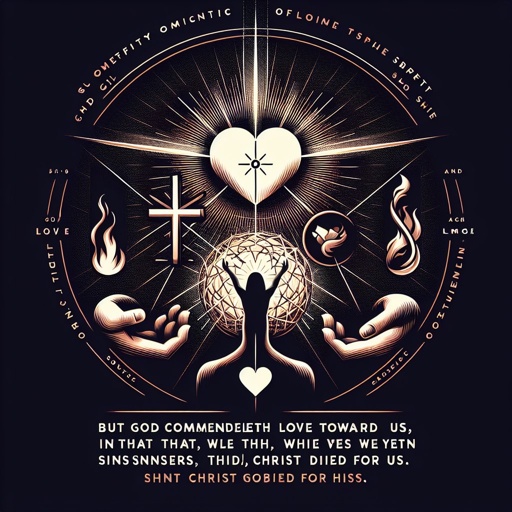
Romans 5:8 - "But God commendeth his love toward us, in that, while we were yet sinners, Christ died for us."
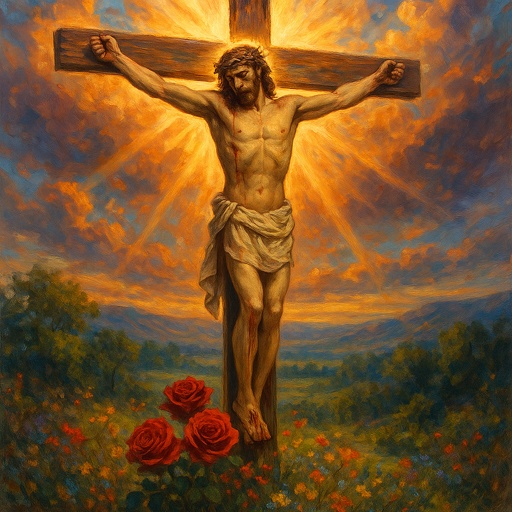
"But God commendeth his love toward us, in that, while we were yet sinners, Christ died for us." - Romans 5:8

"But God commendeth his love toward us, in that, while we were yet sinners, Christ died for us." - Romans 5:8

Romans 5:8 is a verse in the Bible that states, "But God demonstrates his own love for us in this: While we were still sinners, Christ died for us". This verse is often used to explain the Christian belief that God's love is demonstrated through the sacrifice of his son, Jesus, for humanity, even when people were considered sinners. Key message: The verse highlights that God's love is not a reward for good behavior, but a demonstration of love given unconditionally to those who are considered "sinners". Context: This verse is part of the Apostle Paul's letter to the Romans, where he contrasts the actions of Adam with those of Christ, explaining how the death of Christ offers a path to God. Meaning for believers: It serves as a core tenet of Christianity, reinforcing the idea that Christ's death was a sacrifice for all people, and that this action proves God's love and provides a way for people to be reconciled wit

Romans 8:5 - "For they that are after the flesh do mind the things of the flesh; but they that are after the Spirit the things of the Spirit."

"For they that are after the flesh do mind the things of the flesh; but they that are after the Spirit the things of the Spirit." - Romans 8:5

Romans 8:5-8 - "For they that are after the flesh do mind the things of the flesh; but they that are after the Spirit the things of the Spirit. For to be carnally minded is death; but to be spiritually minded is life and peace. Because the carnal mind is enmity against God: for it is not subject to the law of God, neither indeed can be. So then they that are in the flesh cannot please God."

Romans 8

romans 8

Romans 5:1

Romans 8:8 - "So then they that are in the flesh cannot please God."

Romans 8:19

Romans 8:28

Romans 8:31

Romans 13:8

Romans chapter 8

Romans 8:14

Romans 8:28

romans 8:38

Romans 8:35

Romans 8:28

Romans 13:8

Romans 8:6

Romans 8:16

Romans 8:28

Romans 8:19

Romans 8:31