From Death to Life: The Power of Christ's Redemption
"Nevertheless death reigned from Adam to Moses, even over them that had not sinned after the similitude of Adam's transgression, who is the figure of him that was to come." - Romans 5:14
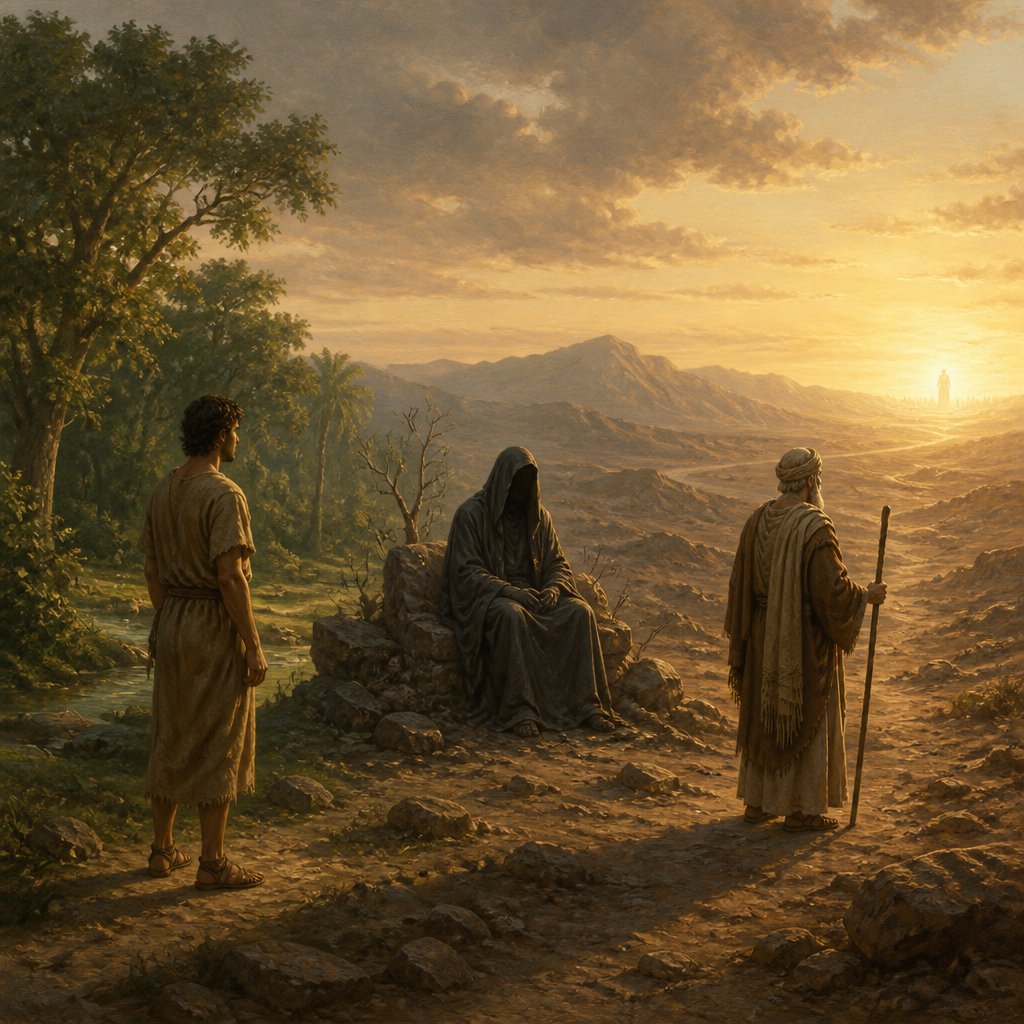
Romans 5:14 boldly proclaims, "Nevertheless death reigned from Adam to Moses, even over them that had not sinned after the similitude of Adam's transgression, who is the figure of him that was to come." This verse encapsulates two critical aspects of the Christian faith: the inevitability of sin and death through our first ancestor, Adam, and the anticipation of redemption through Jesus Christ, the one who was to come.
In the context of Romans, the Apostle Paul masterfully contrasts the reign of death with the gift of life through Christ. To fully grasp the significance of this verse, we must first reflect on the implications of Adam's transgression. Adam, as the representative head of humanity, sinned by disobeying God, bringing sin into the world. As a result, death entered human experience, not just physical death but spiritual death—a separation from God that echoes through generations. From that moment onward, all humankind fell under the heavy shadow of death, a reign unchallenged until the coming of Christ.
Paul’s reference to Moses carries profound weight. Moses is often associated with the Law, which, while intending to guide and protect, could not save humanity from its inherent sinful state. The Law revealed our transgressions but could never ameliorate the consequences instituted through Adam's sin. Thus, the timeline between Adam and Moses represents a grim reality—one characterized by the dominance of sin and death unrestrained. People lived in the acknowledgment of their failures, yet they had no means through the Law to escape the condemnation brought about by Adam’s actions. This reign of death is not exclusive to Adam's sins alone; it encompasses the sins of all who live post-Adam, highlighting our shared human frailty and need for divine intervention.
However, verse 14 also introduces hope by stating that Adam is a figure of Him who was to come—Christ. In doing so, Paul draws us towards the fundamental truth of the Gospel: Jesus Christ stands as the answer to the problem of sin and death. Adam’s choice led to death’s reign; Christ's life, death, and resurrection overturn the eternal grip of sin, offering all who believe the gift of eternal life. The stark contrast between Adam and Christ is the crux of the New Testament—a direct invitation for humanity to move from the despair of death into the glory of life.
As Christians, this transition heralded by Christ should provoke profound gratitude within us. The reign of death, which was once unavoidable, has been invaded by grace. In John 11:25, Jesus states, "I am the resurrection, and the life: he that believeth in me, though he were dead, yet shall he live." Here, we see the fulfillment of the promise that was foreshadowed in Paul's writings. By accepting Jesus as our Savior, we not only acknowledge our sinful state but also embrace our new identity as resurrected beings in Him. Death no longer reigns; instead, believers possess a new life that is eternal.
Reflecting on this glorious gift calls us to live in gratitude and humility. Acknowledging the weight of our sinfulness, we should not take lightly the magnitude of Christ's sacrifice.
This realization anchors our faith, fueling our commitment to share the Good News. We are called to be instruments of grace in a world still entrenched in sin and the fear of death. Each moment of our lives should reflect the freedom we have found in Christ. As we navigate daily struggles and the shadows that try to overtake us, we remember that we are not confined by the old covenant of law or the reign of sin. We live under grace, clothed in righteousness by faith in Him who was to come.
In conclusion, Romans 5:14 serves as a compelling reminder of our need for Christ, whose redemptive work grants us victory over death and sin. Let us therefore walk confidently in the light of our Savior, proclaiming the hope that transforms our lives and those around us.
Want to reflect more on Romans 5:14?
Continue your spiritual journey with Bible Chat — an AI-powered tool for exploring God's Word through conversation. Ask questions, discover connections, and deepen your understanding.
Get Our Apps


Romans 5:14 Artwork

Romans 5:14 - "Nevertheless death reigned from Adam to Moses, even over them that had not sinned after the similitude of Adam's transgression, who is the figure of him that was to come."
"Nevertheless death reigned from Adam to Moses, even over them that had not sinned after the similitude of Adam's transgression, who is the figure of him that was to come." - Romans 5:14

Romans 14:5 - "One man esteemeth one day above another: another esteemeth every day alike. Let every man be fully persuaded in his own mind."

Romans 14:12

Romans 8:14

Romans 10:14

Romans 5:1

Romans 5:19

Romans 5:8

Romans 5:8

Romans 5:8

Romans 5:19

Romans 14:16 - "Let not then your good be evil spoken of:"

Romans 3:14 - "Whose mouth is full of cursing and bitterness:"

Romans 5: 1-11

Romans 5: 1-11
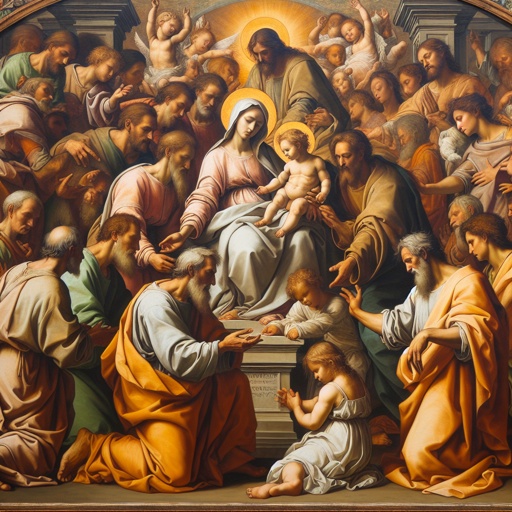
romans 12: 4-5

Romans 5:4 - "And patience, experience; and experience, hope:"

Romans 8:14 - "For as many as are led by the Spirit of God, they are the sons of God."

Romans 14:7 - "For none of us liveth to himself, and no man dieth to himself."

depict the theme of Romans 13:8-14

Romans 14:1 - "Him that is weak in the faith receive ye, but not to doubtful disputations."

Romans 12:14 - "Bless them which persecute you: bless, and curse not."

Romans 9:14 - "What shall we say then? Is there unrighteousness with God? God forbid."

Romans 14:18 - "For he that in these things serveth Christ is acceptable to God, and approved of men."

Romans 14:14 - "I know, and am persuaded by the Lord Jesus, that there is nothing unclean of itself: but to him that esteemeth any thing to be unclean, to him it is unclean."

Romans 14:12 - "So then every one of us shall give account of himself to God."

Romans 1:14 - "I am debtor both to the Greeks, and to the Barbarians; both to the wise, and to the unwise."

Romans 16:14 - "Salute Asyncritus, Phlegon, Hermas, Patrobas, Hermes, and the brethren which are with them."

Romans 14:17 - "For the kingdom of God is not meat and drink; but righteousness, and peace, and joy in the Holy Ghost."