Unity in Diversity: Embracing Our Differences in Faith
"For one believeth that he may eat all things: another, who is weak, eateth herbs." - Romans 14:2
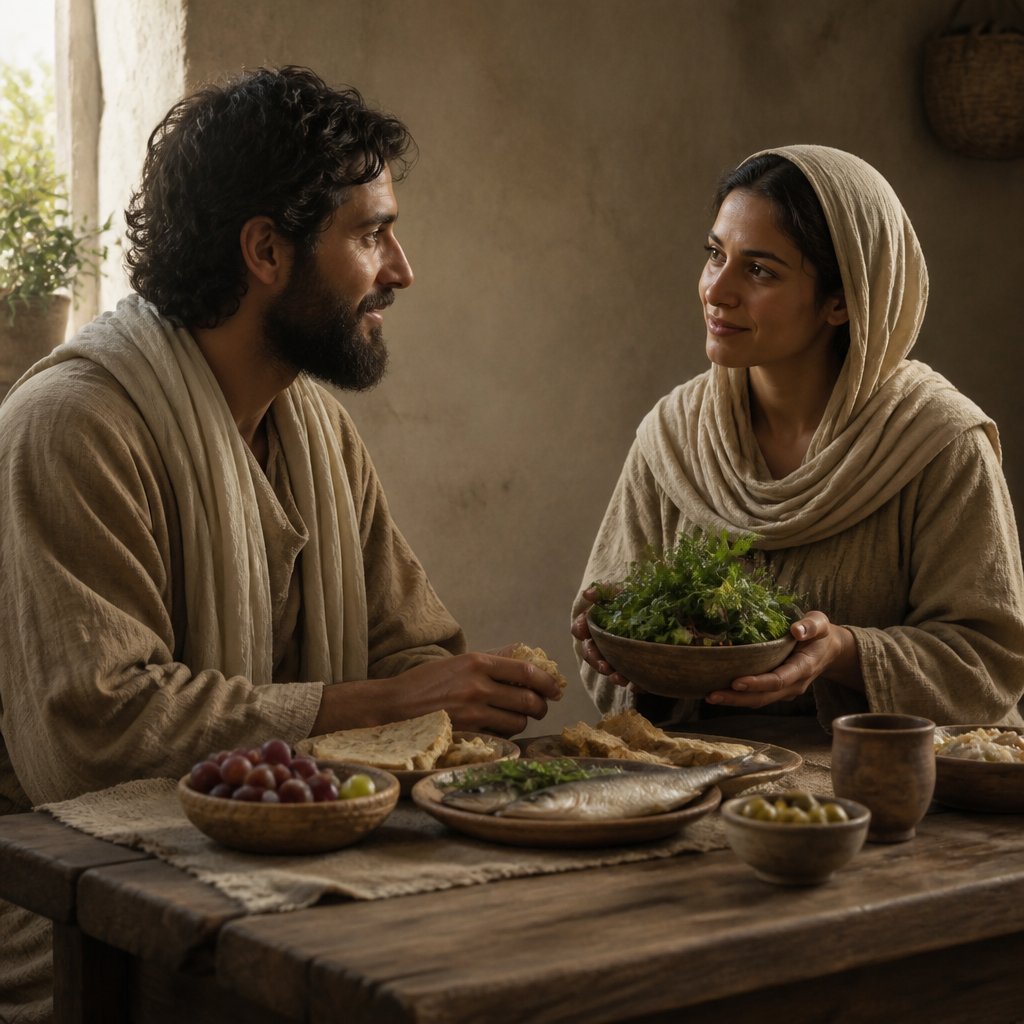
When we turn to Romans 14:2 in the King James Version, we encounter a profound statement: "For one believeth that he may eat all things: another, who is weak, eateth herbs." This verse encapsulates a significant issue that was present in the early church and, to some extent, still exists today: the diversity of beliefs and practices among believers. Here, the apostle Paul addresses the differences in the understanding and practice of faith that can create division within the body of Christ.
At first glance, this verse might seem to simply highlight dietary differences between believers—one being free to eat all things, and another choosing to eat only herbs. However, Paul is drawing on a more extensive theological principle. The believers he refers to are part of a community that is learning to navigate the nuances of faith in a world filled with varied customs and moral beliefs. For some, the conscience is a guiding force that informs their actions, while others may have a more liberated view of their freedom in Christ.
To fully comprehend the significance of this verse, we must first appreciate the context in which it was written. The early Christians, particularly in Rome, came from diverse backgrounds—Jewish followers of Jesus who adhered to the law of Moses and Gentile converts who were unfamiliar with these traditions. This diversity meant that their experiences and understandings of faith varied widely, leading to conflict and disagreement about what was acceptable behavior.
Paul points out that the one who believes he can eat all things sees the freedom afforded to him through Christ’s sacrifice. He understands that food itself is not inherently impure; rather, it is the heart's condition that determines purity. In contrast, the one who is weak—who perhaps carries the conscience of a Jew under the law—restricts himself, believing that consuming certain foods would jeopardize his spiritual standing before God. Both perspectives are valid in their contexts; however, the underlying truth that Paul articulates is crucial for maintaining unity.
The central issue at hand is not the act of eating itself but the heart behind the action. Believers must learn to coexist, respecting each other's consciences and choices even when they differ. Paul urges us to embrace a spirit of acceptance and understanding rather than division. As he continues in Romans 14, he emphasizes that we are not to judge one another based on our differing views, as ultimately, we belong to the Lord (Romans 14:8).
In our modern context, this principle of honoring others' convictions applies not only to dietary issues but also to various practices and beliefs that arise in the Christian community. From worship styles to interpretations of Scripture, the body of Christ is a tapestry woven with individual threads of belief, experience, and conviction. Each thread contributes to the beauty and complexity of our faith community.
In practical terms, Romans 14:2 calls us to practice love over legalism. For those who possess a stronger faith, it is essential not to flaunt our liberties in a way that causes a weaker brother or sister to stumble (Romans 14:13). Similarly, those who may feel restricted in their faith must recognize that their limitations do not define the faith of others. Rather than viewing differences as points of conflict, we should see them as opportunities for growth, dialogue, and deeper fellowship.
Moreover, this scripture invites us into deeper introspection. We must ask ourselves whether we are exhibiting judgment and condemnation toward those whose beliefs differ from our own. Instead, let us engage in grace-driven conversations that promote understanding and build relationship. The heart of Paul’s message is clear: love is what binds us together.
In conclusion, as we meditate on Romans 14:2, let us strive to cultivate an environment of acceptance in our churches and communities. By recognizing the diverse convictions among us, we can challenge ourselves to mature in our faith, not allowing our differences to create divisions but rather recognizing them as reflections of the rich diversity of God’s creation. May we rejoice in our unity as one body in Christ, willing to engage in love with those who walk alongside us on this journey of faith.
Want to reflect more on Romans 14:2?
Continue your spiritual journey with Bible Chat — an AI-powered tool for exploring God's Word through conversation. Ask questions, discover connections, and deepen your understanding.
Get Our Apps


Romans 14:2 Artwork

Romans 14:2 - "For one believeth that he may eat all things: another, who is weak, eateth herbs."
"For one believeth that he may eat all things: another, who is weak, eateth herbs." - Romans 14:2

Romans 2:14 - "For when the Gentiles, which have not the law, do by nature the things contained in the law, these, having not the law, are a law unto themselves:"

Romans 14:12

Romans 8:14

Romans 10:14

Romans 14:16 - "Let not then your good be evil spoken of:"

Romans 3:14 - "Whose mouth is full of cursing and bitterness:"

Romans 8:14 - "For as many as are led by the Spirit of God, they are the sons of God."

Romans 14:7 - "For none of us liveth to himself, and no man dieth to himself."

depict the theme of Romans 13:8-14

Romans 14:1 - "Him that is weak in the faith receive ye, but not to doubtful disputations."

Romans 12:14 - "Bless them which persecute you: bless, and curse not."

Romans 9:14 - "What shall we say then? Is there unrighteousness with God? God forbid."

Romans 14:18 - "For he that in these things serveth Christ is acceptable to God, and approved of men."

Romans 14:14 - "I know, and am persuaded by the Lord Jesus, that there is nothing unclean of itself: but to him that esteemeth any thing to be unclean, to him it is unclean."

Romans 14:12 - "So then every one of us shall give account of himself to God."

Romans 1:14 - "I am debtor both to the Greeks, and to the Barbarians; both to the wise, and to the unwise."

Romans 12:2

Romans 12:2

Romans 12:2

Romans 12:2

Romans 12:2

Romans 12:2

Romans 12:2

Romans 16:14 - "Salute Asyncritus, Phlegon, Hermas, Patrobas, Hermes, and the brethren which are with them."

Romans 14:17 - "For the kingdom of God is not meat and drink; but righteousness, and peace, and joy in the Holy Ghost."

Romans 12:2

Romans 12:2

Romans 12:2