Unity in Diversity: Embracing the Weakness of Faith
"Accept him that is weak in the faith, but not to doubtful disputations. For one believeth that he may eat all things: another, who is weak, eateth herbs. Let not him that eateth despise him that eateth not; and let not him which eateth not judge him that eateth: for God hath received him. Who art thou that judgest another man's servant? to his own master he standeth or falleth. Yea, he shall be holden up: for God is able to make him stand. One man esteemeth one day above another: another esteemeth every day alike. Let every man be fully persuaded in his own mind." - Romans 14:1-5
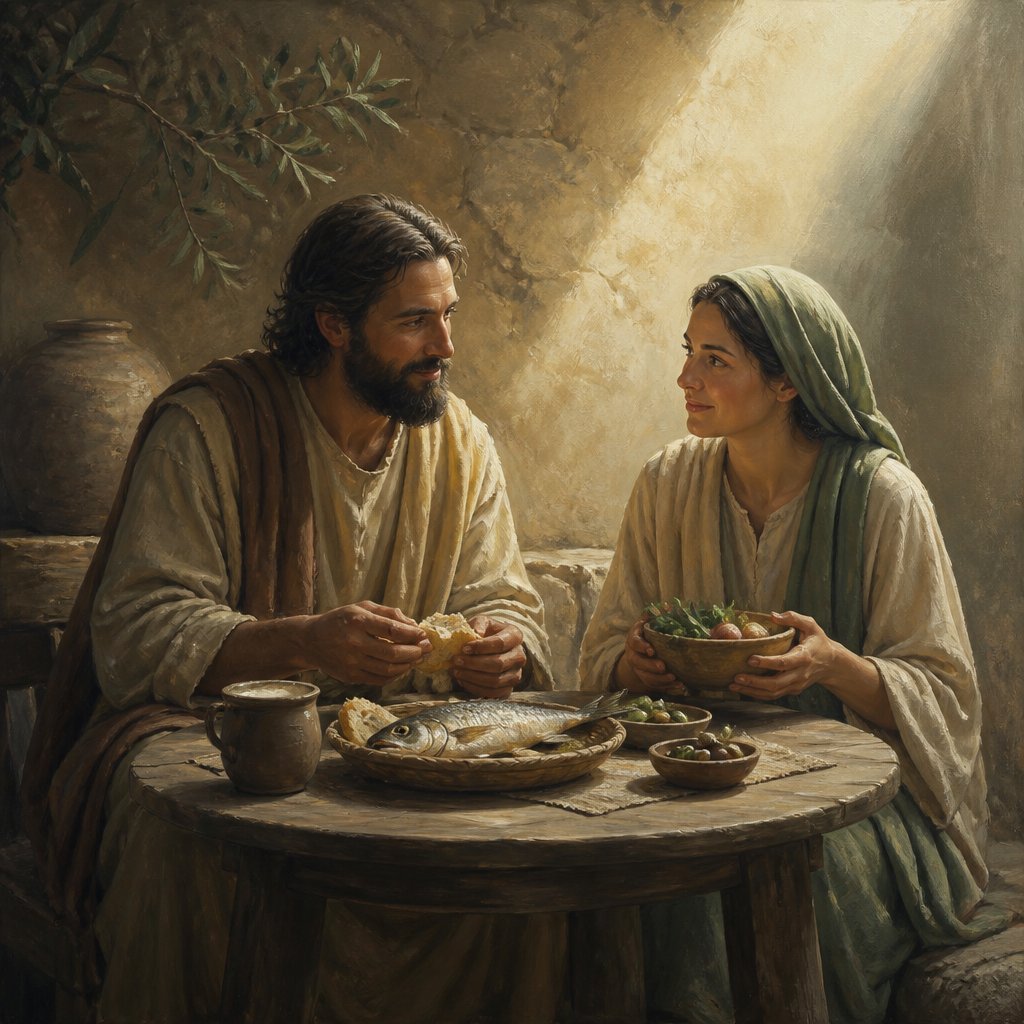
The Apostle Paul, in his epistle to the Romans, addresses a crucial aspect of Christian living: the relationship between believers of varying degrees of faith and conviction. In Romans 14:1-5, he writes, "Accept him that is weak in the faith, but not to doubtful disputations. For one believeth that he may eat all things: another, who is weak, eateth herbs. Let not him that eateth despise him that eateth not; and let not him which eateth not judge him that eateth: for God hath received him. Who art thou that judgest another man's servant? to his own master he standeth or falleth. Yea, he shall be holden up: for God is able to make him stand. One man esteemeth one day above another: another esteemeth every day alike. Let every man be fully persuaded in his own mind."
In these verses, Paul highlights the importance of acceptance and understanding within the Body of Christ. The diversity among believers—whether in practices concerning dietary restrictions or the observance of days—is an invitation to cultivate a community characterized by love and grace rather than judgment and division.
### The Nature of Faith
To begin, Paul identifies two groups within the church: the weak and the strong. The ‘weak in faith’ might adhere to certain restrictions due to their conscience or understanding of God’s will. They may abstain from particular foods or celebrate certain days as holy, not because they are inherently wrong, but because their faith has not fully liberated them from these traditional views. In contrast, the ‘strong’ Christians, who recognize that they are free to eat all things, must avoid the temptation to look down upon their weaker brethren.
This does not mean that the strong should impose their freedom on the weak; rather, their role is to support and encourage growth in faith. It is a call to compassion and empathy, recognizing that we are all on different journeys of faith—a journey that the Lord Himself is perfectly orchestrating.
### The Heart of Acceptance
Paul’s instruction is clear: “Let not him that eateth despise him that eateth not; and let not him which eateth not judge him that eateth: for God hath received him.” Here, we see a fundamental principle of Christian community—acceptance rooted in God’s acceptance of us. Every believer, regardless of their level of faith, is received by God.
This profound truth should reshape our interactions. Instead of criticizing or breaking fellowship over differences, we are called to embrace one another, celebrating our unique expressions of faith. It also serves as a reminder that our disagreements should not lead us to condemnation but rather a deeper understanding of each other's faith journeys.
### Our Master’s Authority
Paul continues with a poignant reminder: “Who art thou that judgest another man's servant? to his own master he standeth or falleth.” Each believer is accountable to God, their Master, who is perfectly aware of their struggles and doubts. To judge another’s faith is to overstep our boundaries, forgetting that only God possesses the authority to judge the heart.
In this context, we are encouraged not only to avoid judgment but to trust in God’s power to sustain each person in their faith journey. “For God is able to make him stand.” This assurance emphasizes that God takes responsibility for nurturing our faith, and He equips each believer to grow in their understanding and practice of faith.
### Belief and Conviction
Finally, Paul exhorts believers to seek personal conviction: “Let every man be fully persuaded in his own mind.” This call to personal conviction encourages us to explore our beliefs, seek truth, and align our practices with our conscience guided by the Holy Spirit. In our pursuit of these convictions, patience and grace toward one another are essential.
### Conclusion
As we reflect on Romans 14:1-5, let us embrace the varied expressions of faith among us. May we strive to accept each other as Christ has accepted us, remembering that our unity is found not in uniformity but in our shared faith in Christ’s transformative power. Let us build each other up, support the weak, and trust in God’s sustaining grace for every believer. In doing so, we will live out the true essence of the loving community that Christ intended.
Want to reflect more on Romans 14:1-5?
Continue your spiritual journey with Bible Chat — an AI-powered tool for exploring God's Word through conversation. Ask questions, discover connections, and deepen your understanding.
Get Our Apps


Romans 14:1-5 Artwork

Romans 14:1-5 - "Accept the one whose faith is weak, without quarreling over disputable matters. One person’s faith allows them to eat anything, but another, whose faith is weak, eats only vegetables. The one who eats everything must not treat with contempt the one who does not, and the one who does not eat everything must not judge the one who does, for God has accepted them. Who are you to judge someone else’s servant? To their own master, servants stand or fall. And they will stand, for the Lord is able to make them stand. One person considers one day more sacred than another; another considers every day alike. Each of them should be fully convinced in their own mind."
"Accept the one whose faith is weak, without quarreling over disputable matters. One person’s faith allows them to eat anything, but another, whose faith is weak, eats only vegetables. The one who eats everything must not treat with contempt the one who does not, and the one who does not eat everything must not judge the one who does, for God has accepted them. Who are you to judge someone else’s servant? To their own master, servants stand or fall. And they will stand, for the Lord is able to make them stand. One person considers one day more sacred than another; another considers every day alike. Each of them should be fully convinced in their own mind." - Romans 14:1-5

Loving Beyond Our Differences; Romans 14:1-12

Romans 5:1

Together in Christ: Loving Beyond Our Differences; Romans 14:1-12

Together in Christ: Loving Beyond Our Differences; Romans 14:1-12

Together in Christ: Loving Beyond Our Differences; Romans 14:1-12

Romans 14:1 - "Him that is weak in the faith receive ye, but not to doubtful disputations."

Romans 5: 1-11

Romans 5: 1-11

Romans 1:14 - "I am debtor both to the Greeks, and to the Barbarians; both to the wise, and to the unwise."

Romans 5:14 - "Nevertheless death reigned from Adam to Moses, even over them that had not sinned after the similitude of Adam's transgression, who is the figure of him that was to come."

"Him that is weak in the faith receive ye, but not to doubtful disputations." - Romans 14:1

Romans 14:5 - "One man esteemeth one day above another: another esteemeth every day alike. Let every man be fully persuaded in his own mind."

Romans 5:1 - "Therefore being justified by faith, we have peace with God through our Lord Jesus Christ:"

Romans 1:5 - "By whom we have received grace and apostleship, for obedience to the faith among all nations, for his name:"

Matthew 5:14

Matthew 5:14

Romans 14:12

Romans 8:14

Romans 10:14

1 Chronicles 14:5 - "And Ibhar, and Elishua, and Elpalet,"

Romans 5:19

Romans 5:8

Romans 5:8

Romans 5:8

Romans 5:19

"I am debtor both to the Greeks, and to the Barbarians; both to the wise, and to the unwise." - Romans 1:14

"Therefore being justified by faith, we have peace with God through our Lord Jesus Christ:" - Romans 5:1

Romans 3:14 - "Whose mouth is full of cursing and bitterness:"