The Weight of God's Glory: Entering the Sacred Space
"And the temple was filled with smoke from the glory of God, and from his power; and no man was able to enter into the temple, till the seven plagues of the seven angels were fulfilled." - Revelation 15:8
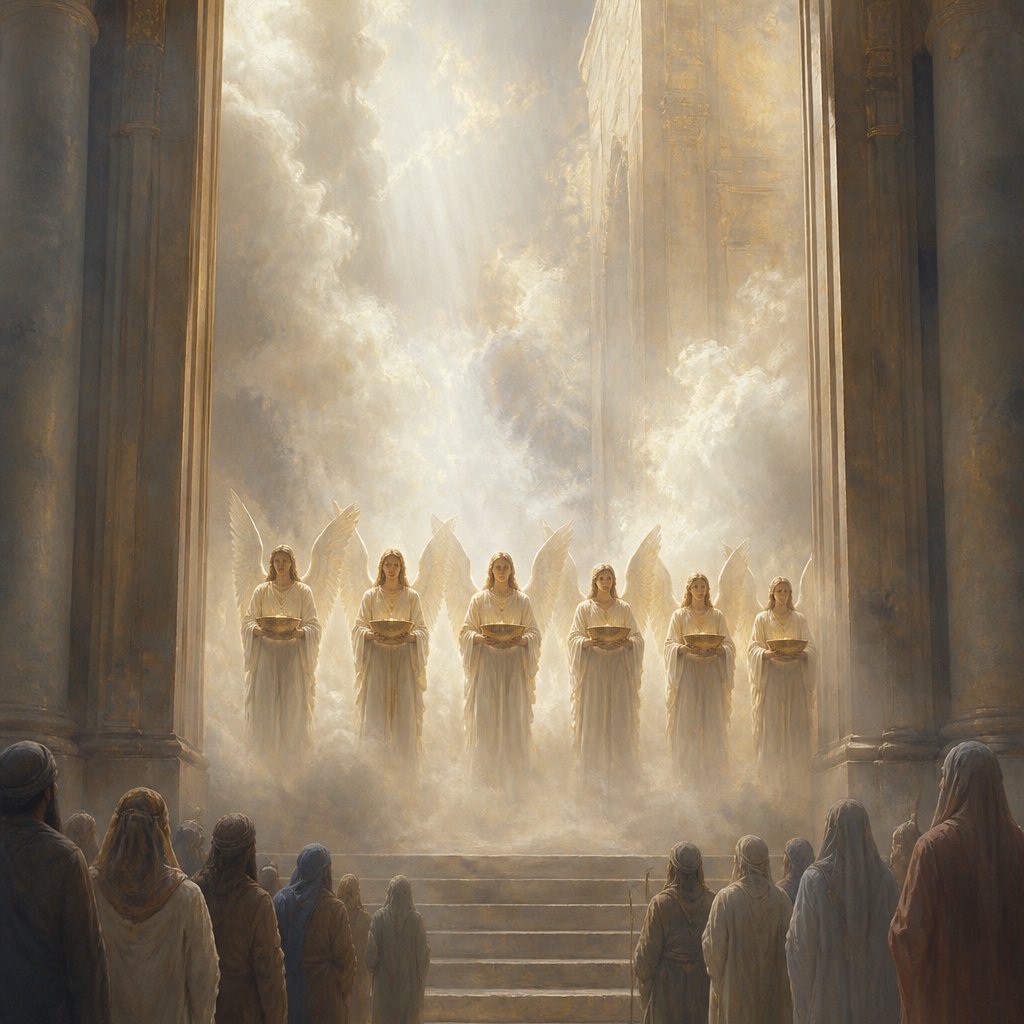
As we approach Revelation 15:8 in the King James Version, we are confronted with a powerful image—"And the temple was filled with smoke from the glory of God, and from his power; and no man was able to enter into the temple, till the seven plagues of the seven angels were fulfilled." This scene is a striking representation of the awe and reverence due to our holy God, and it invites us to reflect on the significance of His presence and the implications of His glory.
In this passage, the temple acts as a metaphor for the very presence of God. In ancient times, the temple in Jerusalem was the place where God’s glory dwelled, signifying His proximity to His people. It was both a physical structure and a spiritual testament to God’s relationship with mankind. The filling of the temple with smoke represents the overwhelming and unapproachable majesty of God, which obscures human ability to draw near. Smoke, in biblical contexts, often symbolizes the divine presence or glory of God—think of the smoke that filled the tabernacle when Moses met with God in Exodus 40:34-35, or the cloud on Mount Sinai (Exodus 19:16-18).
The scripture tells us that no man could enter into the temple until the seven plagues of the seven angels were fulfilled. This serves as a poignant reminder that God’s holiness and justice are absolute. The plagues represent judgment on sin and disobedience, a theme foundational to the narrative of Revelation. Thus, entry is prohibited, emphasizing the serious nature of God’s divine encounters. It is a sobering thought that the reality of sin and evil separates us from the presence of God. The smoke serves both as a barrier and a testament to the severity of His power and holiness.
When we reflect on our lives in the light of this passage, we must consider our own responses to God’s glory. Are we approaching Him with reverence, acknowledging His power and holiness? Or do we take for granted the immense privilege we have as believers to enter His presence through Christ? The dwelling of the smoke invites contemplation on our spiritual condition and our relationship with God. It calls us to recognize our unworthiness and need for redemption, which ultimately leads us to the cross.
The significance of this divine encounter is not merely about God’s power; it is also about the indescribable devotion and love He has for those who trust in Him. While God’s glory fills the temple, separating the sinful man from His presence, it simultaneously serves as an invitation to seek Him earnestly. The reality of His glory offers hope and assurance that despite the separation caused by sin, there exists a way to approach our holy God through the atoning sacrifice of Jesus. He is the fulfillment of the temple, the one through whom we can now freely enter God’s presence—Hebrews 10:19 invites believers, "Having therefore, brethren, boldness to enter into the holiest by the blood of Jesus."
Let us not forget that the filling of the temple with smoke—this traditional sign of divine presence—is a call to worship and adoration, beckoning us to bow down before the King in recognition of His ultimate sovereignty. As we marvel at His power, let us also be reminded of His love that bridges the gap between His holiness and our unworthiness. In light of God’s glory, we should respond with humility, repentance, and a desire to honor Him above all else.
In conclusion, Revelation 15:8 is more than an image; it's a vivid theological statement about the nature of God. It illustrates the tension between His holiness and our need for grace. As we reflect on these truths, may we be inspired to pursue a deeper relationship with Him, always remembering the weight of His glory and the grace that allows our entry into His presence. Let us respond to His glory with lives dedicated to His honor, recognizing that our relationship with Him is the greatest gift we could ever receive.
Want to reflect more on Revelation 15:8?
Continue your spiritual journey with Bible Chat — an AI-powered tool for exploring God's Word through conversation. Ask questions, discover connections, and deepen your understanding.
Get Our Apps


Revelation 15:8 Artwork

Revelation 15:8 - "And the temple was filled with smoke from the glory of God, and from his power; and no man was able to enter into the temple, till the seven plagues of the seven angels were fulfilled."
"And the temple was filled with smoke from the glory of God, and from his power; and no man was able to enter into the temple, till the seven plagues of the seven angels were fulfilled." - Revelation 15:8

Revelation 15:5-8

Revelation 15:5-8

Revelation 15:5-8

REVELATION 4:8

REVELATION 4:8

REVELATION 4:8

REVELATION 4:8

REVELATION 4:8

REVELATION 4:8

REVELATION 4:8

Revelation 4:8

Revelation 15:1-3

Revelation 4:8

Revelation 8:5

Revelation 5:8

Revelation 15:1-4

Revelations 1:15

Revelation 20:15 - "And whosoever was not found written in the book of life was cast into the lake of fire."

Revelations 8:3-5

Revelations 8:11-13

Revelation 15:5 - "And after that I looked, and, behold, the temple of the tabernacle of the testimony in heaven was opened:"

Revelation 12:8 - "And prevailed not; neither was their place found any more in heaven."

Revelation 8:8 - "And the second angel sounded, and as it were a great mountain burning with fire was cast into the sea: and the third part of the sea became blood;"

Revelation 9:8 - "And they had hair as the hair of women, and their teeth were as the teeth of lions."

Revelation 8:6 - "And the seven angels which had the seven trumpets prepared themselves to sound."

Revelation 2:15 - "So hast thou also them that hold the doctrine of the Nicolaitans, which thing I hate."

Revelation 21:15 - "And he that talked with me had a golden reed to measure the city, and the gates thereof, and the wall thereof."

Revelation 1:15 - "And his feet like unto fine brass, as if they burned in a furnace; and his voice as the sound of many waters."