Heavenly Sustenance: Feasting on the Food of Angels
"Man did eat angels' food: he sent them meat to the full." - Psalms 78:25
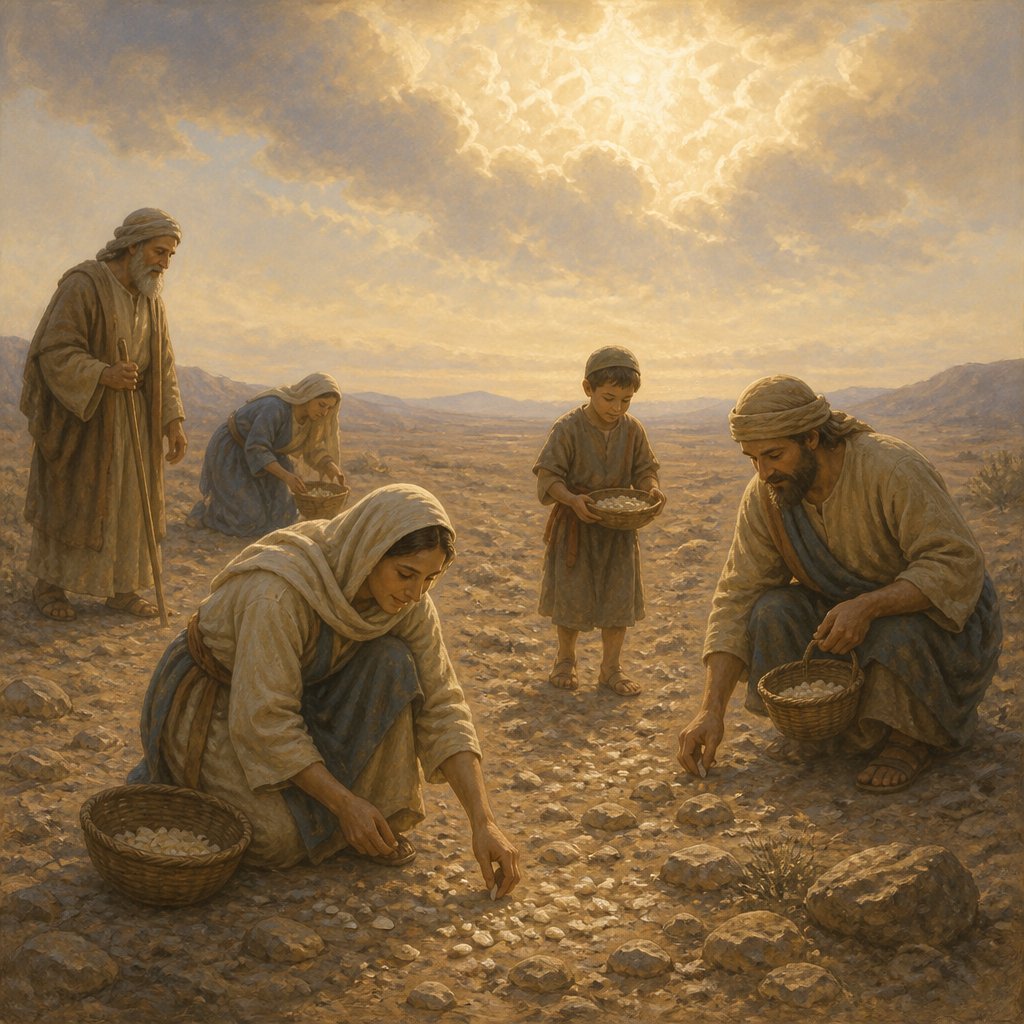
The verse from Psalm 78:25 (KJV) reads: "Man did eat angels' food: he sent them meat to the full." This seemingly simple account draws us into the deeper understanding of God's provision, care, and the divine sustenance that is available to those who seek Him. In these few words, we find a rich tapestry of theology, historical narrative, and personal application that speaks volumes about the nature of God’s blessings and our relationship with Him.
Psalm 78 is a historical psalm that recounts the story of Israel’s journey from Egypt to the Promised Land. It reflects on the faithfulness of God and the forgetfulness of His people—in all its complexity. This particular verse evokes the miraculous provision of manna from heaven, a phenomenon that is a testament to God's omnipotence and grace. God provided for the Israelites in their wilderness wanderings by sending down this bread from heaven, referred to as "angels' food." The term suggests not just sustenance but a heavenly quality; it is food fit for angels, a divine nourishment.
The context of this provision is crucial. The Israelites, having escaped the harsh oppression of slavery in Egypt, found themselves in a barren desert without the means to sustain themselves. They cried out in desperation, and God responded not with anger or rebuke but with miraculous care. This is our first lesson: in times of need and desperation, God is not distant, nor does He abandon us. Instead, He leans in and provides. The Israelites ate this manna daily—a tangible reminder of God’s presence among them and His commitment to their survival. This daily provision required faith; they were instructed to gather just enough for each day, trusting that God would provide again tomorrow (Exodus 16:18). Herein lies a powerful principle: we are often invited to live by faith, depending daily on God’s grace and sustenance.
The phrase "he sent them meat to the full" speaks to abundance. While the Israelites longed for stronger, more substantial food from their time in Egypt, the 'manna' was designed to meet their needs wholly and completely. God’s provision was both sufficient and abundant, not merely enough to get by but enough to fill them to satisfaction. This mirrors the teachings of Jesus in the New Testament—He is the bread of life (John 6:35), the ultimate sustenance we need. Just as God fed the Israelites, He feeds us spiritually with the life-giving bread of His presence through Christ.
In our daily lives, we may face periods of wilderness—seasons of uncertainty, dryness, and hunger for meaning and purpose. We may feel as though we are wandering through the desert with little to cling to. Yet this verse invites us to remember that God’s sustenance is not limited to physical needs. His provision encompasses spiritual nourishment, emotional healing, and relational restoration. When we feel empty, we are encouraged to return to God, who eagerly desires to fill us, nourish us, and restore our souls.
Moreover, the term "angels' food" emphasizes not just the nature of the sustenance but also the source. God, the Creator of the universe, condescends to provide for His creation. This divine interaction, this intersection of heaven and earth, underscores that we are never outside the reach of God’s grace. In every mundane act of our lives, we can find traces of that divine food if we only open our eyes.
Let us reflect on what "eating angels' food" means for us today. In a world filled with transient pleasures and fleeting satisfaction, are we seeking the true and lasting nourishment that God offers? Do we rely on our own efforts to fill our needs, or do we take time to sit at His feet, partake in His sustenance, and trust in His provision?
As we go through life’s deserts, let us remember Psalm 78:25 and the abundance of God's provision. May we learn to hunger for the food that only He can provide, embracing the fullness of life found in Him. With each meal, let us savor the richness of His blessings and the beauty of His grace, turning our hearts towards gratitude for the "angels' food" that He graciously sends our way.
Want to reflect more on Psalms 78:25?
Continue your spiritual journey with Bible Chat — an AI-powered tool for exploring God's Word through conversation. Ask questions, discover connections, and deepen your understanding.
Get Our Apps


Psalms 78:25 Artwork

Psalms 78:25 - "Man did eat angels' food: he sent them meat to the full."

"Man did eat angels' food: he sent them meat to the full." - Psalms 78:25

Psalms 78:8 - "And might not be as their fathers, a stubborn and rebellious generation; a generation that set not their heart aright, and whose spirit was not stedfast with God."

"And they remembered that God was their rock, and the high God their redeemer." - Psalms 78:35

"They kept not the covenant of God, and refused to walk in his law;" - Psalms 78:10

"Therefore their days did he consume in vanity, and their years in trouble." - Psalms 78:33

Psalms 78:18 - "And they tempted God in their heart by asking meat for their lust."

Psalms 78:35 - "And they remembered that God was their rock, and the high God their redeemer."

Psalms 78:47 - "He destroyed their vines with hail, and their sycomore trees with frost."

Psalms 78:10 - "They kept not the covenant of God, and refused to walk in his law;"

Psalms 78:64 - "Their priests fell by the sword; and their widows made no lamentation."

Psalms 78:22 - "Because they believed not in God, and trusted not in his salvation:"

"He gave up their cattle also to the hail, and their flocks to hot thunderbolts." - Psalms 78:48

"They were not estranged from their lust. But while their meat was yet in their mouths," - Psalms 78:30

Psalms 78:61 - "And delivered his strength into captivity, and his glory into the enemy's hand."

Psalms 78:67 - "Moreover he refused the tabernacle of Joseph, and chose not the tribe of Ephraim:"

"When God heard this, he was wroth, and greatly abhorred Israel:" - Psalms 78:59

"And they sinned yet more against him by provoking the most High in the wilderness." - Psalms 78:17

Psalms 78:44 - "And had turned their rivers into blood; and their floods, that they could not drink."

Psalms 78:32 - "For all this they sinned still, and believed not for his wondrous works."

Psalms 78:41 - "Yea, they turned back and tempted God, and limited the Holy One of Israel."

Psalms 78:17 - "And they sinned yet more against him by provoking the most High in the wilderness."

Psalms 78:36 - "Nevertheless they did flatter him with their mouth, and they lied unto him with their tongues."

Psalms 78:59 - "When God heard this, he was wroth, and greatly abhorred Israel:"

Psalms 78:28 - "And he let it fall in the midst of their camp, round about their habitations."

Psalms 78:63 - "The fire consumed their young men; and their maidens were not given to marriage."

Psalms 78:51 - "And smote all the firstborn in Egypt; the chief of their strength in the tabernacles of Ham:"

Psalms 78:37 - "For their heart was not right with him, neither were they stedfast in his covenant."

Psalms 78:68 - "But chose the tribe of Judah, the mount Zion which he loved."

Psalms 78:33 - "Therefore their days did he consume in vanity, and their years in trouble."