Thirst That Leads to God: Seeking Him Early in a Dry Land
"O God, thou art my God; early will I seek thee: my soul thirsteth for thee, my flesh longeth for thee in a dry and thirsty land, where no water is;" - Psalms 63:1
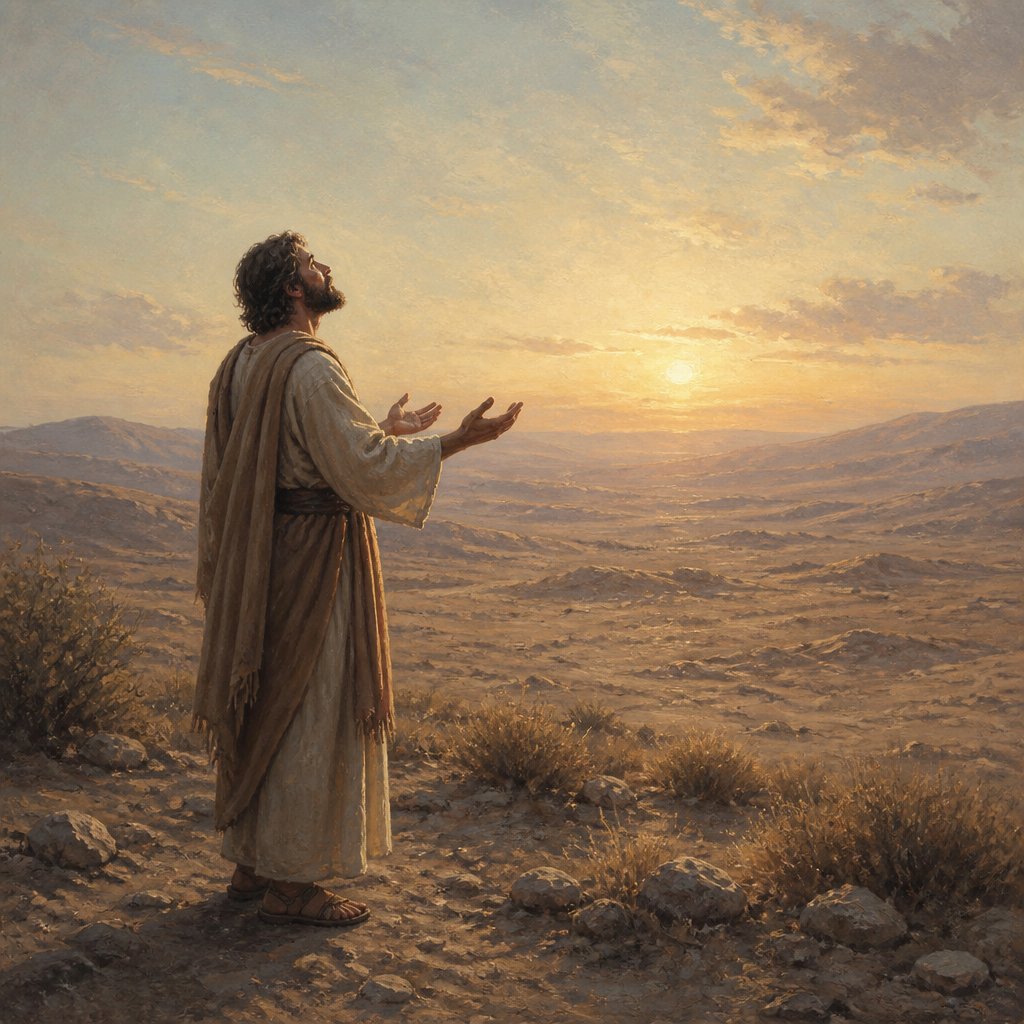
“O God, thou art my God; early will I seek thee: my soul thirsteth for thee, my flesh longeth for thee in a dry and thirsty land, where no water is;” (Psalm 63:1, KJV)
Psalm 63:1 opens with a confession before it becomes a request: “O God, thou art my God.” David does not begin by describing his circumstances; he begins by naming his belonging. This is not distant religion, but personal covenant—God is not merely “the” God, but “my” God. The strength of the verse is rooted here. When life feels barren, when answers feel delayed, when emotions are tangled, the soul’s anchor is not first a change of situation but a renewal of relationship. The heart can say, even in pain, “Thou art my God.”
Then comes a holy decision: “early will I seek thee.” Early speaks of priority, not just time. It is the soul’s declaration that God will not be an afterthought. David’s “early” challenges the pattern of seeking God only once we have exhausted ourselves on worry, distraction, or self-reliance. Early seeking is the deliberate turning of the heart toward God before the day’s noise gathers strength—before the mind fills with fears, before the schedule makes promises it cannot keep, before the flesh tries to rule. It is not about earning God’s attention; it is about giving God our attention.
The verse continues with a striking honesty: “my soul thirsteth for thee, my flesh longeth for thee.” David describes devotion in whole-person language. He does not separate spiritual longing from bodily weakness. He admits what many believers try to hide: we feel our need for God not only in the quiet corners of prayer but in the ache of our humanity. There are seasons when the heart is restless and the body is weary, when you can’t quite explain why you feel empty even if life looks full. David calls that emptiness what it truly is—thirst for God.
Notice also that the thirst is not merely for relief, but for Him: “thirsteth for thee.” This is an important distinction. We often want God’s gifts—peace, direction, provision, strength—yet the deepest hunger of the redeemed heart is God Himself. His presence is the water our desert cannot manufacture. His nearness is the comfort our circumstances cannot guarantee. His voice is the guidance our own reasoning cannot consistently supply.
David locates this longing “in a dry and thirsty land, where no water is.” The dryness is real. The landscape offers no natural supply. That detail protects us from shame when we feel spiritually parched. Dry places happen—through suffering, through waiting, through opposition, through grief, through the daily fatigue of living in a broken world. Yet the psalm does not teach that dryness means abandonment. It teaches that dryness can become a doorway. When there is “no water” anywhere else, the soul is invited to seek the One who gives living water.
This verse also confronts the ways we try to hydrate our thirst with substitutes. In a “dry and thirsty land,” it is tempting to chase quick comforts: constant noise, endless scrolling, overwork, entertainment, comparison, control. These can momentarily distract, but they cannot satisfy the “soul thirsteth” kind of need. David’s words call us to stop pretending that lesser waters will do. The ache we feel is not proof that God is far; it may be evidence that God is drawing us.
To seek God early, then, is not merely to rise at a certain hour—though that can be a beautiful discipline. It is to place Him first in desire and dependence. It is to wake up and say, “O God, thou art my God,” before we say, “What will happen today?” It is to open the day with surrender instead of self-protection. It is to bring our thirst to the only fountain.
If you are in a dry season, Psalm 63:1 gives you words to pray when your own words feel thin. You can confess relationship: “thou art my God.” You can choose pursuit: “early will I seek thee.” You can tell the truth about your need: “my soul thirsteth for thee.” And you can name your reality without losing hope: “in a dry and thirsty land, where no water is.” The God who is “my God” is not intimidated by deserts. He meets seekers there, and He satisfies thirst that nothing else can touch.
Prayer: O God, thou art my God. Teach me to seek thee early, not only with my schedule but with my heart. My soul thirsteth for thee, and my flesh longeth for thee. In the dry and thirsty land, where no water is, draw me to thy presence and satisfy me with thyself. Amen.
Want to reflect more on Psalms 63:1?
Continue your spiritual journey with Bible Chat — an AI-powered tool for exploring God's Word through conversation. Ask questions, discover connections, and deepen your understanding.
Get Our Apps


Psalms 63:1 Artwork

Psalms 63:1 - "O God, thou art my God; early will I seek thee: my soul thirsteth for thee, my flesh longeth for thee in a dry and thirsty land, where no water is;"
"O God, thou art my God; early will I seek thee: my soul thirsteth for thee, my flesh longeth for thee in a dry and thirsty land, where no water is;" - Psalms 63:1

Psalms 63:4 - "Thus will I bless thee while I live: I will lift up my hands in thy name."

Psalms 63:11 - "But the king shall rejoice in God; every one that sweareth by him shall glory: but the mouth of them that speak lies shall be stopped."

Psalms 63:10 - "They shall fall by the sword: they shall be a portion for foxes."

Psalms 78:63 - "The fire consumed their young men; and their maidens were not given to marriage."

Psalms 63:9 - "But those that seek my soul, to destroy it, shall go into the lower parts of the earth."

Psalms 63:2 - "To see thy power and thy glory, so as I have seen thee in the sanctuary."

Psalms 63:6 - "When I remember thee upon my bed, and meditate on thee in the night watches."

"To see thy power and thy glory, so as I have seen thee in the sanctuary." - Psalms 63:2

"My soul followeth hard after thee: thy right hand upholdeth me." - Psalms 63:8

Psalms 119:63 - "I am a companion of all them that fear thee, and of them that keep thy precepts."

Psalms 63:3 - "Because thy lovingkindness is better than life, my lips shall praise thee."

Psalms 63:8 - "My soul followeth hard after thee: thy right hand upholdeth me."

"Because thy lovingkindness is better than life, my lips shall praise thee." - Psalms 63:3

Psalms 63:7 - "Because thou hast been my help, therefore in the shadow of thy wings will I rejoice."

Untiring a Godly relationship with self through prayer psalm 63:1

Psalms 63:5 - "My soul shall be satisfied as with marrow and fatness; and my mouth shall praise thee with joyful lips:"

"They shall fall by the sword: they shall be a portion for foxes." - Psalms 63:10

"The fire consumed their young men; and their maidens were not given to marriage." - Psalms 78:63
!["O God, thou [art] my God; early will I seek thee: my soul thirsteth for thee, my flesh longeth for thee in a dry and thirsty land, where no water is;" - Psalm 63:1](https://media.bible.art/018a0c0b-b098-40a1-8716-99b0c5bb0c0b-thumbnail.jpg)
"O God, thou [art] my God; early will I seek thee: my soul thirsteth for thee, my flesh longeth for thee in a dry and thirsty land, where no water is;" - Psalm 63:1

"But those that seek my soul, to destroy it, shall go into the lower parts of the earth." - Psalms 63:9

"When I remember thee upon my bed, and meditate on thee in the night watches." - Psalms 63:6

"I am a companion of all them that fear thee, and of them that keep thy precepts." - Psalms 119:63

"Because thou hast been my help, therefore in the shadow of thy wings will I rejoice." - Psalms 63:7

"My soul shall be satisfied as with marrow and fatness; and my mouth shall praise thee with joyful lips:" - Psalms 63:5

"Thus will I bless thee while I live: I will lift up my hands in thy name." - Psalms 63:4

"But the king shall rejoice in God; every one that sweareth by him shall glory: but the mouth of them that speak lies shall be stopped." - Psalms 63:11

psalm 80:1-7

Psalms 128:1 - "Blessed is every one that feareth the LORD; that walketh in his ways."