The Sacred Stewardship of Worship: Lessons from Numbers 4:16
"¶ And to the office of Eleazar the son of Aaron the priest pertaineth the oil for the light, and the sweet incense, and the daily meat offering, and the anointing oil, and the oversight of all the tabernacle, and of all that therein is, in the sanctuary, and in the vessels thereof." - Numbers 4:16
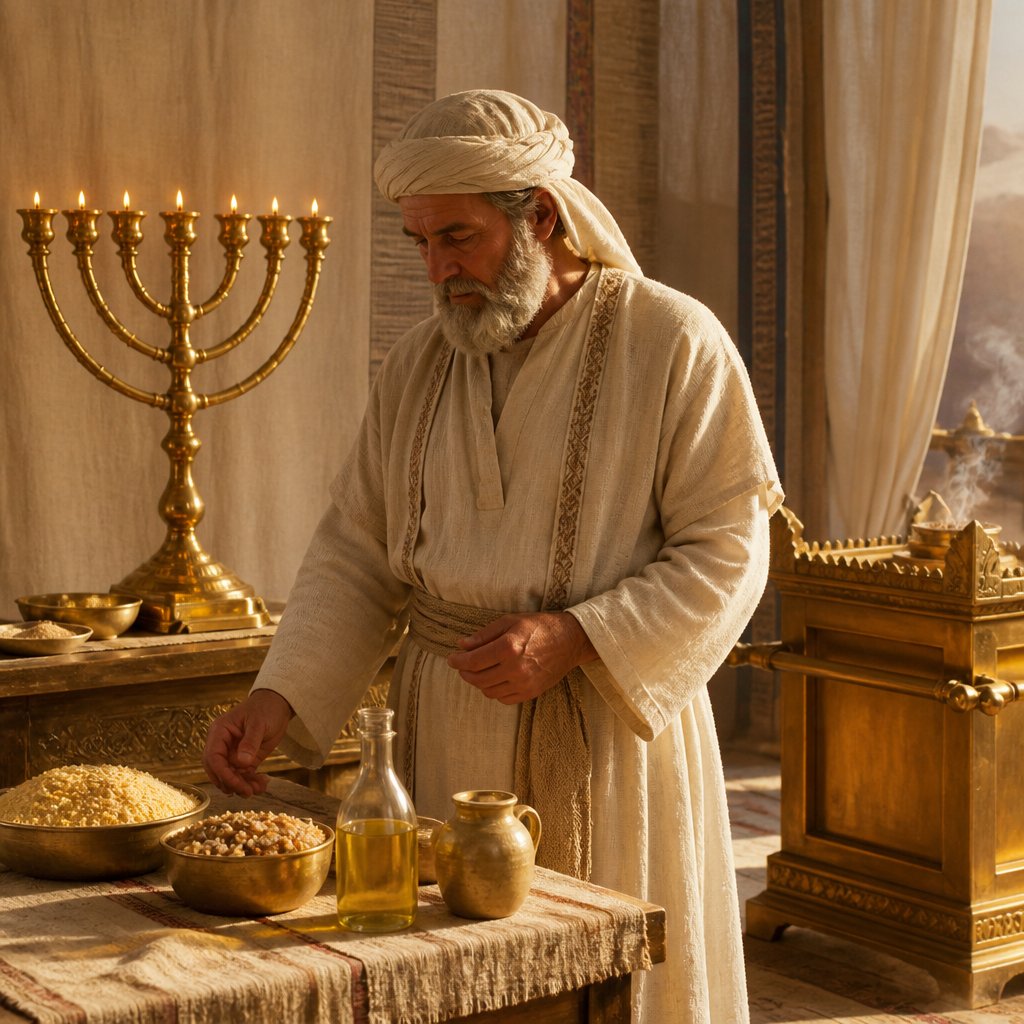
In the ancient sanctuary of Israel, God established a divine order and designated specific duties for the Levites, particularly under the leadership of Aaron’s descendants. Numbers 4:16 reveals an intricate relationship between the priesthood and the sacred elements of worship, stating: "And to the office of Eleazar the son of Aaron the priest pertaineth the oil for the light, and the sweet incense, and the daily meat offering, and the anointing oil, and the oversight of all the tabernacle, and of all that therein is, in the sanctuary, and in the vessels thereof." This verse serves not only as a historical account but also as a rich source of spiritual insight into our own walk with God and the stewardship of our faith.
First, let us examine the elements entrusted to Eleazar: oil for the light, sweet incense, a daily meat offering, and anointing oil. Each of these represents essential aspects of worship and service. The oil for the light symbolizes illumination—spiritual clarity and guidance provided by God through His Spirit. Jesus in the New Testament refers to Himself as the light of the world (John 8:12), reminding us that in our stewardship of faith, we are called to reflect His light in our lives. How often do we allow the distractions and darkness of the world to extinguish our spiritual brightness? Maintaining our spiritual flame requires intentionality in our relationship with God—regular prayer, scripture reading, and fellowship—which rekindles the light within.
Next, the sweet incense exemplifies the prayers of the saints rising before the Lord. Incense in biblical times was a symbol of intercession and communion with God. In Revelation 5:8, the elders present golden bowls of incense before the throne, which represent the prayers of God’s people. As we consider our roles as stewards of prayer, we must reflect on the importance of our personal and communal prayer life. Are our prayers offered in sincerity and faith? Are we standing in the gap for others, lifting up their needs alongside our own? This fragrant offering of prayer is a privilege and an act of worship; thus, we must strive to keep our prayer lives vibrant, fragrant, and aligned with God’s will.
Additionally, the daily meat offering signifies sustenance and provision—our dependence on God for our physical and spiritual needs. The act of bringing a daily offering reminds us that gratitude must be a routine part of our worship. Just as the Israelites were to present offerings daily, we, too, should cultivate an attitude of thankfulness in our daily lives. 1 Thessalonians 5:18 reminds us to "In everything give thanks: for this is the will of God in Christ Jesus concerning you."
The anointing oil entrusted to Eleazar holds rich significance as well. Anointing represents consecration, empowerment, and the setting apart for God’s purposes. As believers, we, too, are anointed by the Holy Spirit (1 John 2:20), called to lead lives that reflect Christ. Are we living in that anointing? Being set apart means that our actions, choices, and testimony should align with the character of God. We live in a world that pushes conformity, yet our anointing compels us to walk counter-culturally, exhibiting love, grace, and truth.
Finally, the oversight of the tabernacle signifies the divine importance of community and structure in worship. In our spiritual walk, we are not meant to practice our faith in isolation. We are called into community—becoming the Body of Christ. As Eleazar oversaw the tabernacle and its operations, we must recognize the importance of accountability, mentoring, and serving within our church families. How are you contributing to the health and ministry of your local body?
As we meditate on Numbers 4:16, let us take to heart the lessons of stewardship inherent in this passage. We are called not only to offer our prayers and offerings but also to be vigilant stewards of the light, the incense, and the anointing, ensuring that our lives honor and reflect God’s holiness. Let us become watchful caretakers of the sacred, recognizing that in our stewardship, we participate in the ongoing story of God’s redemptive work in the world.
Want to reflect more on Numbers 4:16?
Continue your spiritual journey with Bible Chat — an AI-powered tool for exploring God's Word through conversation. Ask questions, discover connections, and deepen your understanding.
Get Our Apps


Numbers 4:16 Artwork

Numbers 4:16 - "¶ And to the office of Eleazar the son of Aaron the priest pertaineth the oil for the light, and the sweet incense, and the daily meat offering, and the anointing oil, and the oversight of all the tabernacle, and of all that therein is, in the sanctuary, and in the vessels thereof."
"¶ And to the office of Eleazar the son of Aaron the priest pertaineth the oil for the light, and the sweet incense, and the daily meat offering, and the anointing oil, and the oversight of all the tabernacle, and of all that therein is, in the sanctuary, and in the vessels thereof." - Numbers 4:16

Numbers 16:4 - "And when Moses heard it, he fell upon his face:"

"And when Moses heard it, he fell upon his face:" - Numbers 16:4

Numbers 16:18

Numbers 11:16-26
Numbers 32:16-18
Numbers 32:16-18

Numbers 16:16 - "And Moses said unto Korah, Be thou and all thy company before the LORD, thou, and they, and Aaron, to morrow:"

Numbers 25:16 - "¶ And the LORD spake unto Moses, saying,"

Numbers 7:16 - "One kid of the goats for a sin offering:"

Numbers 34:16 - "And the LORD spake unto Moses, saying,"

Numbers 3:16 - "And Moses numbered them according to the word of the LORD, as he was commanded."

Numbers 16:36 - "¶ And the LORD spake unto Moses, saying,"

Numbers 16:23 - "¶ And the LORD spake unto Moses, saying,"

Numbers 16:44 - "¶ And the LORD spake unto Moses, saying,"

Numbers 16:43 - "And Moses and Aaron came before the tabernacle of the congregation."

Numbers 26:16 - "Of Ozni, the family of the Oznites: of Eri, the family of the Erites:"

Numbers 28:16 - "And in the fourteenth day of the first month is the passover of the LORD."

Numbers 4:7

Numbers 4:8

Numbers 16:20 - "And the LORD spake unto Moses and unto Aaron, saying,"

Numbers 16:48 - "And he stood between the dead and the living; and the plague was stayed."
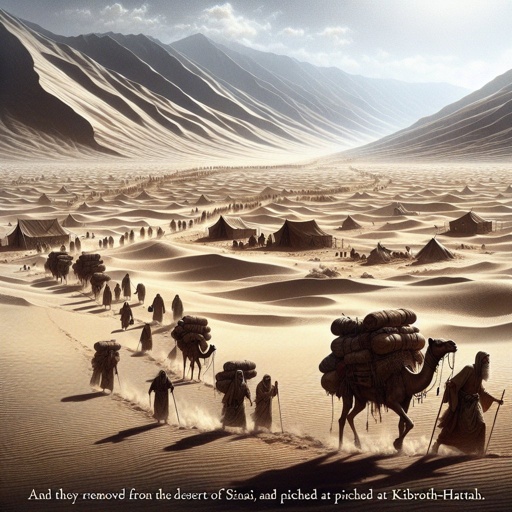
Numbers 33:16 - "And they removed from the desert of Sinai, and pitched at Kibroth-hattaavah."

Be hostile to the medianites numbers 25:16-18

Numbers 10:16 - "And over the host of the tribe of the children of Zebulun was Eliab the son of Helon."

Numbers 12:16 - "And afterward the people removed from Hazeroth, and pitched in the wilderness of Paran."

Numbers 4:4 - "This shall be the service of the sons of Kohath in the tabernacle of the congregation, about the most holy things:"

Numbers 9:16 - "So it was alway: the cloud covered it by day, and the appearance of fire by night."

Numbers 16:6 - "This do; Take you censers, Korah, and all his company;"