The Cost of Strange Fire: A Reflection on Reverence and Holiness
"And Nadab and Abihu died before the LORD, when they offered strange fire before the LORD, in the wilderness of Sinai, and they had no children: and Eleazar and Ithamar ministered in the priest's office in the sight of Aaron their father." - Numbers 3:4
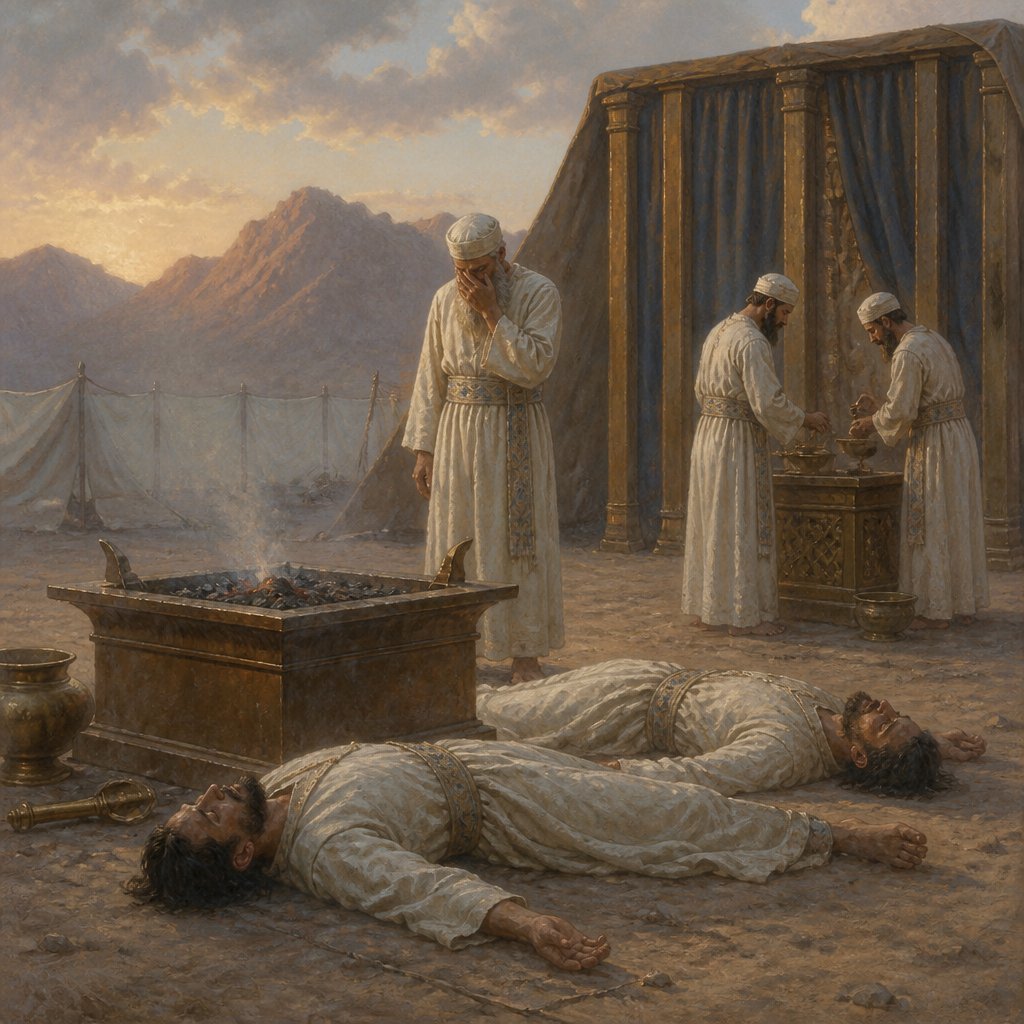
Numbers 3:4 reminds us of a somber truth in the life of those called to serve the Lord: "And Nadab and Abihu died before the LORD, when they offered strange fire before the LORD, in the wilderness of Sinai, and they had no children: and Eleazar and Ithamar ministered in the priest's office in the sight of Aaron their father." This verse serves not only as a historical account but also as a potent reminder of the consequences of approaching God without the appropriate reverence and understanding of His holiness.
To understand the gravity of Nadab and Abihu’s actions, we must look at their context. These two sons of Aaron, the high priest, were chosen to serve in a privileged role, acting as intermediaries between God and the people of Israel. They were given direct access to the presence of the Almighty One, a responsibility that required an acute awareness of the sacredness of their task. God had provided explicit instructions for worship, detailing how offerings were to be presented. The fire they offered was termed "strange" because it deviated from God’s command—suggesting that it was unauthorized and not in alignment with God’s ordained way of worship.
The phrase "strange fire" holds a critical dimension in our understanding of worship. In our contemporary faith communities, we may not literally offer sacrifices as Aaron’s lineage did, but we still bring our offerings—our worship, our service, our very lives—before the Lord. The question then becomes: Are we offering what God has prescribed, or are we filling our lives with what feels right in our own eyes? When Nadab and Abihu approached God with their strange fire, it represented a tragic blending of personal initiative with divine expectation, resulting in catastrophic consequences.
This account teaches us that our willingness to serve God is not enough without a heart that seeks to please Him in the manner He has specified. The story further emphasizes the principle that God’s holiness cannot be compromised. Nadab and Abihu’s untimely death is a stark reminder that casual approaches to sacred matters can have severe repercussions. Their life and ministry ended abruptly, not just silencing their voices but also crippling their lineage, for they "had no children.” Their sacrifice and failure became a lesson for future generations, echoing throughout the history of Israel—a dire warning against presumption and irreverence in matters of worship.
As we meditate on this verse, let us consider our own lives in light of these principles. Are we offering sacrifices to the Lord that align with His word? Are we worshipping in spirit and in truth, or have we allowed the culture and our own desires to shape our offerings? God desires our hearts, but He also desires our obedience.
Moreover, in recognizing the importance of worshiping the Lord as He has commanded, consider the roles of Eleazar and Ithamar, who took up the priestly responsibilities after the death of Nadab and Abihu. Their unyielding commitment to minister in the sight of Aaron, their father, serves as an example of faithfulness amidst the sobering reality of divine discipline. They learned from the tragic lesson of their brothers and committed themselves to the right ways of God.
As we serve, let us take heart and remember that, like Eleazar and Ithamar, we are part of a holy priesthood, called to declare His glory and bring our worship in accordance with His desires. Let us examine our rituals, our worship styles, and our judgments; may they be etched with holiness, reverence, and a true understanding of who God is—a God who deserves the utmost respect and honor. In doing so, we will not only preserve our witness but also deepen our relationship with the One who calls us into His presence.
Want to reflect more on Numbers 3:4?
Continue your spiritual journey with Bible Chat — an AI-powered tool for exploring God's Word through conversation. Ask questions, discover connections, and deepen your understanding.
Get Our Apps


Numbers 3:4 Artwork

Numbers 3:4 - "And Nadab and Abihu died before the LORD, when they offered strange fire before the LORD, in the wilderness of Sinai, and they had no children: and Eleazar and Ithamar ministered in the priest's office in the sight of Aaron their father."
"And Nadab and Abihu died before the LORD, when they offered strange fire before the LORD, in the wilderness of Sinai, and they had no children: and Eleazar and Ithamar ministered in the priest's office in the sight of Aaron their father." - Numbers 3:4

Numbers 4:3 - "From thirty years old and upward even until fifty years old, all that enter into the host, to do the work in the tabernacle of the congregation."

Numbers 4:7

Numbers 4:8

Numbers 3:41

Numbers 4:4 - "This shall be the service of the sons of Kohath in the tabernacle of the congregation, about the most holy things:"

Numbers 11. 4 to 6

Numbers 4:7-8

Numbers 3:16 - "And Moses numbered them according to the word of the LORD, as he was commanded."

Numbers 3:3 - "These are the names of the sons of Aaron, the priests which were anointed, whom he consecrated to minister in the priest's office."

Numbers 4:24 - "This is the service of the families of the Gershonites, to serve, and for burdens:"

Numbers 4:21 - "¶ And the LORD spake unto Moses, saying,"

Numbers 7:4 - "And the LORD spake unto Moses, saying,"

Numbers 3:5 - "¶ And the LORD spake unto Moses, saying,"

Numbers 3:11 - "And the LORD spake unto Moses, saying,"

Numbers 3:44 - "¶ And the LORD spake unto Moses, saying,"

Numbers 4:38 - "And those that were numbered of the sons of Gershon, throughout their families, and by the house of their fathers,"

Picture of Numbers 21:1-3

Levites selected as priests in numbers 3

Numbers 3:18 - "And these are the names of the sons of Gershon by their families; Libni, and Shimei."

Numbers 3:42 - "And Moses numbered, as the LORD commanded him, all the firstborn among the children of Israel."

Numbers 4:29 - "¶ As for the sons of Merari, thou shalt number them after their families, by the house of their fathers;"
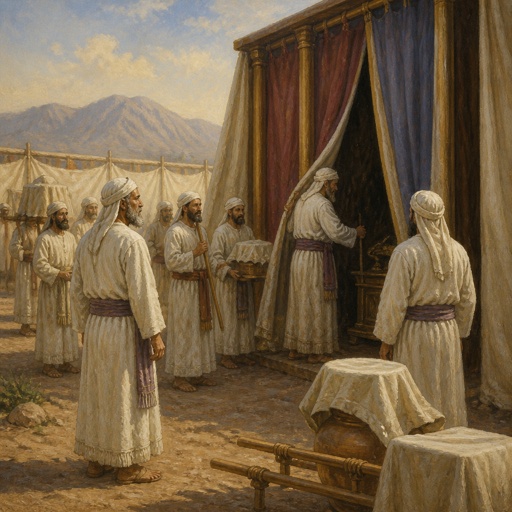
"From thirty years old and upward even until fifty years old, all that enter into the host, to do the work in the tabernacle of the congregation." - Numbers 4:3

Numbers 4:42 - "¶ And those that were numbered of the families of the sons of Merari, throughout their families, by the house of their fathers,"

Numbers 3:19 - "And the sons of Kohath by their families; Amram, and Izehar, Hebron, and Uzziel."

Numbers 3:14 - "¶ And the LORD spake unto Moses in the wilderness of Sinai, saying,"

Numbers 3:23 - "The families of the Gershonites shall pitch behind the tabernacle westward."

Numbers 3:17 - "And these were the sons of Levi by their names; Gershon, and Kohath, and Merari."

Numbers 4:17 - "¶ And the LORD spake unto Moses and unto Aaron, saying,"