The Ongoing Legacy of Sacrifice: Understanding Numbers 29:38
"And one goat for a sin offering; beside the continual burnt offering, and his meat offering, and his drink offering." - Numbers 29:38
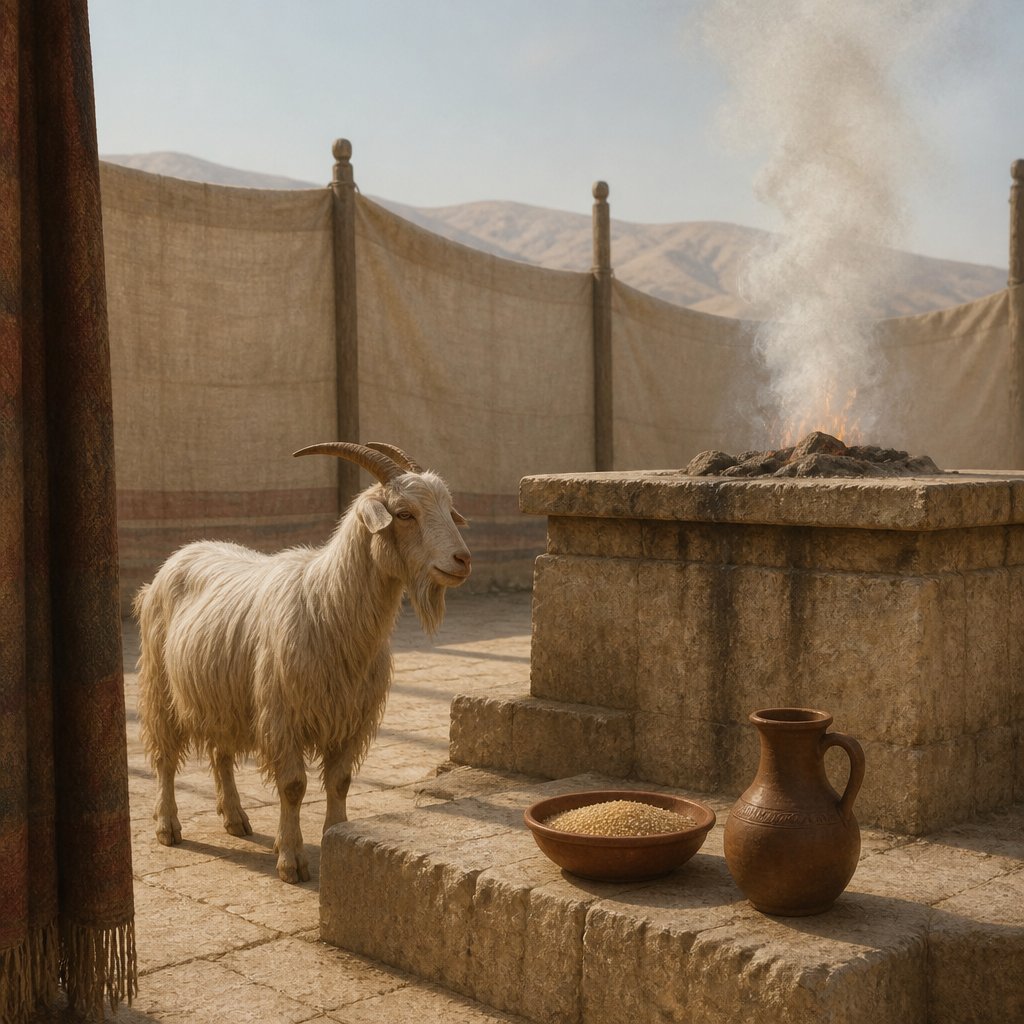
As we delve into Numbers 29:38 from the King James Version—"And one goat for a sin offering; beside the continual burnt offering, and his meat offering, and his drink offering"—we are invited to reflect on the deep spiritual implications of sacrificial offerings laid out in the Old Testament. In these passages, we find a profound connectivity between ritual, worship, and the human condition that transcends centuries, offering us invaluable lessons in our modern lives.
To comprehend the weight of this verse, we must first grasp the role of sacrifices in the Israelite community. The ritual of offering was not merely a religious formality but a vital expression of faith and obedience to God. Each type of offering, whether it was for atonement, thanksgiving, or daily devotion, held immense significance in the life of the individuals and the collective nation. Specifically, the mention of the goat for a sin offering highlights the importance of confession and atonement in maintaining a right relationship with God.
The goat, symbolically used in this offering, represented the acknowledgment of sin. Within the community, sins—both intentional and unintentional—had the potential to separate an individual from God and from others. In bringing forth an offering, the Israelites were not just performing a ritual; they were expressing their understanding of their shortcomings and their need for divine reconciliation. This act of faith pointed to the essential truth that recognition and repentance are the first steps toward restoration.
The juxtaposition of the sin offering with the continual burnt offering, along with the accompanying meat and drink offerings, introduces us to the intricate relationship between sacrifice and sustenance. The continual burnt offering represents the daily commitment to God, where worshipers continually present themselves and their deeds. It indicates that our relationship with God is not a one-time event—like the sin offering—but rather an ongoing state of being. Both offerings serve to reinforce the need for believers to live in a posture of humility and dedication, acknowledging the importance of daily surrender to God.
In examining this verse, we are reminded of the Gospel message that unfolds in the New Testament. The culmination of sacrifice is manifest in Jesus Christ, the ultimate sin offering who reconciles humanity to God. The writer of Hebrews 10:12 states, "But this man, after he had offered one sacrifice for sins forever, sat down on the right hand of God." Here, we are called to understand that while the Old Testament sacrifices were necessary for atonement, the sacrifice of our Lord transforms our approach to sin and repentance. In Christ, we are not just offered forgiveness but are invited into a new relationship characterized by grace.
Moreover, Numbers 29:38 encourages us to reflect on the holistic nature of our offerings unto God. We find that the sin offering is placed aside the continual burnt offering and the meat and drink offerings. Each aspect represents different dimensions of our relationship: our need for atonement, our dedication, and our gratitude. This wholeness suggests that our walk with the Lord should encompass not just confession of sin but also our worship, service, and expression of thanks.
As we apply this biblical principle, we need to ask ourselves:
- How often do we take the time to confess our sins, not just in private but in community?
- Are we live our lives as continual offerings, reflecting our commitment to the Lord?
- Do we integrate gratitude in our daily walk with God, recognizing the many gifts He bestows?
In summary, Numbers 29:38 offers a glimpse into a lifestyle characterized by recognition of our flaws, a commitment to righteousness, and an attitude of thankfulness. It beckons us to embrace our role as a living sacrifice, holy and acceptable to God (Romans 12:1). As we journey through life, let us continuously strive to align our actions with the profound significance of what it means to offer ourselves fully to God—acknowledging our sins while pursuing a lifestyle of worship.
Want to reflect more on Numbers 29:38?
Continue your spiritual journey with Bible Chat — an AI-powered tool for exploring God's Word through conversation. Ask questions, discover connections, and deepen your understanding.
Get Our Apps


Numbers 29:38 Artwork

Numbers 29:38 - "And one goat for a sin offering; beside the continual burnt offering, and his meat offering, and his drink offering."
"And one goat for a sin offering; beside the continual burnt offering, and his meat offering, and his drink offering." - Numbers 29:38

Numbers 32:38

The Plague on the Firstborn - Exodus 12:29-38

The Plague on the Firstborn - Exodus 12:29-38

The Plague on the Firstborn - Exodus 12:29-38

Numbers 4:38 - "And those that were numbered of the sons of Gershon, throughout their families, and by the house of their fathers,"

Exodus 38:29 - "And the brass of the offering was seventy talents, and two thousand and four hundred shekels."

Numbers 7:38 - "One golden spoon of ten shekels, full of incense:"

Numbers 29:7

Job 38:29 - "Out of whose womb came the ice? and the hoary frost of heaven, who hath gendered it?"

Numbers 29:29 - "¶ And on the sixth day eight bullocks, two rams, and fourteen lambs of the first year without blemish:"

Numbers 31:38 - "And the beeves were thirty and six thousand; of which the LORD'S tribute was threescore and twelve."

Exodus 29:38 - "¶ Now this is that which thou shalt offer upon the altar; two lambs of the first year day by day continually."

Numbers 33:29 - "And they went from Mithcah, and pitched in Hashmonah."

Numbers 26:38 - "¶ The sons of Benjamin after their families: of Bela, the family of the Belaites: of Ashbel, the family of the Ashbelites: of Ahiram, the family of the Ahiramites:"

Numbers 14:38 - "But Joshua the son of Nun, and Caleb the son of Jephunneh, which were of the men that went to search the land, lived still."

Numbers 32:38 - "And Nebo, and Baal-meon, (their names being changed,) and Shibmah: and gave other names unto the cities which they builded."

Numbers 4:29 - "¶ As for the sons of Merari, thou shalt number them after their families, by the house of their fathers;"

Numbers 29:15 - "And a several tenth deal to each lamb of the fourteen lambs:"

Numbers 28:29 - "A several tenth deal unto one lamb, throughout the seven lambs;"

Numbers 29:10 - "A several tenth deal for one lamb, throughout the seven lambs:"

Numbers 29:5 - "And one kid of the goats for a sin offering, to make an atonement for you:"

Numbers 29:4 - "And one tenth deal for one lamb, throughout the seven lambs:"

Numbers 3:29 - "The families of the sons of Kohath shall pitch on the side of the tabernacle southward."

"One golden spoon of ten shekels, full of incense:" - Numbers 7:38

Numbers 29:40 - "And Moses told the children of Israel according to all that the LORD commanded Moses."

Numbers 29:30 - "And their meat offering and their drink offerings for the bullocks, for the rams, and for the lambs, shall be according to their number, after the manner:"

Numbers 29:33 - "And their meat offering and their drink offerings for the bullocks, for the rams, and for the lambs, shall be according to their number, after the manner:"

Numbers 29:37 - "Their meat offering and their drink offerings for the bullock, for the ram, and for the lambs, shall be according to their number, after the manner:"