The Dangers of Discontentment: Lessons from Korah's Rebellion
"Now Korah, the son of Izhar, the son of Kohath, the son of Levi, and Dathan and Abiram, the sons of Eliab, and On, the son of Peleth, sons of Reuben, took men:" - Numbers 16:1
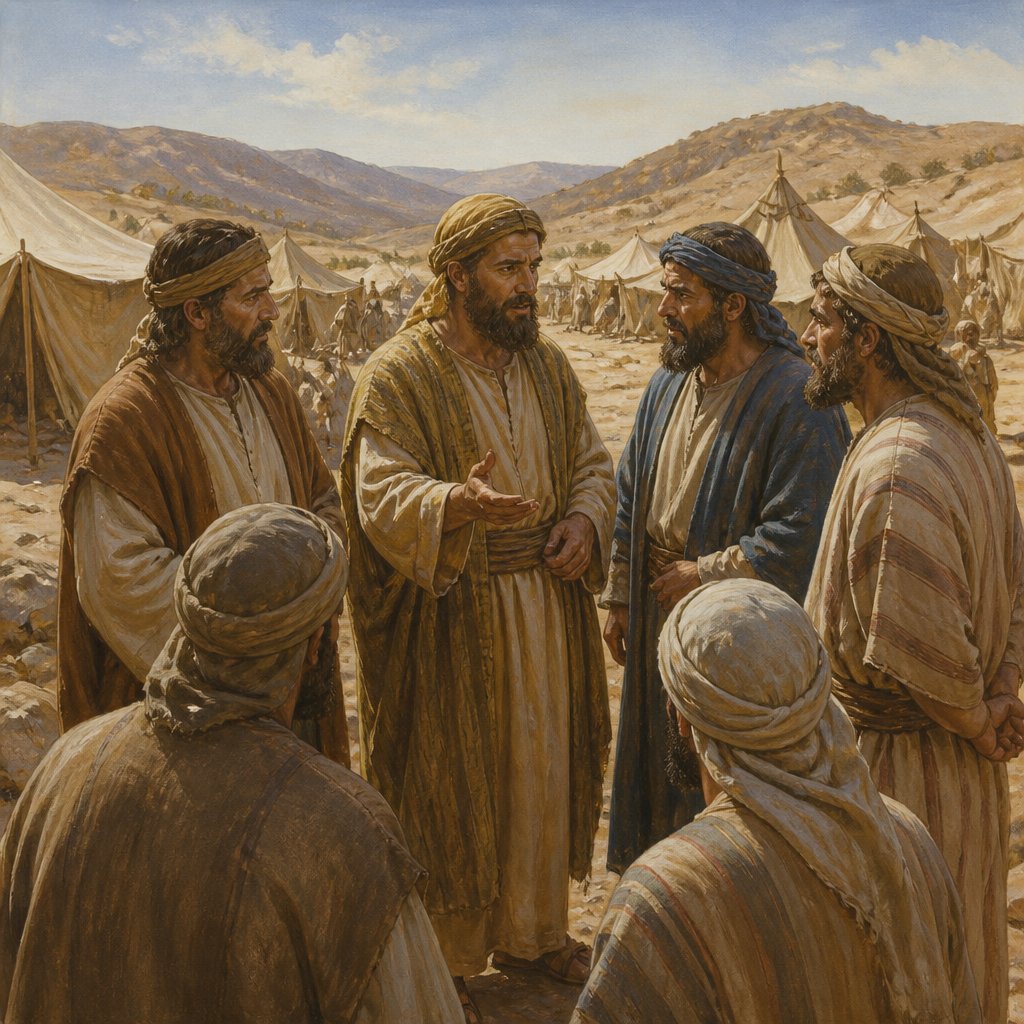
**Scripture Reading: Numbers 16:1 (KJV)**
*Now Korah, the son of Izhar, the son of Kohath, the son of Levi, and Dathan and Abiram, the sons of Eliab, and On, the son of Peleth, sons of Reuben, took men.*
In the progression of Israel’s journey in the wilderness, the narrative of Korah’s rebellion stands out as a powerful warning against discontentment and the desire for authority. Here, we observe Korah, a Levite, who, along with others, rose up against Moses and Aaron in what can only be described as a tragic miscalculation of his standing before God. To fully grasp the implications of this rebellion, we must dive deep into the heart of the matter—the effects of envy, jealousy, and a spirit of rivalry among the children of God.
Korah was not just any Israelite; he hailed from the revered tribe of Levi, designated to serve in the tabernacle and perform sacred duties. Yet, this privilege did not suffice for him. It stirred within him a yearning for greater authority, for the responsibility and recognition credited to Moses and Aaron. Korah convinced himself that the role of servant was beneath him, showing how easily one can forget the significance of their calling in the presence of a jealous desire for more.
In our lives, we often encounter our own versions of Korah. Whether in our churches, workplaces, or even within our families, the insatiable hunger for recognition can lead us to challenge those God has put in positions of authority. Instead of acknowledging the variety of callings and the unique paths God has laid out for us, we may find ourselves grumbling and desiring a role intended for others.
What Korah failed to discern was that every calling from God is significant. In Numbers 3:10, God distinctly commands that Aaron and his sons are to be the priests, thus setting a divine order that Korah—unwilling to accept his place—repudiated. Like Korah, we must ask ourselves: do we trust God’s arrangement for our lives? Are we content with our current roles in His kingdom, or have we fallen prey to the deceptive lure of dissatisfaction?
Korah’s rebellion also showcased the destructive potential of discontentment. He gathered 250 leaders, influential men within Israel, and led them in a revolt, accusing Moses and Aaron of exalting themselves above the congregation (Numbers 16:3). In doing so, he not only jeopardized his own standing with God but also incited others to challenge God’s appointed leaders. This ripple effect highlights how our attitudes can influence those around us, leading to communal discontent and division.
The Lord’s response to Korah’s rebellion is sobering: the earth opened its mouth and swallowed him along with his conspirators (Numbers 16:31-33). This judgment reflects God's intolerance for challenges to His authority and order. When we act out of envy and strive for roles not designated to us, we risk not only our spiritual well-being but also the unity of the community God has established through Christ.
So, what is the antidote to this disease of discontentment? First, we must cultivate a heart of gratitude. Regularly reflecting on the gifts, talents, and positions we have been entrusted with can rejuvenate our spirits and redirect our focus from wanting more to valuing what we already possess. Second, we must earnestly seek to understand and support those God has placed in authority over us. Instead of rebellion, we should strive for unity and edification within the body of Christ, recognizing that each part plays a pivotal role in God’s design.
In conclusion, Korah’s story serves as a powerful reminder of the need to embrace our God-ordained roles with humility and gratitude. May we learn from his folly and choose the path of contentment, seeking to glorify God in every sphere we occupy, thereby fostering unity rather than division.
Want to reflect more on Numbers 16:1?
Continue your spiritual journey with Bible Chat — an AI-powered tool for exploring God's Word through conversation. Ask questions, discover connections, and deepen your understanding.
Get Our Apps


Numbers 16:1 Artwork

Numbers 16:1 - "Now Korah, the son of Izhar, the son of Kohath, the son of Levi, and Dathan and Abiram, the sons of Eliab, and On, the son of Peleth, sons of Reuben, took men:"
"Now Korah, the son of Izhar, the son of Kohath, the son of Levi, and Dathan and Abiram, the sons of Eliab, and On, the son of Peleth, sons of Reuben, took men:" - Numbers 16:1

Numbers 16:1-3 - "Now Korah, the son of Izhar, the son of Kohath, the son of Levi, and Dathan and Abiram, the sons of Eliab, and On, the son of Peleth, sons of Reuben, took men: And they rose up before Moses, with certain of the children of Israel, two hundred and fifty princes of the assembly, famous in the congregation, men of renown: And they gathered themselves together against Moses and against Aaron, and said unto them, Ye take too much upon you, seeing all the congregation are holy, every one of them, and the Lord is among them: wherefore then lift ye up yourselves above the congregation of the Lord?"
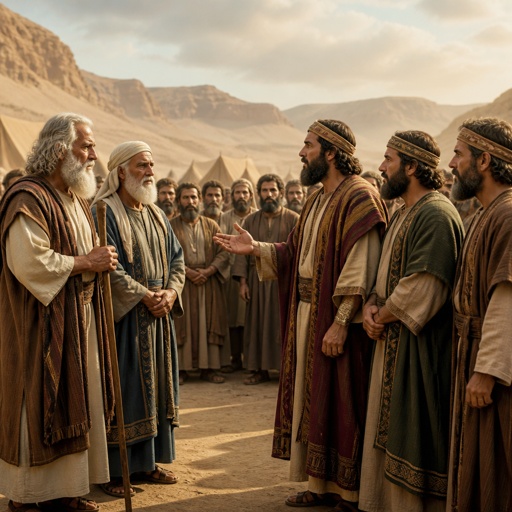
"Now Korah, the son of Izhar, the son of Kohath, the son of Levi, and Dathan and Abiram, the sons of Eliab, and On, the son of Peleth, sons of Reuben, took men: And they rose up before Moses, with certain of the children of Israel, two hundred and fifty princes of the assembly, famous in the congregation, men of renown: And they gathered themselves together against Moses and against Aaron, and said unto them, Ye take too much upon you, seeing all the congregation are holy, every one of them, and the Lord is among them: wherefore then lift ye up yourselves above the congregation of the Lord?" - Numbers 16:1-3
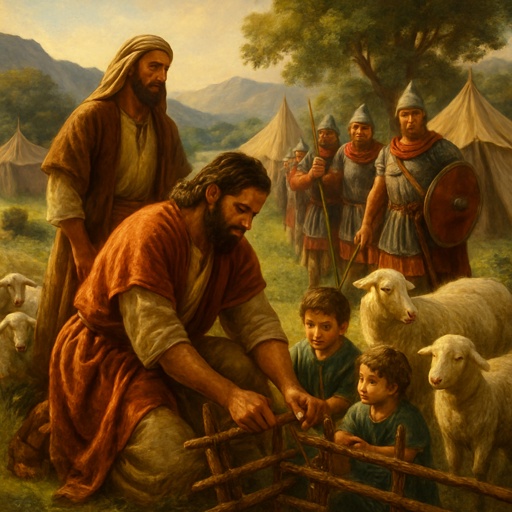
Numbers 32:16-18
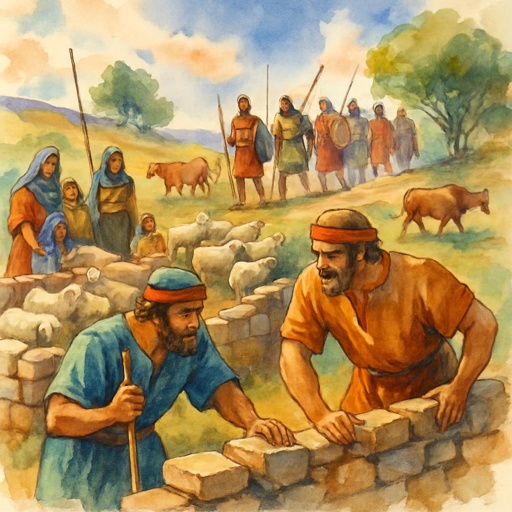
Numbers 32:16-18

Numbers 1:16 - "These were the renowned of the congregation, princes of the tribes of their fathers, heads of thousands in Israel."

create a mosaic that depicts numbers 8:1 to 12:16 do not show words

Numbers 16:18
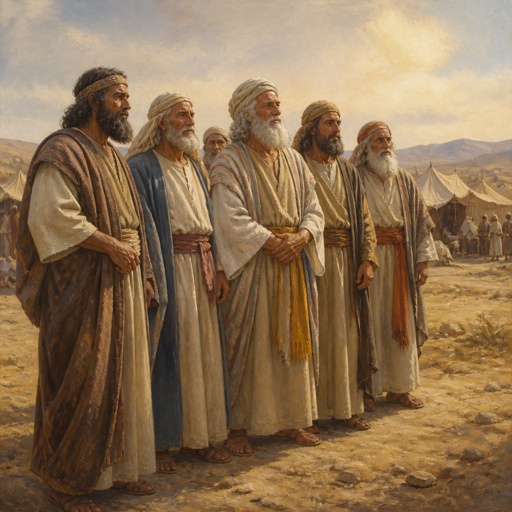
"These were the renowned of the congregation, princes of the tribes of their fathers, heads of thousands in Israel." - Numbers 1:16

Numbers 11:16-26

Numbers 16:16 - "And Moses said unto Korah, Be thou and all thy company before the LORD, thou, and they, and Aaron, to morrow:"

Numbers 25:16 - "¶ And the LORD spake unto Moses, saying,"

Numbers 7:16 - "One kid of the goats for a sin offering:"

Numbers 34:16 - "And the LORD spake unto Moses, saying,"

Numbers 3:16 - "And Moses numbered them according to the word of the LORD, as he was commanded."

Numbers 16:36 - "¶ And the LORD spake unto Moses, saying,"

Numbers 16:23 - "¶ And the LORD spake unto Moses, saying,"

Numbers 16:44 - "¶ And the LORD spake unto Moses, saying,"

Numbers 16:43 - "And Moses and Aaron came before the tabernacle of the congregation."

Numbers 26:16 - "Of Ozni, the family of the Oznites: of Eri, the family of the Erites:"

Numbers 28:16 - "And in the fourteenth day of the first month is the passover of the LORD."

Numbers 16:20 - "And the LORD spake unto Moses and unto Aaron, saying,"

Numbers 16:48 - "And he stood between the dead and the living; and the plague was stayed."

Numbers 33:16 - "And they removed from the desert of Sinai, and pitched at Kibroth-hattaavah."

Be hostile to the medianites numbers 25:16-18

Numbers 10:16 - "And over the host of the tribe of the children of Zebulun was Eliab the son of Helon."

Numbers 12:16 - "And afterward the people removed from Hazeroth, and pitched in the wilderness of Paran."

Numbers 9:16 - "So it was alway: the cloud covered it by day, and the appearance of fire by night."

Numbers 16:4 - "And when Moses heard it, he fell upon his face:"