The Resilience of a Renewed Community
"The children of Parosh, two thousand an hundred seventy and two." - Nehemiah 7:8
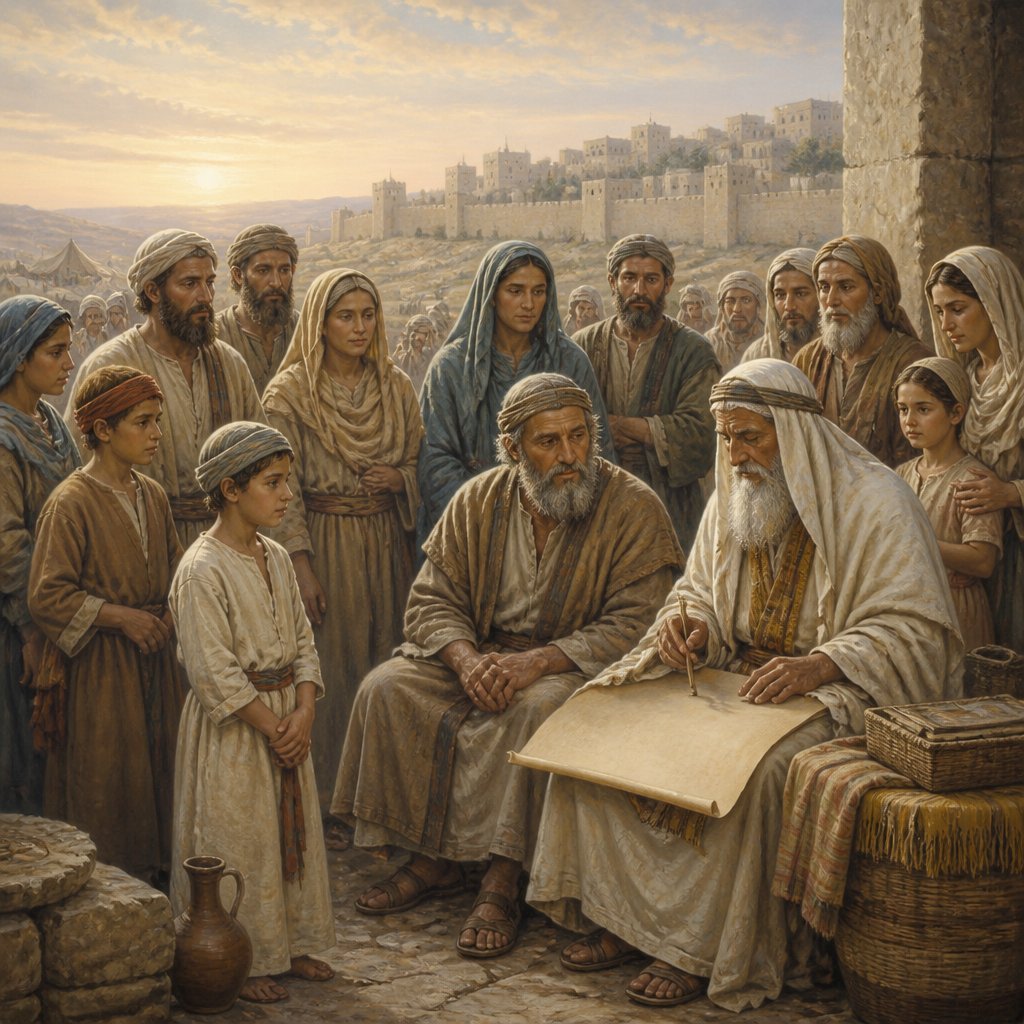
The book of Nehemiah provides a compelling narrative of restoration, leadership, and community rebuilding centered around faith and purpose. In Nehemiah 7:8, we encounter one of the genealogies of those returning from exile, specifically mentioning, "The children of Parosh, two thousand an hundred seventy and two." At first glance, the verse may seem like a mere enumeration of names and numbers, yet it reveals profound truths about identity, heritage, and community in God’s redemptive plan.
**Understanding the Context**
To understand the significance of this verse, we must delve into the historical and cultural context from which it emerges. The children of Parosh were among the exiles who returned to Jerusalem after the Babylonian captivity. This return was not a mere return to a physical location; it symbolized a return to promise, identity, and covenantal relationship with God. Nehemiah had been tasked with rebuilding the walls of Jerusalem, an act that was not only about physical restoration but also spiritual and communal renewal.
The numbered community in Nehemiah represents a body of believers committed to reclaiming what was lost. Each group mentioned in this chapter serves as a reminder that God cares about the individual as well as the collective. The painstaking detail of recording names and numbers conveys an intrinsic worth of every person involved; God knows each of us by name, and in His redemptive plan, we find our place.
**Symbolism of Numbers**
The specific number, two thousand one hundred seventy and two, is not just a statistic; it holds symbolic meaning. Numbers in the Bible often carry weight; they reflect God’s order, provision, and the collective strength of His people. In the case of Parosh, 2,172 signifies a community that has endured hardship yet is now poised to embrace a new beginning. The restoration of Jerusalem’s walls was a testimony of God's faithfulness and a call to the people to rise and build together.
**Community and Commitment**
God’s design for humanity includes a strong emphasis on community. Each member of the children of Parosh represents families, stories, and histories intertwined with God’s covenant. This reality invites us to reflect on our own communities. Each individual is part of a larger tapestry that God weaves to display His grace and purpose. When we commit to building our communities—be it in our families, churches, or neighborhoods—we are actively participating in God’s redemptive story.
This brings us to the importance of our commitment, much like the children of Parosh, to work towards spiritual and communal health. Nehemiah’s leadership motivated a community of diverse backgrounds to unite for a common purpose. They were motivated by prayer, burden for their homeland, and faith that God would provide for their needs. In our communities today, we are also called to unity and restoration, driven by our love for one another and the shared mission of advancing God's Kingdom.
**Practical Application**
As we reflect on Nehemiah 7:8 and the narrative of the children of Parosh, let us consider how we can contribute to our communities. Here are a few questions to ponder:
1. What spiritual or practical ‘walls’ need rebuilding in my community?
2. How can I better connect with those around me, learning their stories and fostering relationships?
3. What commitments am I willing to make to support the physical and spiritual restoration of those in need?
**Conclusion**
In essence, Nehemiah 7:8 invites us into a deeper understanding of community resilience and personal responsibility. Each number in that verse tells a story of obedience, hope, and the belief that with God, restoration is always possible. As we embrace our collective identity in Christ, let us rest in the knowledge that we are not alone; together, we can build a future that reflects God’s glory and purpose. Amen.
Want to reflect more on Nehemiah 7:8?
Continue your spiritual journey with Bible Chat — an AI-powered tool for exploring God's Word through conversation. Ask questions, discover connections, and deepen your understanding.
Get Our Apps


Nehemiah 7:8 Artwork

Nehemiah 7:8 - "The children of Parosh, two thousand an hundred seventy and two."
"The children of Parosh, two thousand an hundred seventy and two." - Nehemiah 7:8

Nehemiah 8:7 - "Also Jeshua, and Bani, and Sherebiah, Jamin, Akkub, Shabbethai, Hodijah, Maaseiah, Kelita, Azariah, Jozabad, Hanan, Pelaiah, and the Levites, caused the people to understand the law: and the people stood in their place."

Nehemiah 7:7 - "Who came with Zerubbabel, Jeshua, Nehemiah, Azariah, Raamiah, Nahamani, Mordecai, Bilshan, Mispereth, Bigvai, Nehum, Baanah. The number, I say, of the men of the people of Israel was this;"

Nehemiah 8:10

Nehemiah 8:10

Nehemiah 8:10

Nehemiah 10:7 - "Meshullam, Abijah, Mijamin,"

Nehemiah 7:42 - "The children of Harim, a thousand and seventeen."

Nehemiah 7:24 - "The children of Hariph, an hundred and twelve."

Nehemiah 7:56 - "The children of Neziah, the children of Hatipha."

Nehemiah 8:8 - "So they read in the book in the law of God distinctly, and gave the sense, and caused them to understand the reading."

Nehemiah 7:25 - "The children of Gibeon, ninety and five."

Nehemiah 10:8 - "Maaziah, Bilgai, Shemaiah: these were the priests."

Nehemiah 7:40 - "The children of Immer, a thousand fifty and two."

Nehemiah 7:31 - "The men of Michmas, an hundred and twenty and two."

Nehemiah 7:33 - "The men of the other Nebo, fifty and two."

Nehemiah 7:21 - "The children of Ater of Hezekiah, ninety and eight."

Nehemiah 7:28 - "The men of Beth-azmaveth, forty and two."

Nehemiah 7:14 - "The children of Zaccai, seven hundred and threescore."

Nehemiah 7:27 - "The men of Anathoth, an hundred twenty and eight."

Nehemiah 7:35 - "The children of Harim, three hundred and twenty."

Nehemiah 7:16 - "The children of Bebai, six hundred twenty and eight."

Nehemiah 7:58 - "The children of Jaala, the children of Darkon, the children of Giddel,"

Nehemiah 7:9 - "The children of Shephatiah, three hundred seventy and two."

Nehemiah 7:48 - "The children of Lebana, the children of Hagaba, the children of Shalmai,"

Nehemiah 7:19 - "The children of Bigvai, two thousand threescore and seven."

Nehemiah 7:15 - "The children of Binnui, six hundred forty and eight."

Nehemiah 7:44 - "¶ The singers: the children of Asaph, an hundred forty and eight."

Nehemiah 7:18 - "The children of Adonikam, six hundred threescore and seven."