The Generosity of Leadership: A Call to Divine Stewardship
"¶ And some of the chief of the fathers gave unto the work. The Tirshatha gave to the treasure a thousand drams of gold, fifty basons, five hundred and thirty priests' garments." - Nehemiah 7:70
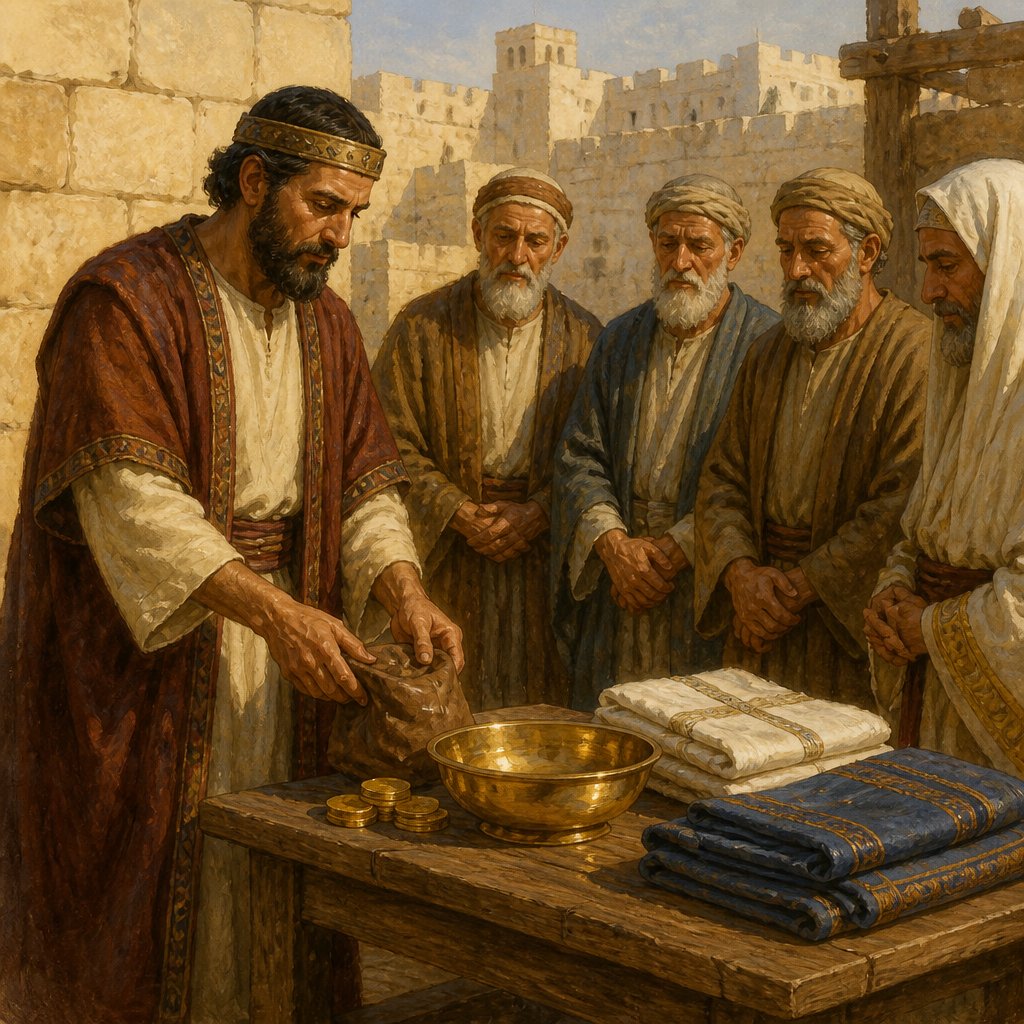
In Nehemiah 7:70, we find a remarkable moment recorded in the historical context of the rebuilding of Jerusalem: "And some of the chief of the fathers gave unto the work. The Tirshatha gave to the treasure a thousand drams of gold, fifty basons, five hundred and thirty priests' garments." (KJV). This verse, while seemingly a mere account of items donated for the restoration of the temple, invites us to reflect on the deeper implications of generosity and stewardship as demonstrated by these leaders, particularly the Tirshatha, who was the governor of Judah during this time.
Stewardship is often depicted in terms of how we manage our worldly possessions for the glory of God, but this passage exemplifies a form of stewardship rooted in sacrificial giving. The 'chief of the fathers' symbolize those in positions of influence and authority. Their actions remind us that leadership comes with the responsibility to advance the collective good, particularly in service to God and His house. Today, our offices, churches, and communities often rely on those in leadership roles to model sacrificial generosity.
The Tirshatha’s substantial offering—a thousand drams of gold, fifty basons, and five hundred and thirty priests' garments—spotlights the extraordinary nature of commitment. A dram of gold, valued highly in today's currency, indicates that this was no trivial gift. Such generosity underscores the reality that true leadership involves investing in the greater mission. Just as the Tirshatha’s contributions were aimed at revitalizing the worship environment for the people of Israel, we too are called to contribute to the ministries and missions that foster community and faith.
Why did the Tirshatha give such a generous gift? It is reasonable to suppose that he recognized the importance of the work ahead. Nehemiah’s mission was not merely about rebuilding walls; it was fundamentally about restoring the practice of worship and the covenant relationship between God and His people. The Tirshatha, embodying this vision, made a personal commitment reflecting his dedication to God’s work. This echoes the heart of 2 Corinthians 9:7, which states, "Every man according as he purposeth in his heart, so let him give; not grudgingly, or of necessity: for God loveth a cheerful giver."
As we reflect on this principle of giving, we must ask ourselves: How are we contributing to the work of God? In a world where self-interest often dominates, the act of giving can be countercultural. The Tirshatha's actions challenge us—to consider our own treasures, whether they be financial, emotional, or spiritual. Are we holding back from God’s work?
Moreover, the public nature of this donation speaks volumes about accountability and community engagement in stewardship. In our lives, public commitments to God’s work serve as testimonies of faith that inspire generosity in others. This gives us an exhilarating opportunity to lead by example. When we act transparently in our giving and our commitment to service, we encourage others to embrace the same spirit.
Interestingly, the donation included priests' garments, symbolizing the preparation and equipping of leaders for ministry. True generosity not only meets immediate needs but also invests in future leadership. As we pour resources—be they monetary or mentorship—into developing future servants of God, we advance His Kingdom, preparing others to lead and serve.
In conclusion, Nehemiah 7:70 not only highlights an episode in history but also offers profound truths about leadership, sacrifice, and stewardship. May we be inspired to give generously, to contribute meaningfully to God’s work, and to lead others towards the heart of stewardship that reflects God’s generosity towards us. As the Tirshatha modeled, let us give whole-heartedly, not out of obligation, but out of a love that seeks to see God’s work flourish.
Let us pray:
Heavenly Father, help us to embody the spirit of generosity shown by the Tirshatha and leaders of Judah. May we give wholeheartedly to Your work, recognizing the importance of our contributions, and inspire others with our deeds of kindness. Guide us as we seek to honor You with our time, talents, and treasures. Amen.
Want to reflect more on Nehemiah 7:70?
Continue your spiritual journey with Bible Chat — an AI-powered tool for exploring God's Word through conversation. Ask questions, discover connections, and deepen your understanding.
Get Our Apps


Nehemiah 7:70 Artwork

Nehemiah 7:70 - "¶ And some of the chief of the fathers gave unto the work. The Tirshatha gave to the treasure a thousand drams of gold, fifty basons, five hundred and thirty priests' garments."
"¶ And some of the chief of the fathers gave unto the work. The Tirshatha gave to the treasure a thousand drams of gold, fifty basons, five hundred and thirty priests' garments." - Nehemiah 7:70

Numbers 7:70 - "One kid of the goats for a sin offering:"
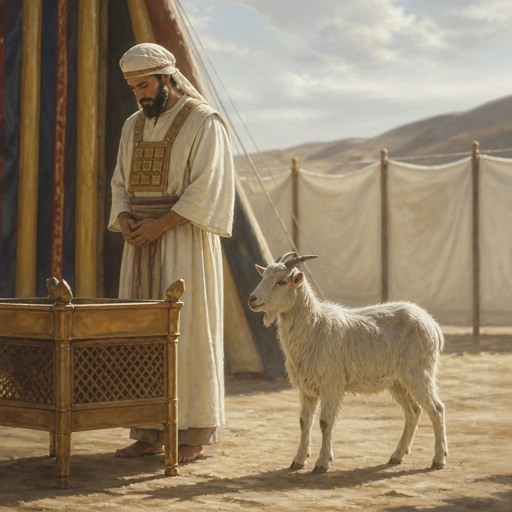
"One kid of the goats for a sin offering:" - Numbers 7:70

Nehemiah 7:7 - "Who came with Zerubbabel, Jeshua, Nehemiah, Azariah, Raamiah, Nahamani, Mordecai, Bilshan, Mispereth, Bigvai, Nehum, Baanah. The number, I say, of the men of the people of Israel was this;"

Nehemiah 10:7 - "Meshullam, Abijah, Mijamin,"

Nehemiah 7:42 - "The children of Harim, a thousand and seventeen."

Nehemiah 7:24 - "The children of Hariph, an hundred and twelve."

Nehemiah 7:56 - "The children of Neziah, the children of Hatipha."

Nehemiah 7:25 - "The children of Gibeon, ninety and five."

Nehemiah 7:40 - "The children of Immer, a thousand fifty and two."

Nehemiah 7:31 - "The men of Michmas, an hundred and twenty and two."

Nehemiah 7:33 - "The men of the other Nebo, fifty and two."

Nehemiah 7:28 - "The men of Beth-azmaveth, forty and two."

Nehemiah 7:21 - "The children of Ater of Hezekiah, ninety and eight."

Nehemiah 7:14 - "The children of Zaccai, seven hundred and threescore."

Nehemiah 7:27 - "The men of Anathoth, an hundred twenty and eight."

Nehemiah 7:35 - "The children of Harim, three hundred and twenty."

Nehemiah 7:16 - "The children of Bebai, six hundred twenty and eight."

Nehemiah 7:58 - "The children of Jaala, the children of Darkon, the children of Giddel,"

Nehemiah 7:9 - "The children of Shephatiah, three hundred seventy and two."

Nehemiah 7:48 - "The children of Lebana, the children of Hagaba, the children of Shalmai,"

Nehemiah 7:15 - "The children of Binnui, six hundred forty and eight."

Nehemiah 7:19 - "The children of Bigvai, two thousand threescore and seven."

Nehemiah 7:44 - "¶ The singers: the children of Asaph, an hundred forty and eight."

Nehemiah 7:13 - "The children of Zattu, eight hundred forty and five."

Nehemiah 7:18 - "The children of Adonikam, six hundred threescore and seven."

Nehemiah 7:49 - "The children of Hanan, the children of Giddel, the children of Gahar,"

Nehemiah 7:55 - "The children of Barkos, the children of Sisera, the children of Tamah,"

Nehemiah 7:20 - "The children of Adin, six hundred fifty and five."