Restoration and Community: Lessons from Nehemiah 7:14
"The children of Zaccai, seven hundred and threescore." - Nehemiah 7:14
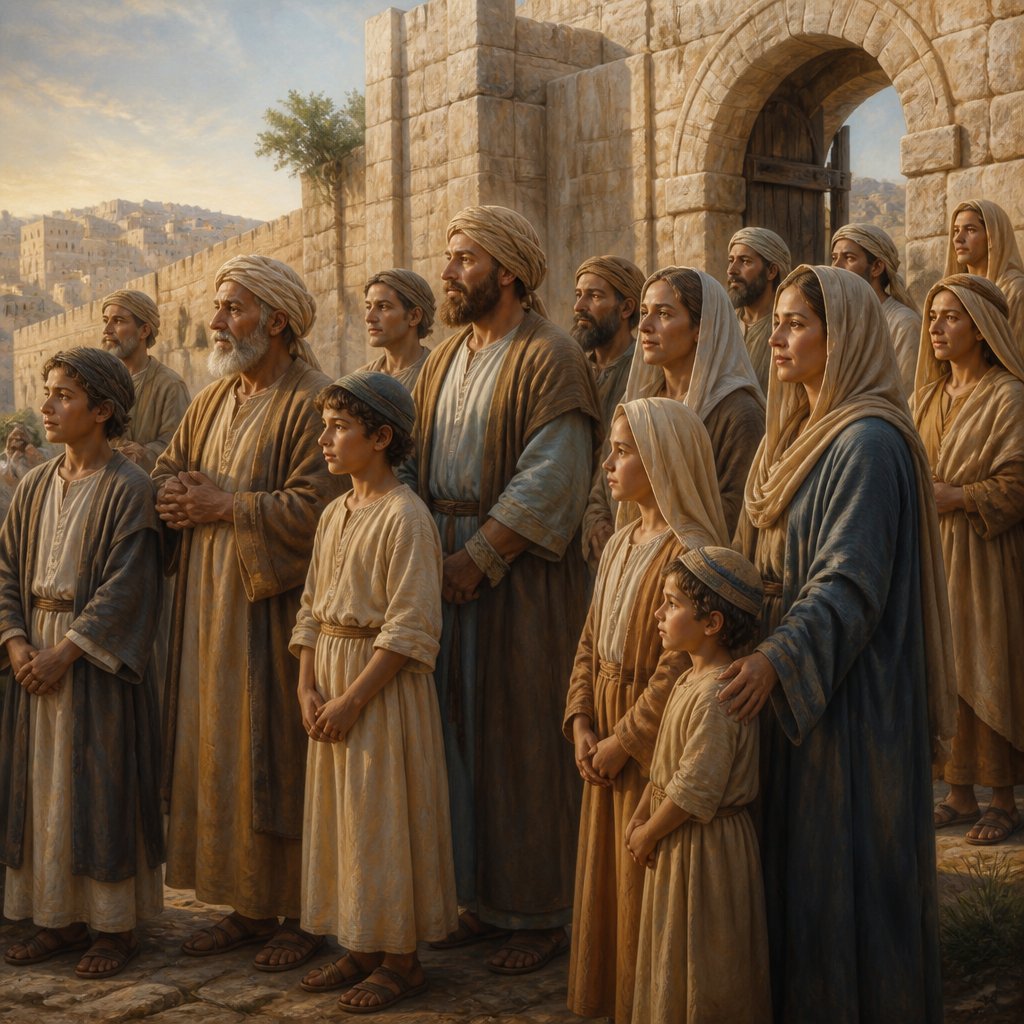
As we delve into the rich narrative of Nehemiah, we are immediately struck by the theme of restoration—of a city, a people, and their relationship with God. Nehemiah 7:14 introduces us to the specific families that returned to Jerusalem after the Babylonian exile, marking a pivotal moment in Jewish history. The verse states: "The children of Zaccai, seven hundred and threescore."
At first glance, this passage might seem trivial—merely a census detail in a list of names. Yet, embedded within these simple numbers is a profound message about identity, belonging, and divine purpose that reaches far beyond the pages of history. Each name and number in this genealogy symbolizes a thread in the intricate tapestry of God's unfolding plan for His people.
### The Importance of Names
In biblical culture, names carried deep significance. They often encapsulated not just identity but also the character, destiny, or heritage of individuals. The name "Zaccai" might mean "pure" or "clean," suggesting a legacy of holiness. This resonates with Nehemiah's broader goal of rebuilding the community of Jerusalem into a faithful assembly devoted to God.
The reference to the children of Zaccai highlights the importance of family in God's redemptive plan. Each individual's return signified not only their personal commitment to restoration but also their willingness to take part in a larger community effort. This serves as a reminder to us today that our faith is not just a solitary endeavor; it is inherently communal. Just as the children of Zaccai came together to form part of the newly restored Jerusalem, we too are called to be active participants in the body of Christ.
### The Power of Numbers
The phrase "seven hundred and threescore" translates to 760 souls. Delving into this number, we notice its completeness; it signifies the gathering of the faithful. Numbers in scripture have significant meanings and tend to reveal God's character and intentions. Seven, for instance, is often recognized as a number of perfection or completion, seen throughout the Bible’s narrative in creation and covenant.
The mention of 760 individuals signifies a significant movement of God in a community. This enables us to reflect on our own lives: How many souls have we engaged with in our spiritual journey? Just as the returning exiles formed a community, we are reminded of Christ’s call to go out and make disciples, demonstrating that our faith is meant to be shared.
### Lessons on Restoration
God's restoration endeavor is rooted in establishing His people. The return from exile was more than a physical relocation; it was a spiritual restoration. Each family returning represented a reclaiming of their identity as God’s chosen people. They were coming back to rebuild not just walls, but their covenant relationship with God and with one another.
In our contemporary lives, we must ponder: What areas in our lives need restoration? Are there relationships that need mending? How can we contribute to the spiritual revitalization of our communities? The returning exiles provide us with a model of resilience. They faced numerous challenges, yet they pressed on in faith, driven by their commitment to God’s work.
### Conclusion
Nehemiah 7:14 serves as a powerful reminder of our calling to community and restoration in Christ. As we read this verse today, let it ignite in us a passion for our communities and a willingness to engage actively in rebuilding our neighborhoods, churches, and families. Let us seek to live out our faith in ways that bring glory to God and foster relationships that reflect His love. Amen.
Want to reflect more on Nehemiah 7:14?
Continue your spiritual journey with Bible Chat — an AI-powered tool for exploring God's Word through conversation. Ask questions, discover connections, and deepen your understanding.
Get Our Apps


Nehemiah 7:14 Artwork

Nehemiah 7:14 - "The children of Zaccai, seven hundred and threescore."
"The children of Zaccai, seven hundred and threescore." - Nehemiah 7:14

Nehemiah 7:7 - "Who came with Zerubbabel, Jeshua, Nehemiah, Azariah, Raamiah, Nahamani, Mordecai, Bilshan, Mispereth, Bigvai, Nehum, Baanah. The number, I say, of the men of the people of Israel was this;"

Nehemiah 11:11-14

Nehemiah 12:14 - "Of Melicu, Jonathan; of Shebaniah, Joseph;"

Nehemiah 10:7 - "Meshullam, Abijah, Mijamin,"

Nehemiah 7:42 - "The children of Harim, a thousand and seventeen."

Nehemiah 7:24 - "The children of Hariph, an hundred and twelve."

Nehemiah 7:56 - "The children of Neziah, the children of Hatipha."

Nehemiah 7:25 - "The children of Gibeon, ninety and five."

Nehemiah 7:40 - "The children of Immer, a thousand fifty and two."

Nehemiah 7:31 - "The men of Michmas, an hundred and twenty and two."

Nehemiah 7:33 - "The men of the other Nebo, fifty and two."

Nehemiah 7:28 - "The men of Beth-azmaveth, forty and two."

Nehemiah 7:21 - "The children of Ater of Hezekiah, ninety and eight."

Nehemiah 7:27 - "The men of Anathoth, an hundred twenty and eight."

Nehemiah 7:35 - "The children of Harim, three hundred and twenty."

Nehemiah 7:16 - "The children of Bebai, six hundred twenty and eight."

Nehemiah 7:58 - "The children of Jaala, the children of Darkon, the children of Giddel,"

Nehemiah 7:9 - "The children of Shephatiah, three hundred seventy and two."

Nehemiah 7:48 - "The children of Lebana, the children of Hagaba, the children of Shalmai,"

Nehemiah 7:15 - "The children of Binnui, six hundred forty and eight."

Nehemiah 7:19 - "The children of Bigvai, two thousand threescore and seven."

Nehemiah 7:44 - "¶ The singers: the children of Asaph, an hundred forty and eight."

Nehemiah 7:13 - "The children of Zattu, eight hundred forty and five."

Nehemiah 7:18 - "The children of Adonikam, six hundred threescore and seven."

Nehemiah 7:49 - "The children of Hanan, the children of Giddel, the children of Gahar,"

Nehemiah 7:55 - "The children of Barkos, the children of Sisera, the children of Tamah,"

Nehemiah 7:20 - "The children of Adin, six hundred fifty and five."

Nehemiah 10:14 - "The chief of the people; Parosh, Pahath-moab, Elam, Zatthu, Bani,"