Restoration Through Faithfulness: Lessons from Nehemiah 7:13
"The children of Zattu, eight hundred forty and five." - Nehemiah 7:13

In the captivating narrative of Nehemiah, we witness a profound journey of restoration and rebuilding—not just of walls, but of the very spirit of a people. Nehemiah 7:13 states simply, "The children of Zattu, eight hundred forty and five." At first glance, this verse may seem like a mere numerical listing, a census detail amidst the broader story of Jerusalem's reconstruction. However, upon closer inspection, it reveals rich layers of meaning that resonate deeply with our own lives and faith journeys.
The context of Nehemiah's account is crucial. After years of exile in Babylon, the Israelites had returned to their homeland with a collective yearning to restore both their city and their identity. This wasn’t just a physical rebuilding; it was a spiritual reawakening. Nehemiah, as the appointed leader, exemplified faithfulness and dedication as he sought not only to mend broken walls but also to unite a fragmented community. In this moment, the enumeration of families, such as the children of Zattu, represents the restoration of the people of God—each number signifies a family, each family a story of resilience and hope.
The children of Zattu, numbering eight hundred and forty-five, invite us to reflect on the significance of our own heritage and the legacies that we carry forward. How many lives have been shaped, influenced, and inspired by individuals who came before us? They represent a remnant of faith, just as our own spiritual ancestors—parents, grandparents, church leaders—have played pivotal roles in shaping our understanding of God and His faithfulness.
Interestingly, Zattu, a name found in the genealogical lists, does not resonate widely outside this context, yet it serves as a cornerstone for many who seek God in the mundane details of life. These names in the biblical texts often serve to remind us that God sees and values every person, even in their obscurity. Each name and family represents sacrifices, struggles, victories, and faithfulness—a reminder that in the grand tapestry of God’s story, every thread is woven with purpose.
When considering the significance of the number eight hundred and forty-five, we are prompted to think about what this multitude represents. In biblical numerology, the number eight often symbolizes new beginnings, and the act of restoration that Nehemiah undertook was indeed a fresh start for the returned exiles. It is a powerful metaphor for our own lives—reminding us that through Christ, we too can experience new beginnings and become vessels of restoration in our communities.
In our contemporary context, we may not be rebuilding city walls, but we are often called to restore relationships, communities, and even our own spirits. Just as those who returned to Jerusalem needed to come together in unity, we are encouraged to build each other up in love and faith. Just as Nehemiah led the people in prayer, action, and perseverance, we can lead in our families, workplaces, and churches by embodying those same principles.
Furthermore, Nehemiah's emphasis on counting and recognizing each individual serves as a reminder of accountability. As we restore our lives and impacts, we must reflect on who we are bringing along in this journey of faith. Are we acknowledging and encouraging those around us? Are we counting the blessings of community? The prayer of Nehemiah echoes through time; he sought favor, wisdom, and strength from God, and so must we.
In conclusion, the verse from Nehemiah 7:13 may appear to be a simple statistic, but it’s a profound reminder that God is attentive to the details of our lives and faith. May we be inspired by the faithfulness of the children of Zattu and strive to embody that same commitment in our walks with Christ. Let us remember always that our journeys intersect with many others—we are part of a larger narrative of restoration that God is crafting in this world.
Want to reflect more on Nehemiah 7:13?
Continue your spiritual journey with Bible Chat — an AI-powered tool for exploring God's Word through conversation. Ask questions, discover connections, and deepen your understanding.
Get Our Apps


Nehemiah 7:13 Artwork

Nehemiah 7:13 - "The children of Zattu, eight hundred forty and five."

"The children of Zattu, eight hundred forty and five." - Nehemiah 7:13

Nehemiah 13:7 - "And I came to Jerusalem, and understood of the evil that Eliashib did for Tobiah, in preparing him a chamber in the courts of the house of God."

Nehemiah 11:13

Nehemiah 7:7 - "Who came with Zerubbabel, Jeshua, Nehemiah, Azariah, Raamiah, Nahamani, Mordecai, Bilshan, Mispereth, Bigvai, Nehum, Baanah. The number, I say, of the men of the people of Israel was this;"

Nehemiah 10:13 - "Hodijah, Bani, Beninu."

Nehemiah 12:13 - "Of Ezra, Meshullam; of Amariah, Jehohanan;"

Nehemiah 10:7 - "Meshullam, Abijah, Mijamin,"
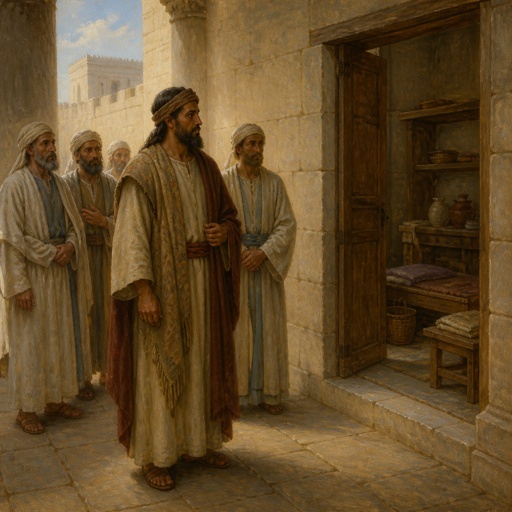
"And I came to Jerusalem, and understood of the evil that Eliashib did for Tobiah, in preparing him a chamber in the courts of the house of God." - Nehemiah 13:7

Nehemiah 7:42 - "The children of Harim, a thousand and seventeen."

Nehemiah 7:24 - "The children of Hariph, an hundred and twelve."

Nehemiah 7:56 - "The children of Neziah, the children of Hatipha."

Nehemiah 7:25 - "The children of Gibeon, ninety and five."

Nehemiah 7:40 - "The children of Immer, a thousand fifty and two."

Nehemiah 7:31 - "The men of Michmas, an hundred and twenty and two."

Nehemiah 7:33 - "The men of the other Nebo, fifty and two."

Nehemiah 7:21 - "The children of Ater of Hezekiah, ninety and eight."

Nehemiah 7:28 - "The men of Beth-azmaveth, forty and two."

Nehemiah 7:14 - "The children of Zaccai, seven hundred and threescore."

Nehemiah 7:27 - "The men of Anathoth, an hundred twenty and eight."

Nehemiah 7:35 - "The children of Harim, three hundred and twenty."

"Hodijah, Bani, Beninu." - Nehemiah 10:13

Nehemiah 7:16 - "The children of Bebai, six hundred twenty and eight."

Nehemiah 7:58 - "The children of Jaala, the children of Darkon, the children of Giddel,"

Nehemiah 7:9 - "The children of Shephatiah, three hundred seventy and two."

Nehemiah 7:48 - "The children of Lebana, the children of Hagaba, the children of Shalmai,"

Nehemiah 7:19 - "The children of Bigvai, two thousand threescore and seven."

Nehemiah 7:15 - "The children of Binnui, six hundred forty and eight."

Nehemiah 7:44 - "¶ The singers: the children of Asaph, an hundred forty and eight."

Nehemiah 7:18 - "The children of Adonikam, six hundred threescore and seven."